


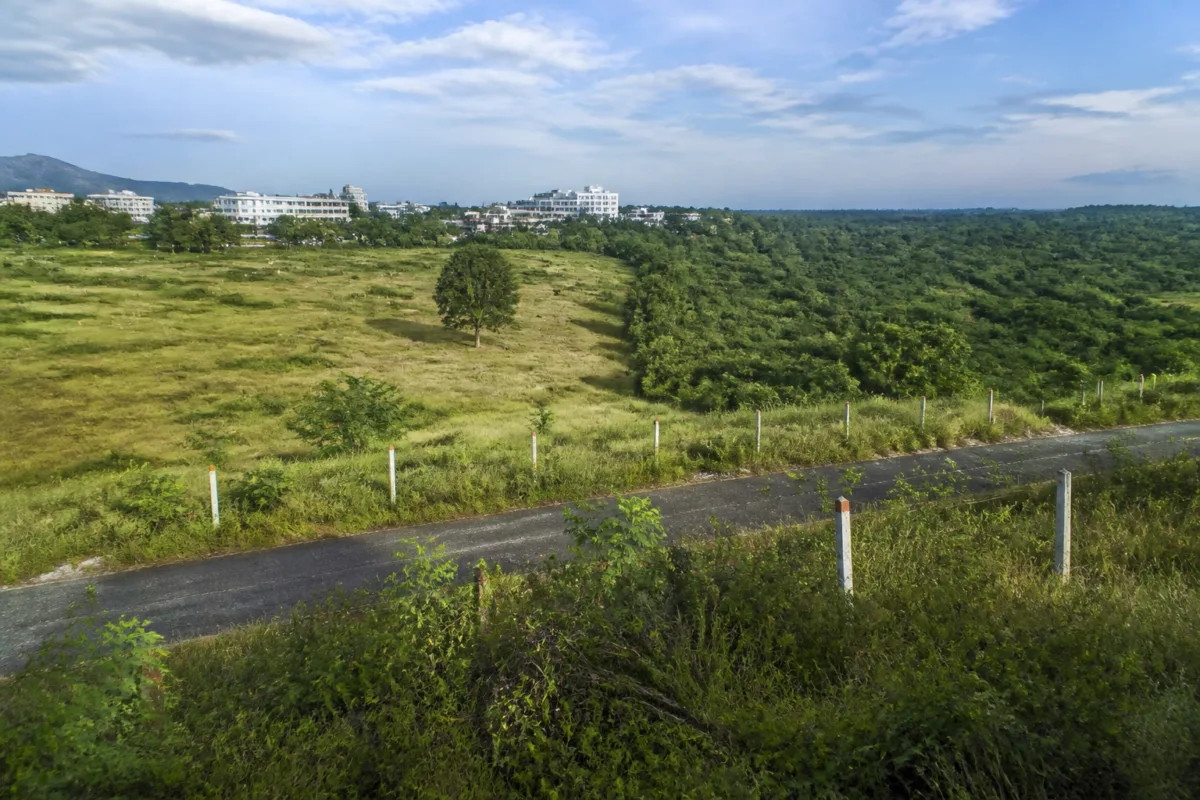
The Madras High Court has issued an interim restraint on the proposed transfer of 196 acres of Bharathiar University land in Coimbatore to the Tamil Nadu Industrial Development Corporation (TIDCO), according to petitioner Muralidharan, who has opposed construction affecting an elephant movement corridor.
The land is part of a larger 925.84-acre tract acquired in 1977 from farmers in Vadavalli, Kalveerampalayam, Bommanampalayam, Marudamalai, Marudapuram and Sultanipuram villages for establishing Bharathiar University. The acquisition involved around 1,200 farmers, but compensation was not paid at the time, leading landowners to approach the courts.
According to the report, the Tamil Nadu government later issued an order allocating Rs 164 crore for compensation, subject to landowners withdrawing their cases and agreeing not to return to court over the matter. The order proposed that 196 acres obtained from the university be transferred to TIDCO, with the amount received from the transfer used to compensate the original landowners.
The government order reportedly specified that only non-polluting industries could be established on the land. It also referred to the transfer of 77 acres to the Forest Department. The proposal has drawn objections from people who argue that land acquired for education should not be diverted for commercial or industrial use.
Muralidharan filed an additional affidavit in a case concerning construction that could obstruct an elephant movement route. He argued that the proposed transfer would create impacts beyond industrial pollution. Buildings, roads, electric lighting, vehicle movement, human activity and compound walls could alter the landscape and restrict the movement of elephants, the affidavit said.
The petitioner also warned that disruption of elephant habitats and movement routes could increase the possibility of animals entering residential areas, creating risks for both wildlife and residents. The argument places the proposed land transfer within a wider land-use and public safety question: whether an activity described as non-polluting can still affect an ecologically sensitive area through its physical footprint and daily operations.
The additional affidavit requested a joint field inspection by the Forest, Revenue and Higher Education departments, Bharathiar University representatives and ecological experts. It also sought court supervision and assistance from an amicus curiae, or adviser appointed to assist the court.
The proposed inspection would identify the land parcel by survey number and map its geographic boundaries, earlier tax-related land limits, the area proposed for the current project, reserve forest boundaries and elephant movement routes. The petitioner sought permanent protection of the land as elephant habitat and a movement corridor, along with a prohibition on industrial activity until the effects of the proposed conversion are fully examined.
Muralidharan said the High Court had recorded the additional affidavit and issued an interim order restraining the transfer of the land to TIDCO. The report does not provide the text of the court order or details of the next hearing. The status of the compensation process and any further administrative action will depend on the court proceedings and the proposed examination of the land and surrounding ecological features.

