


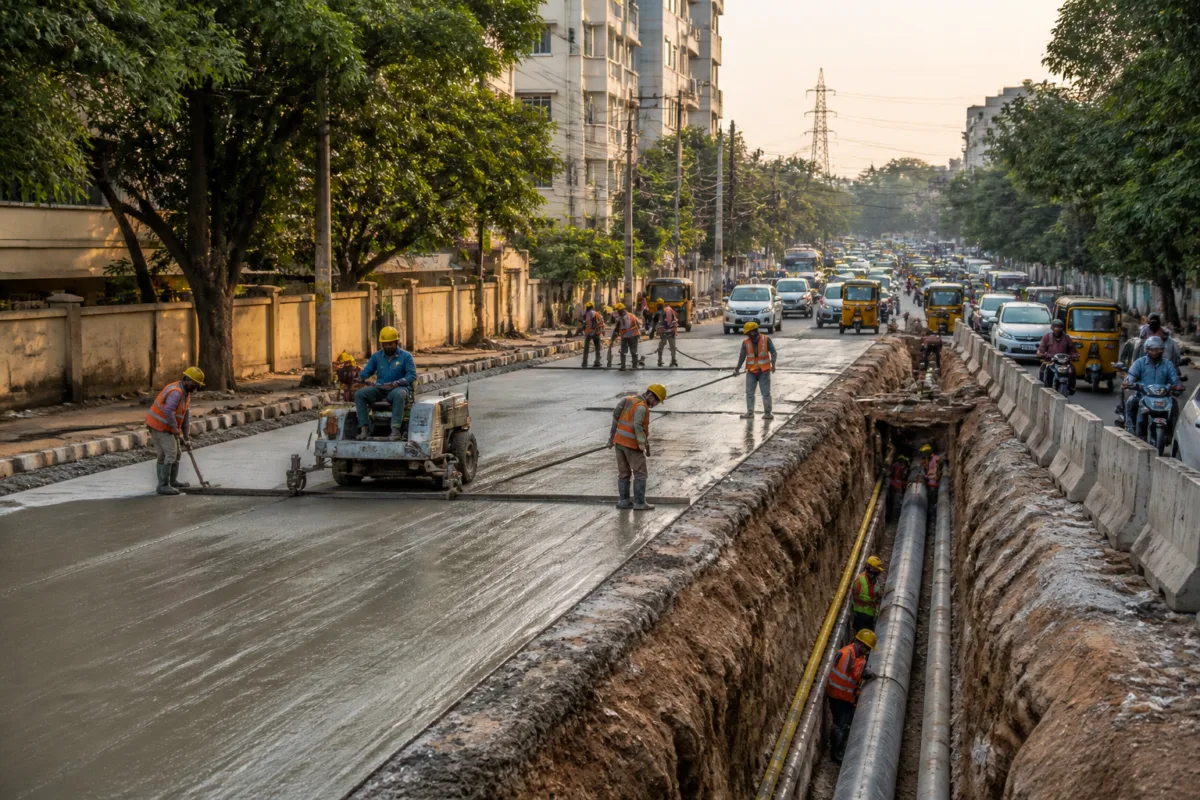
Bengaluru’s first proposed phase of a large white-topping programme has received approval at an average cost of ₹17.74 crore per kilometre, nearly 2.7 times the average rate indicated in the state’s 2026–27 Budget.
According to a Prajavani report, the Karnataka Cabinet approved on November 11 a proposal to white-top 130.85 km of roads across 88 roads in 12 packages at a total cost of ₹2,321.17 crore. The Urban Development Department issued administrative approval for implementing the programme on November 23.
The Budget presented on March 6 had announced that more than 450 km of roads would be white-topped over three years at a total cost of ₹3,000 crore. That implied an average cost of about ₹6.66 crore per kilometre. The newly approved proposal, prepared by Bengaluru Smart Infrastructure Limited (B-SMILE), works out to approximately ₹17.74 crore per kilometre.
The proposal itself referred to the Budget announcement and said the first phase had been prepared within the funding available for 2026–27, the report said. B-SMILE officials attributed the higher overall estimate to work beyond the road surface. The package includes expenditure for upgrading Bengaluru Water Supply and Sewerage Board water and sewerage lines before white-topping, with the aim of avoiding road cuts after the concrete surface is completed.
Costs associated with works by the Bangalore Electricity Supply Company and Karnataka Power Transmission Corporation Limited were also included in the revised estimate, according to the report. This means the approved figure covers coordinated utility works in addition to the white-topping component itself.
B-SMILE officials justified the programme on the grounds that it could provide a long-term response to Bengaluru’s heavy traffic, reduce repeated road repairs, create pothole-free roads and improve travel safety. They also said the estimate reflected integrated works rather than being limited to the road surface.
The spending pattern creates a significant implementation and oversight question. The approved first phase would consume about ₹2,321.17 crore of the ₹3,000 crore cited for the wider programme, while covering only 130.85 km against the announced target of more than 450 km. On the figures reported, the first phase therefore represents a substantial share of the stated budget but less than one-third of the announced road length.
The inclusion of water, sewerage and power-related works may reduce the risk of newly completed roads being reopened for utility projects. However, the available report does not provide a package-wise cost split, the names of the 88 roads, construction schedules, procurement details or the expected completion dates. Those details will be important for assessing how much of the higher rate is attributable to utility coordination, road conditions and other project components.
The cabinet approval and the November 23 administrative order move the programme beyond a budget announcement into implementation. The key public-interest issue now is whether the integrated scope, expenditure and road coverage are disclosed clearly enough to allow residents and oversight institutions to track delivery against both the approved cost and the original three-year target.

