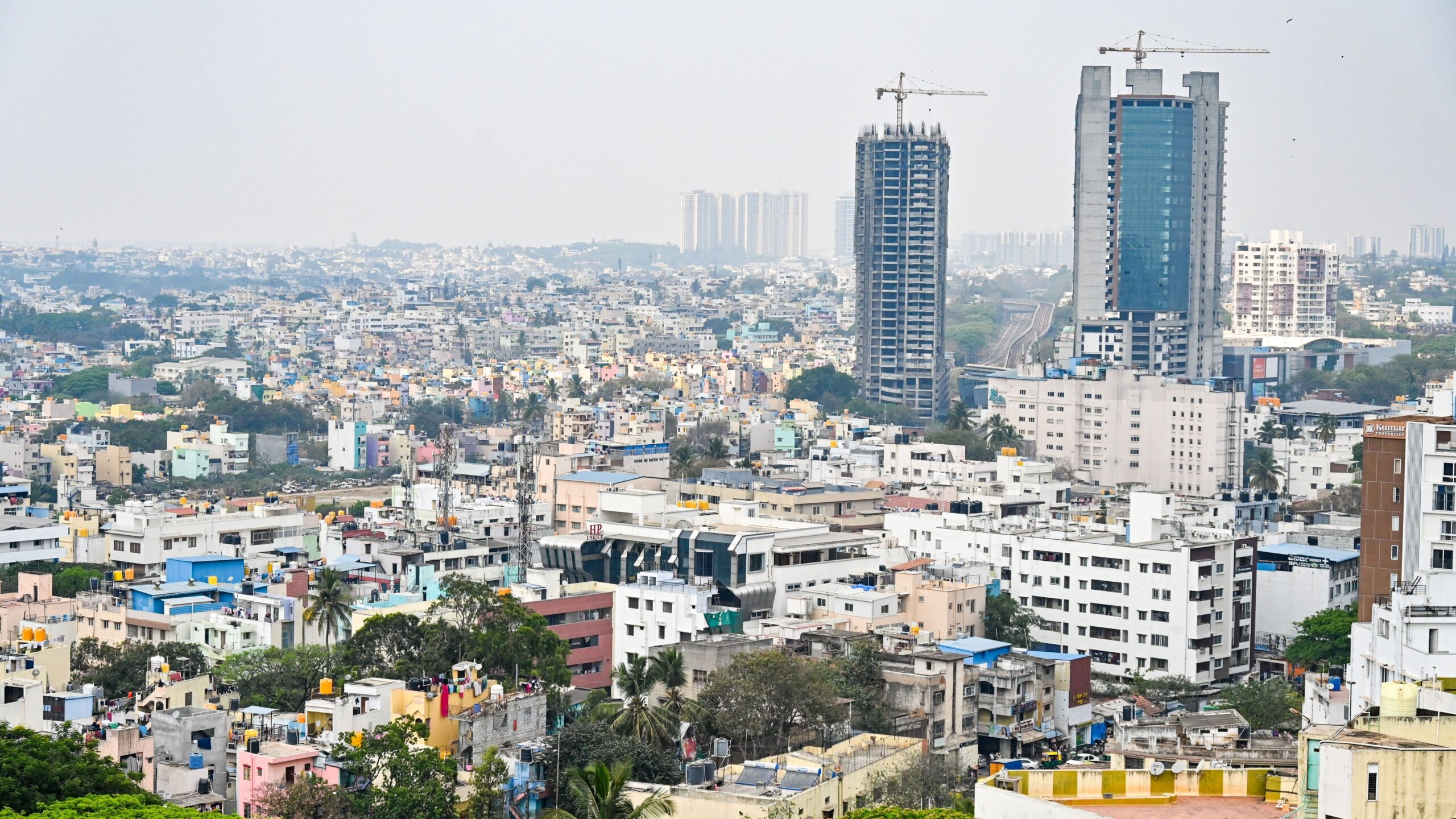
Bengaluru’s long-term development strategy is facing calls for a stronger citizen focus, with urban experts arguing that the city’s future planning should be shaped around everyday needs rather than infrastructure expansion alone. The discussion comes as Bengaluru prepares for a new vision framework intended to guide growth, mobility, housing and public infrastructure over the coming decades.
The proposed vision exercise is expected to look beyond individual projects and address how Bengaluru grows as a metropolitan region. Experts have stressed the need for residents to have a meaningful role in determining priorities, particularly as the city confronts congestion, water stress, pollution, uneven access to services and pressure on its natural system. The call for a citizen-centred approach reflects a broader shift in urban planning. Large transport corridors, commercial districts and housing projects can reshape neighbourhoods for decades, but their success ultimately depends on whether residents can access jobs, schools, healthcare, public transport and public spaces without excessive time or cost. For Bengaluru vision planning, mobility is likely to remain one of the biggest challenges. Metro expansion, suburban rail, bus improvements and road projects are progressing across different parts of the metropolitan region, yet connectivity between these systems and neighbourhoods remains uneven. Planning experts have argued that future investment should prioritise integrated networks rather than treating individual infrastructure projects as separate solutions. Housing is another central concern. Rising land values and expanding employment centres have pushed many workers towards peripheral areas, often increasing commuting distances. A long-term plan will need to consider affordable housing alongside transport, water, sanitation, schools and other essential services rather than allowing residential growth to occur independently of infrastructure capacity.
The environmental dimension is equally important. Bengaluru’s lakes, wetlands, open spaces and groundwater systems are under pressure from urbanisation. Protecting these resources is not simply a conservation objective; they provide drainage, water storage, cooling and ecological functions that directly influence the city’s resilience. The Bengaluru vision plan could therefore become an opportunity to connect infrastructure investment with climate adaptation. Development around public transport corridors, protection of natural drainage networks, greater use of permeable surfaces and stronger water management can help accommodate growth without increasing exposure to flooding or water shortages. Experts have also highlighted the importance of public participation. Consultation needs to extend beyond formal meetings and reach renters, informal workers, women, older residents, people with disabilities and communities on the city’s expanding edges. Their experience can reveal gaps that large-scale technical models may overlook. For Bengaluru, the value of a long-term vision will ultimately depend on implementation. Clear priorities, measurable targets, transparent monitoring and coordination between agencies will be essential if the plan is to move beyond a policy document.
A city designed around its residents is not necessarily one with fewer infrastructure projects. It is one where infrastructure decisions are judged by the access, safety, affordability and resilience they create. That could provide Bengaluru with a more grounded framework for managing its next phase of growth.