


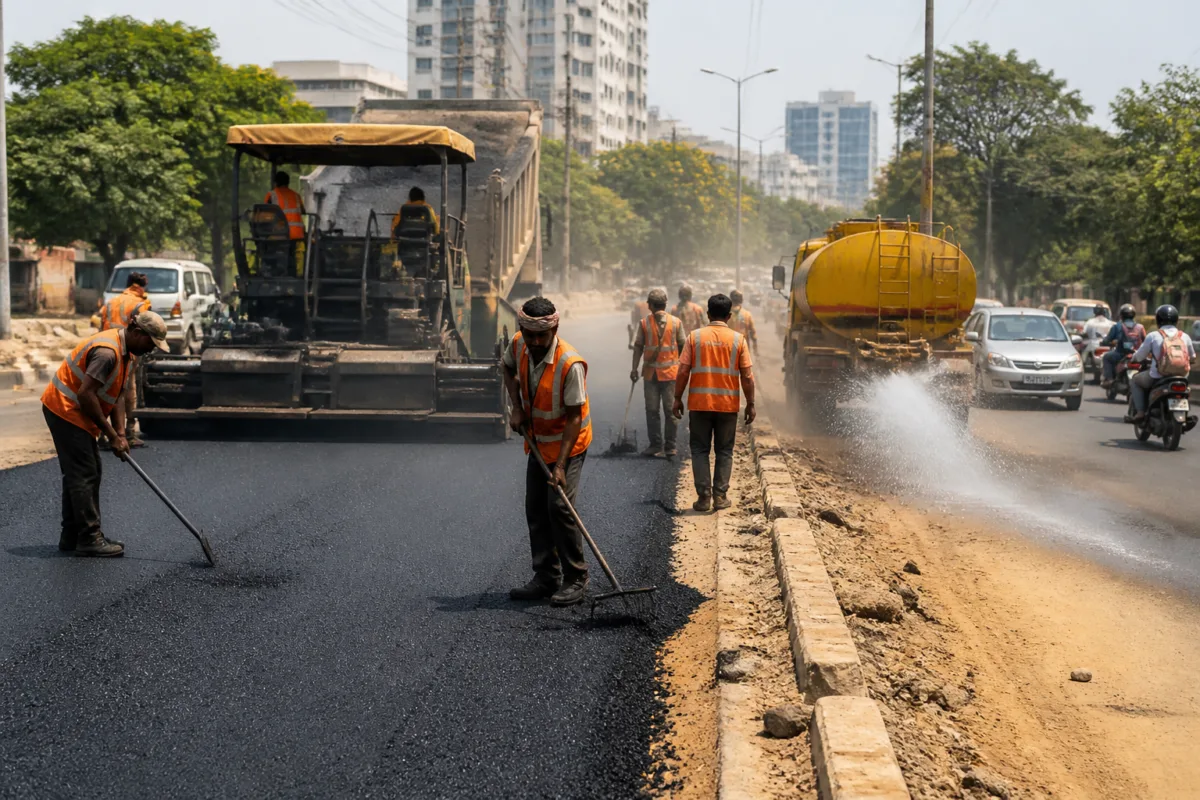
Bengaluru civic authorities resurfaced roads, cleared roadside silt and painted sections of south Bengaluru ahead of Prime Minister Narendra Modi’s visit on Friday, prompting residents to question why similar action was not taken after repeated complaints about damaged and dusty roads.
The work was particularly visible along Bannerghatta Road, where residents have previously raised concerns about poor road conditions and dust, according to a report by Deccan Herald. The Bengaluru South City Corporation (BSCC) posted photographs on X showing road watering, silt clearance, asphalting and painting carried out before the visit.
The images triggered criticism from residents and other users on social media. They alleged that civic officials had responded rapidly to the upcoming VVIP movement, while complaints about road quality and dust had not received the same attention. Some residents also posted photographs of damaged roads in other parts of Bengaluru, highlighting what they described as an uneven civic response across the city.
The episode has placed routine road maintenance under scrutiny. The works shown in the corporation’s post included measures that are part of ordinary road upkeep: removing accumulated roadside material, reducing dust through watering, repairing or resurfacing road sections and repainting road infrastructure. The timing, rather than the nature of the work, became the central point of public criticism.
Historian Vikram Sampath responded to the corporation’s post on X by urging the Prime Minister to visit Bengaluru more frequently so that civic authorities would act. He criticised what he described as a display of “lip service” and said regular civic duties should be carried out every day rather than only during a high-profile visit.
Entrepreneur Srivathsa Kalale Nadaddur also criticised the civic body, saying the work represented a “shameful display of lip service” and that authorities were out of touch with the feelings of Bengaluru residents. His comments reflected the broader complaint that visible improvements were being delivered for a specific event rather than through a consistent maintenance system.
The reported clean-up also draws attention to the difference between complaint-based civic administration and event-driven execution. When roads are repaired or cleaned only along a high-profile route, residents in other parts of the city may continue to face the same problems without comparable intervention. The photographs shared by residents of damaged roads elsewhere in Bengaluru made that contrast part of the public discussion.
The corporation’s social-media post documented the road watering, clearing, asphalting and painting works, but the report did not include details of the total length of road treated, the expenditure involved, the number of complaints pending, or whether the work was part of a regular maintenance schedule. Those details will determine whether the intervention represents routine upkeep brought forward or a temporary response to the Prime Minister’s visit.

