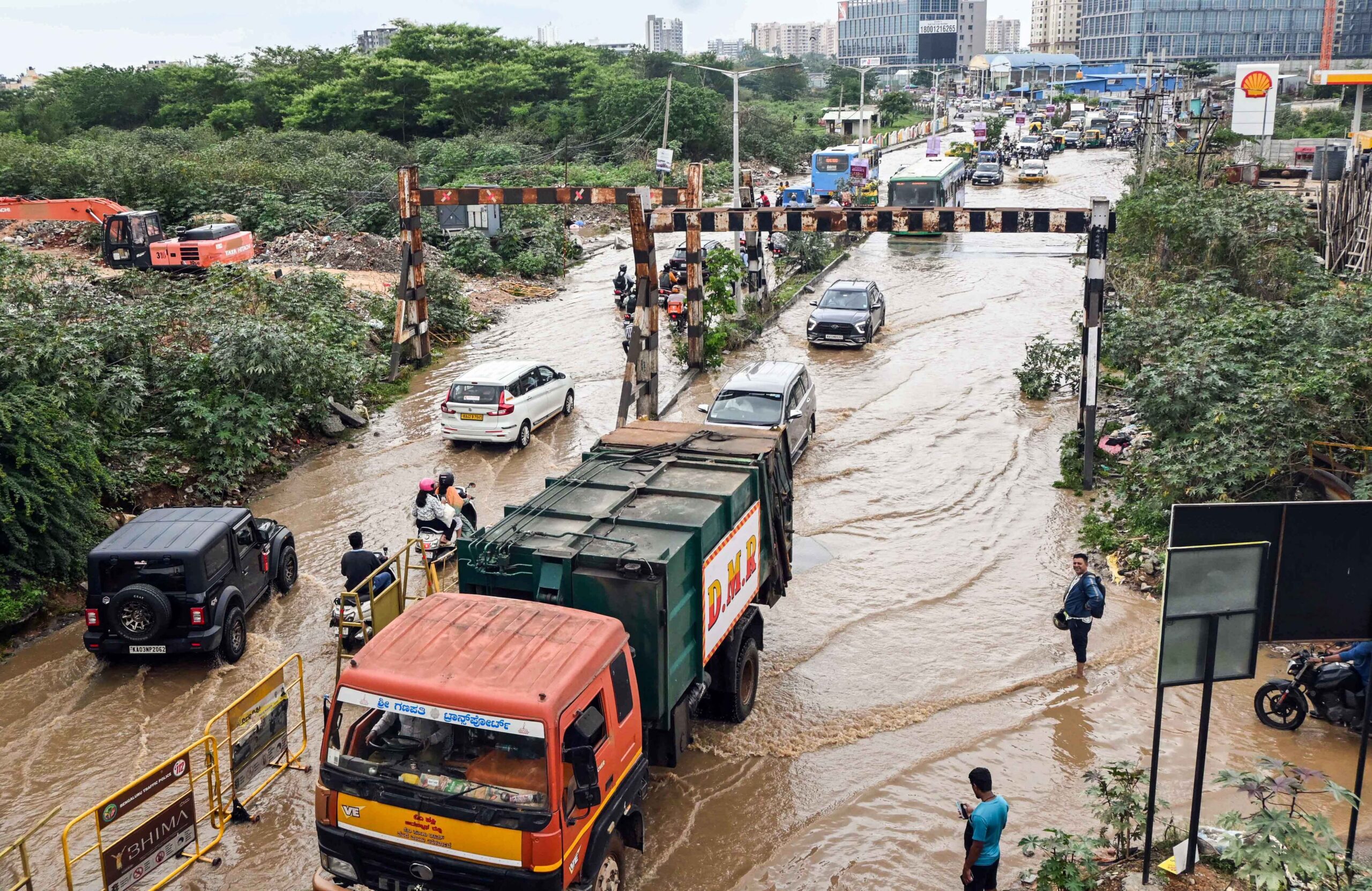
Light rain disrupted traffic movement across Bengaluru on Monday, with wet roads and slower vehicle speeds affecting parts of the city as another spell of showers remained possible on Tuesday. The episode once again exposed how even relatively modest rainfall can strain Bengaluru’s road network, particularly when precipitation coincides with peak commuting periods.
The city experienced intermittent showers on August 24, with traffic movement slowing on several important corridors. Weather forecasts indicate that Bengaluru could continue to see cloudy conditions and isolated thunderstorms, keeping the possibility of further disruption during the working week.The Bengaluru rain episode is significant because the city’s mobility problems are amplified when roads become wet. Reduced visibility, slower vehicle speeds and temporary water accumulation can quickly turn existing bottlenecks into longer traffic queues. Previous rain spells have similarly affected the Outer Ring Road and other heavily travelled corridors. For daily commuters, the consequences extend beyond longer journey times. Bus passengers can face delays when traffic slows, while pedestrians and cyclists are particularly vulnerable where footpaths become waterlogged or continuous walking infrastructure is absent. The recurring disruption also raises questions about stormwater management.
Bengaluru’s extensive built-up areas contain large stretches of roads, parking surfaces and buildings that limit natural water absorption. When drainage channels are blocked, undersized or poorly maintained, even short spells of rain can result in localised accumulation. The city’s response therefore needs to move beyond clearing water after roads flood. Regular drain maintenance, protection of natural waterways and restoration of lakes and wetlands can increase the capacity of urban areas to absorb and temporarily store rainfall. Better road design, including properly graded surfaces and functioning pedestrian drainage, can further reduce disruption. The Bengaluru rain pattern also highlights the importance of coordinating weather preparedness with transport management. Real-time traffic information, temporary traffic controls and reliable public transport can help reduce the impact of sudden showers, particularly during morning and evening peaks. Current forecasts suggest that rainfall activity could remain intermittent rather than continuously heavy. That makes preparedness even more important: disruption can result from the timing and intensity of a short shower rather than from exceptionally high daily rainfall totals.
For Bengaluru, the longer-term objective should be to make routine monsoon showers less disruptive to everyday life. Stronger drainage, safer pedestrian routes, resilient roads and dependable public transport can help the city absorb rainfall without turning every wet commute into a mobility problem.