


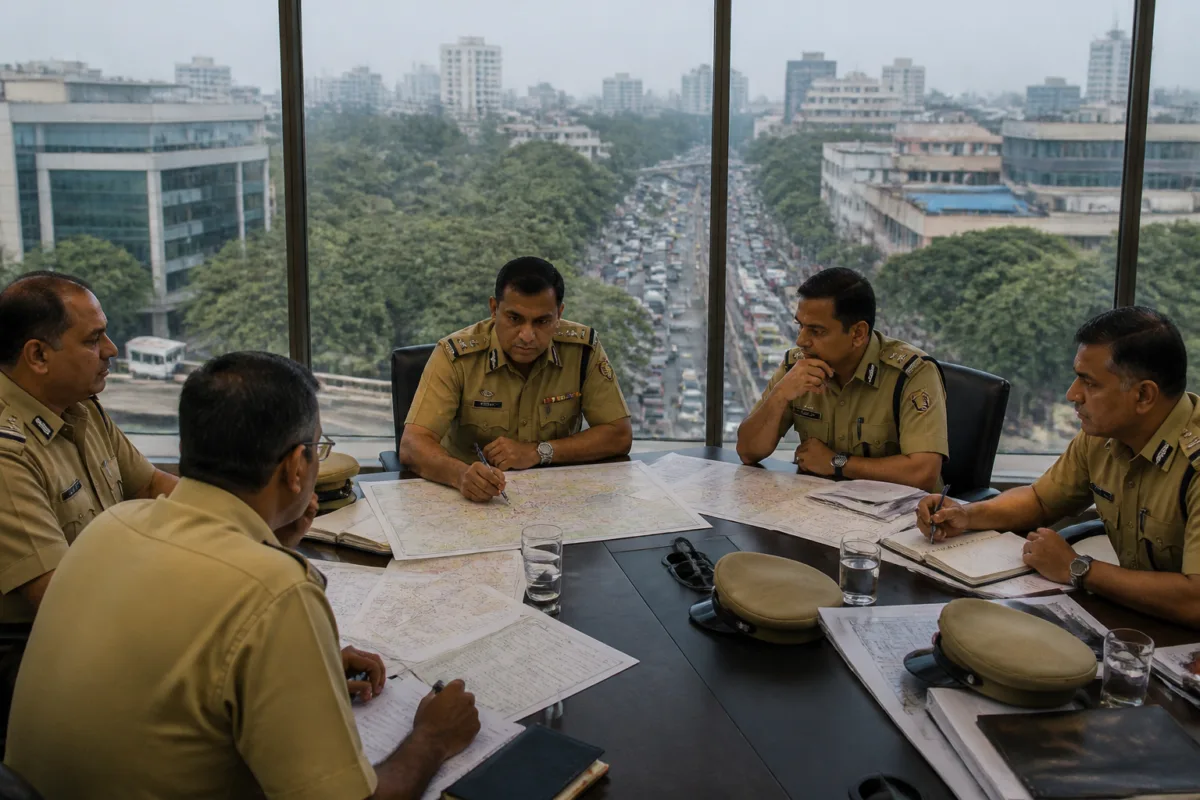
Bengaluru’s five-commissionerate policing model will retain the Central Crime Branch (CCB) in a redesigned form, while shifting some supervisory and licensing responsibilities to zonal commissioners, Chief Commissioner of Police R Hithendra has said.
In an interview with Deccan Herald, Hithendra said an official order redesignates the CCB as the Anti-Rowdy Squad. The specialised wings will remain within the structure, while the earlier East–West division will be modified to fit the new arrangement.
Two DCP posts for the Anti-Rowdy Squad are currently vacant and will remain separate from the CCB’s two DCP positions, which will investigate cases, he said. The Anti-Rowdy Squad will deal with crimes that have city-wide implications.
The new zonal DCP for Headquarters and Crimes will supervise crime and investigations in the respective zones. Hithendra said the arrangement draws on models used in Belagavi, Kalaburagi, Mysuru and Mangaluru, while the additional chief commissioner layer was created specifically for Bengaluru.
Under the structure, the chief commissioner will sit between the Director General and Inspector General of Police and the five zonal commissioners. Hithendra said the layer was intended to ensure closer supervision, since placing five or six city commissioners directly under the state police chief could limit the time available for oversight.
Coordination between the six commissioners is being handled through twice-daily group calls at 8 am and 8 pm. Each commissioner briefs the group on the day’s agenda, problems and priorities, with decisions taken by the chief commissioner binding on the participating officers, according to Hithendra.
The restructuring also places emphasis on reorganising police stations according to workload. Hithendra said some stations have relatively low staffing despite higher crime loads, while others have more staff and fewer cases. A detailed assessment will be undertaken after he reviews the functioning of individual stations.
That exercise could affect how citizens experience policing at the station level, although the interview does not specify a timetable, staffing formula or criteria for reallocating personnel. The report also does not provide current station-wise figures on staff strength, case volumes or response times.
Hithendra identified getting the five commissionerates and the traffic commissionerate operational as the immediate priority. He also listed traffic, drugs, women’s safety and cyber security among the policing issues requiring attention.
The new arrangement changes where citizens should approach for certain licences and permits. Applications relating to a specific zone, such as permission to keep a weapon at home, a petrol bunk licence or a cracker permit, should be taken to the relevant zonal commissioner. City-wide permissions, including permission to carry a weapon across Bengaluru, should be handled by the chief commissioner’s office.
Hithendra said citizens should first approach police stations for grievances, with unresolved complaints escalating to the zonal commissioner and then to his office. He also said officers found to have intentionally committed wrongdoing would face legal action if evidence established the misconduct.
The administrative model therefore combines central coordination with zonal responsibility. Its effectiveness will depend on how clearly responsibilities are communicated, whether station staffing reflects actual workloads and how quickly the new offices become operational. The interview confirms these priorities but does not yet establish implementation outcomes or measurable improvements in policing services.

