


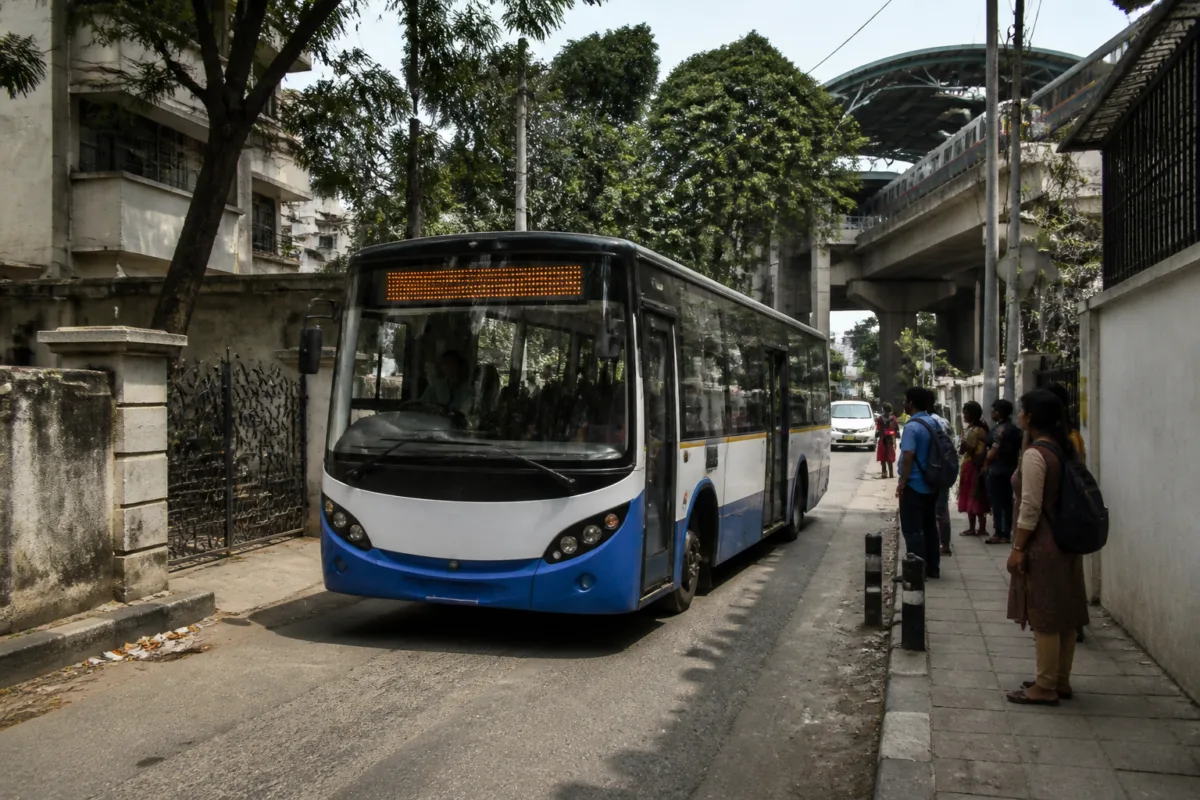
The Bengaluru Metropolitan Transport Corporation (BMTC) has floated tenders to purchase 200 minibuses for Metro feeder routes, seeking smaller vehicles that can serve roads around stations where its existing feeder buses may be less suitable.
The tenders, issued on November 23, cover 100 buses measuring seven metres and another 100 measuring 11 metres. Bids are due by December 22, 2026, and are scheduled to be opened on January 2, 2027, according to the tender documents cited by Deccan Herald.
The buses will conform to BS-4 emission norms and will include LED destination display boards, voice announcement systems, automatic location tracking devices and emergency buttons. BMTC plans to deploy the buses on a 30-day trial run, the report said.
The procurement follows attempts by BMTC to obtain smaller electric buses through leasing. Those efforts did not succeed after the manufacturer quoted high bid amounts, according to the report. The corporation subsequently decided to purchase diesel buses instead. The state government included the proposal in a budgetary announcement, and the state Cabinet approved it on October 6.
BMTC currently operates 255 nine- and 12-metre buses as Metro feeders. The proposed smaller buses are intended to improve the corporation’s ability to operate on narrow lanes around Metro stations, although the report does not specify the routes or stations where they will initially be deployed.
The procurement is separate from BMTC’s planned leasing of 4,500 electric buses under the PM E-Drive scheme. Of those electric buses, 200 will be seven-metre, non-air-conditioned vehicles intended for operation within a five-kilometre radius of Metro stations, according to the report.
As of November 7, BMTC had a fleet of 6,910 buses, including 1,779 electric buses, and operated 6,243 schedules daily. The additional feeder capacity is aimed at addressing the connection between Metro stations and surrounding neighbourhoods, where station access depends on road conditions, lane width and the availability of local bus services.
The tender process and the planned trial will determine when the buses are procured and how they are assigned across the network. The available report does not provide an award date, purchase cost or details of the proposed operating routes.

