


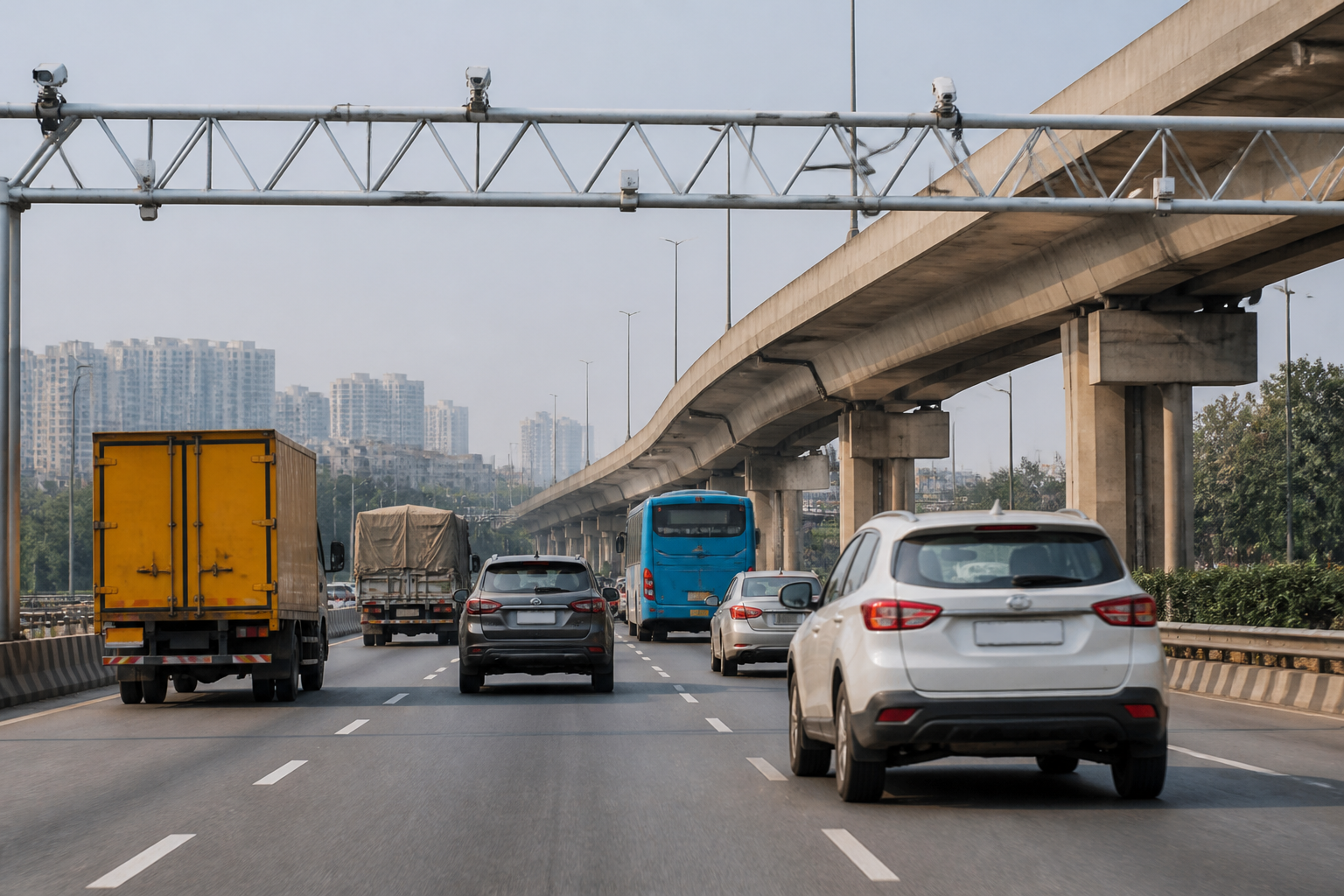
Bengaluru’s Electronic City Flyover and Bengaluru–Nelamangala Highway are set to adopt Multi-Lane Free Flow (MLFF) tolling, allowing vehicles to pass through toll points without stopping at booths. The proposed system will use Automatic Number Plate Recognition (ANPR) cameras and FASTag-linked payments to collect tolls electronically while vehicles remain in motion.
The two highway stretches are expected to become the first in Karnataka to adopt MLFF, a system already operational on select national highways in parts of the country, including Gujarat. More than one lakh vehicles, including cars and heavy commercial vehicles, use the two corridors every day.
Under the proposed arrangement, ANPR cameras installed at key points will identify vehicles and read their registration plates. The applicable toll will then be deducted automatically from the vehicle’s FASTag account. The system is intended to remove queues at conventional toll plazas, where vehicles currently slow down or stop during FASTag transactions.
“The MLFF system is being proposed to ensure smoother movement of vehicles and reduce congestion,” a National Highways Authority of India official was quoted as saying. The change would replace toll lanes and booths with camera-based enforcement across the designated stretches.
On the Electronic City corridor, authorities plan to remove the existing toll booths on the 10-km Electronic City Flyover and the 14-km Attibele stretch once MLFF is implemented. The Bengaluru–Nelamangala Highway, beginning at Goraguntepalya, will also be brought under the system.
The proposed shift will not eliminate toll payments. Vehicles with insufficient FASTag balances will be identified, and the owner will receive a notice allowing 72 hours to clear the outstanding toll. Failure to pay within that period could result in a charge equal to twice the toll amount.
The toll structure on some stretches is also expected to change. The 20-year private-participation agreement for the Electronic City Flyover has ended, bringing the stretch under NHAI. The authority is set to revise the toll structure, with a likely increase in charges, while scrapping tolls for two-wheelers.
The Silk Board–Tamil Nadu border stretch is also expected to move from the rules framed by NHAI in 1997 to the 2009 rules, enabling a revision of toll charges. The reported proposal therefore combines a new electronic collection system with changes to the rules governing toll rates.
Implementation will require the installation and operation of ANPR cameras, reliable FASTag account matching and an enforcement process for vehicles with insufficient balances. NHAI’s proposed next steps are the removal of existing booths and the transition to MLFF on the identified Bengaluru corridors.
