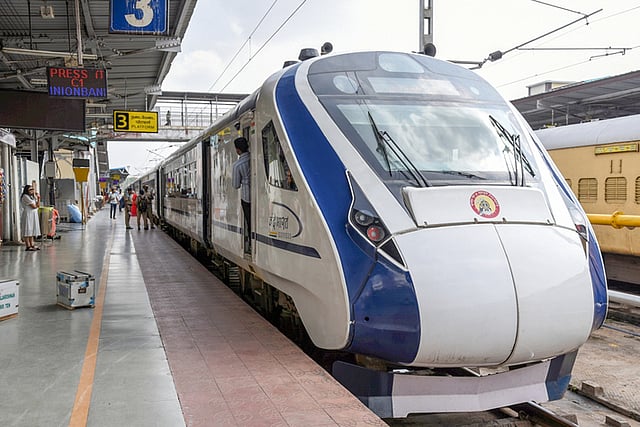
Bengaluru Ernakulam Train Gets More Passenger Capacity
The Ernakulam–Bengaluru Vande Bharat Express is set to receive additional coaches, taking the train’s composition to 16, in a move aimed at easing sustained passenger demand on one of the busiest inter-state rail links connecting Kerala with Karnataka. The expansion could improve seat availability while strengthening rail as a lower-emission alternative to road and air travel.
The service currently operates with fewer coaches than the proposed 16-coach configuration. The expansion comes as demand for faster inter-city rail connectivity between southern states continues to grow, particularly among business travellers, students and families travelling between Kerala and Bengaluru. Adding coaches is a relatively direct way of increasing capacity without creating an entirely new train path. For passengers, the immediate benefit should be a larger number of seats on existing services. It could also reduce some pressure on heavily used overnight trains and road-based services, although the overall impact will depend on schedules, fares and how effectively additional capacity is distributed. The Bengaluru Ernakulam Vande Bharat corridor has wider economic significance because it connects two major urban economies with strong links in technology, services, education, healthcare and tourism. Bengaluru is a major employment centre for residents of Kerala, while Ernakulam and the wider central Kerala region serve as important commercial and industrial hubs. Improved rail capacity can also support more sustainable regional mobility.
A well-utilised electric railway service can move large numbers of passengers with less road-space consumption than individual cars and buses. However, the environmental benefit is strongest when rail expansion is supported by convenient public transport at both ends of the journey. The additional coaches could therefore increase pressure on stations and connecting transport systems. Better pedestrian access, reliable city buses, taxis and last-mile services will be important if increased rail capacity is to translate into smoother journeys rather than simply shifting congestion from the railway network to station approaches. For Bengaluru, stronger inter-state rail connections also have implications for the city’s broader growth pattern. As housing costs and employment opportunities push more people to consider longer-distance travel, dependable regional transport can influence where workers choose to live and how frequently they commute. The Bengaluru Ernakulam Vande Bharat expansion should consequently be viewed as part of a wider southern transport network rather than an isolated train upgrade.
Increasing capacity on existing rail infrastructure can help accommodate travel demand without requiring equivalent expansion of highways or airport capacity.The next challenge will be maintaining punctuality and service quality as passenger volumes increase. If additional capacity is matched with integrated last-mile transport and dependable scheduling, the expanded service could make inter-state rail a more practical component of southern India’s increasingly connected urban economy.