


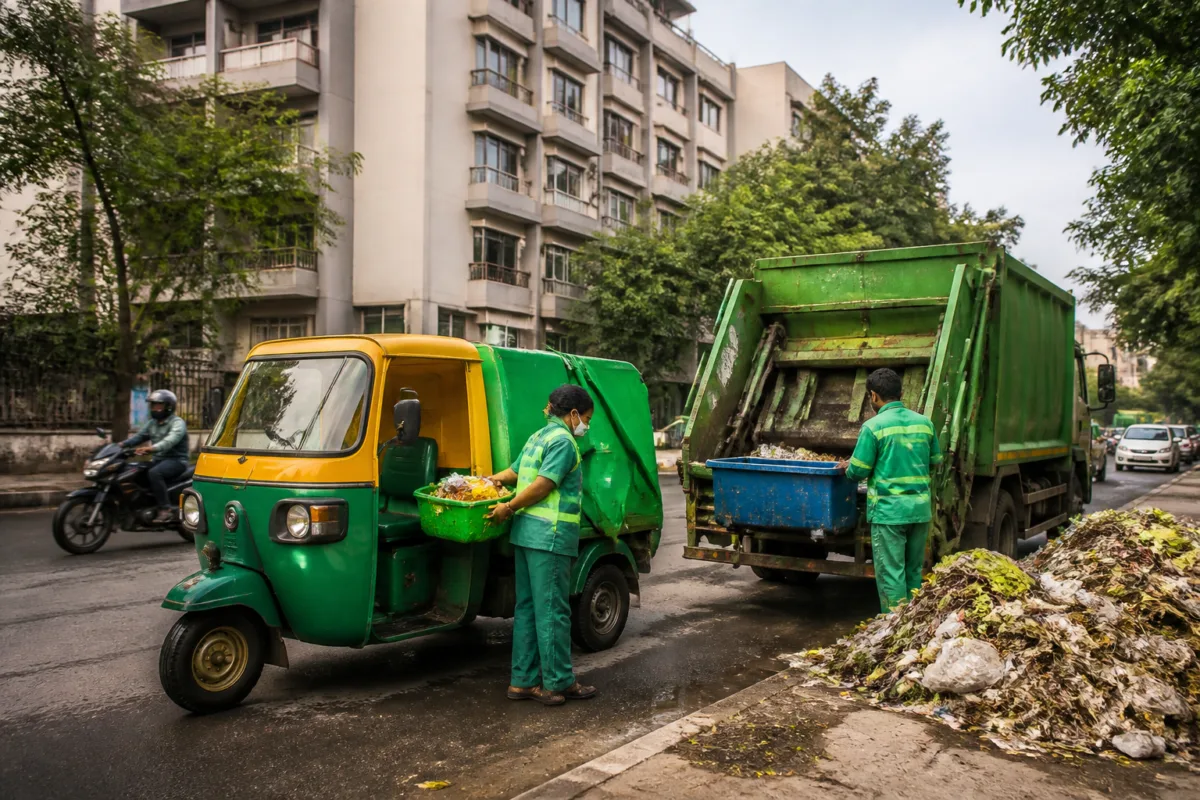
Bengaluru’s waste management system is set for a major vehicle upgrade after the Karnataka Cabinet approved the purchase of 4,900 GPS-enabled vehicles for waste collection and transportation across areas under the Greater Bengaluru Authority. The five-year plan has a revised estimated cost of ₹1,494.70 crore, Greater Bengaluru Development Minister Krishnaraja Byre Gowda said after the Cabinet meeting, according to Prajavani.
The approved fleet will include 1,900 three-wheelers and 3,000 four-wheelers. The vehicles, along with the staff required for waste collection and disposal, will be provided by the successful tenderer. The state government will now invite tenders for implementing the programme.
The new vehicles are expected to have a substantially higher carrying capacity than the three-wheelers currently in use. Existing vehicles can transport about half a tonne of waste, while the new vehicles will have capacities ranging from three to five tonnes, the minister said. GPS tracking is intended to provide operational monitoring of collection and transport services.
The approved project will cover the areas of two city corporations within the Greater Bengaluru Authority’s jurisdiction for five years. Byre Gowda said that providing waste-management services across all five corporations for seven years could require about ₹4,500 crore. The difference indicates that the immediate approval is limited in geographic and temporal scope rather than representing a full seven-year arrangement for the entire expanded metropolitan administration.
The Cabinet also approved a set of water and sewage infrastructure projects for Bengaluru. Two water reservoirs will be built at a total cost of ₹61.50 crore to improve drinking-water supply and strengthen storage capacity. A reservoir with a capacity of 50 million litres per day will be constructed at Kaval Byrasandra village at a cost of ₹22.50 crore, while another with a capacity of 22 million litres per day will be built in the Banashankari area for ₹39 crore.
The Kaval Byrasandra project is expected to benefit about 72,000 residents, according to the minister. The stated objective is to increase storage capacity, supply water in line with demand and improve the resilience of the urban distribution system. The source report does not provide a completion timeline for either reservoir.
For sewage infrastructure, the Cabinet approved a 10-million-litres-per-day sewage treatment plant at Kacharakanahalli at an estimated cost of ₹51.37 crore. The project is intended to improve the sewerage system in the area, although the approval details reported by Prajavani do not specify the construction schedule or the agency responsible for day-to-day operation after completion.
The government has also approved the preparation of a GIS-based master plan for Bengaluru and surrounding urban areas at a cost of ₹16.60 crore. The plan will collect geographic information and study road connectivity, urban expansion and land use. It is intended to support long-term guidance for development works in planning areas as the city expands and population growth increases pressure on infrastructure.
The waste fleet, water reservoirs, sewage treatment plant and metropolitan master plan address different parts of Bengaluru’s urban-service chain. The immediate implementation milestones are the tender for the GPS-enabled vehicles and the subsequent execution of the approved water, sewage and planning projects.

