


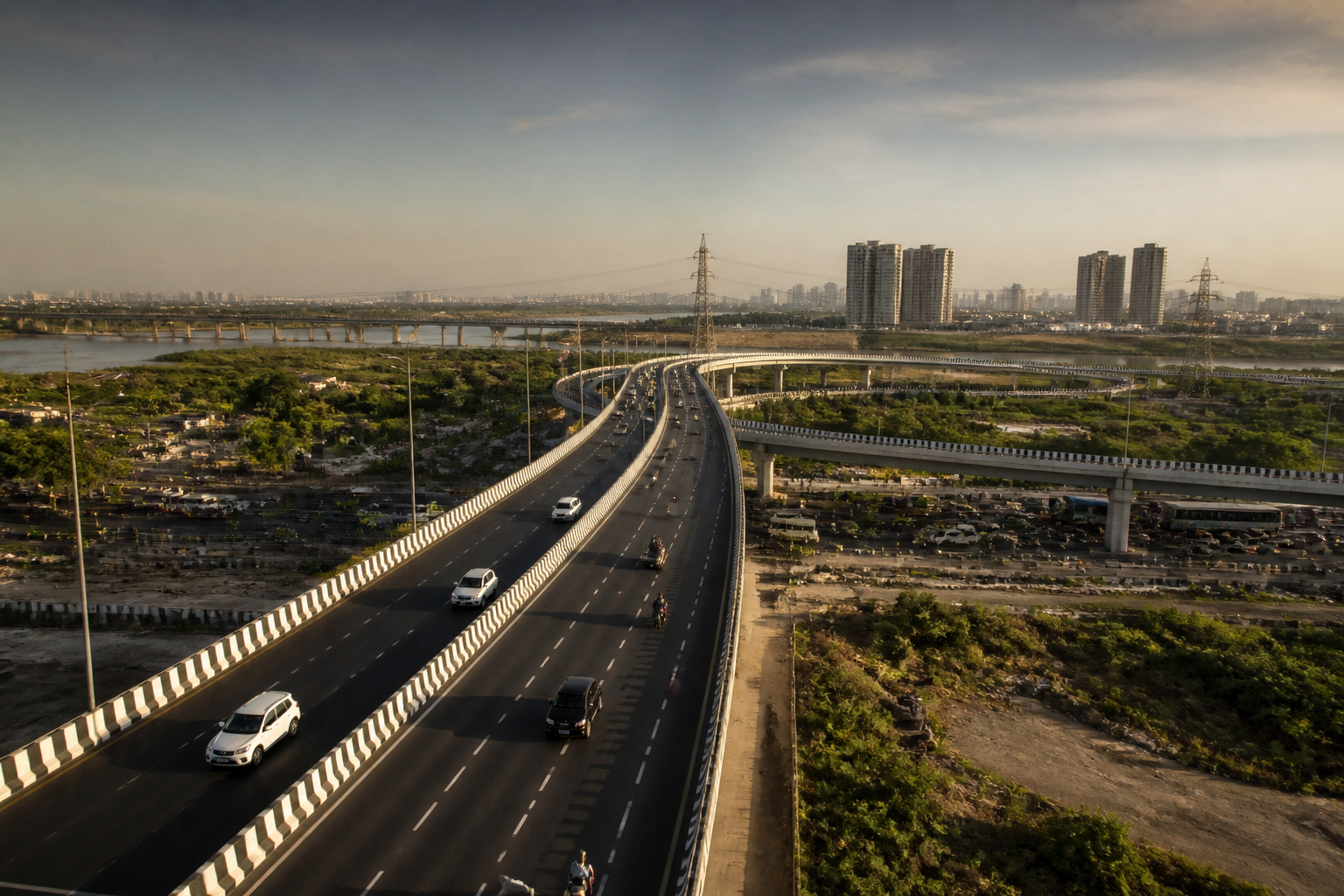
Delhi’s Barapullah Phase III flyover will open to the public on September 29, creating a signal-free connection between Mayur Vihar and Sarai Kale Khan and reducing the reported travel time to around 15 minutes, Delhi PWD Minister Parvesh Sahib Singh said.
Union Home Minister Amit Shah is scheduled to inaugurate the 3.5-km elevated corridor, which is expected to improve connectivity for commuters travelling from Noida and East Delhi towards South Delhi. The route is also expected to ease traffic movement along National Highway 24, the DND Flyway and Ring Road.
The project was approved in 2014 and construction began in 2015, with completion originally targeted for 2017. Its opening follows more than a decade of delays linked to a seven-year land acquisition dispute, environmental approvals, technical challenges associated with building across the Yamuna floodplain and prolonged administrative hurdles.
The revised cost of the project is approximately Rs 1,635 crore. Singh said the project had seen accelerated progress over the past year and a half through continuous monitoring, regular inspections and coordination between multiple agencies. He said he had visited the site several times and worked with officials to address bottlenecks.
The three-lane flyover will have eight loops, with four each at Sarai Kale Khan and Mayur Vihar. Officials expect the corridor to reduce the journey from East Delhi to the All India Institute of Medical Sciences from the current 35-40 minutes to about 15 minutes, subject to traffic and operating conditions after the opening.
The project includes a dedicated cycle track and a special bridge structure over the Yamuna floodplain. It is also expected to improve access to the multi-modal transport hub at Sarai Kale Khan, which brings together services and facilities associated with the National Capital Region Transport Corporation, Indian Railways, the Inter-State Bus Terminal, the Delhi Metro Rail Corporation and the Delhi-Mumbai Expressway.
Officials have estimated that the flyover could reduce carbon dioxide emissions by about two tonnes a day. They have equated that reduction with the absorption capacity of nearly 30,000 trees. The estimate forms part of the project’s stated transport and environmental benefits, although the actual impact will depend on traffic volumes, route use and congestion patterns after the corridor becomes operational.
The project had also required clearance for tree transplantation. According to the PWD minister, intervention with the Centre helped secure the necessary clearance, allowing work to progress during the last year and a half. The September 29 inauguration is the next formal milestone in a project whose deadlines were repeatedly extended.
