


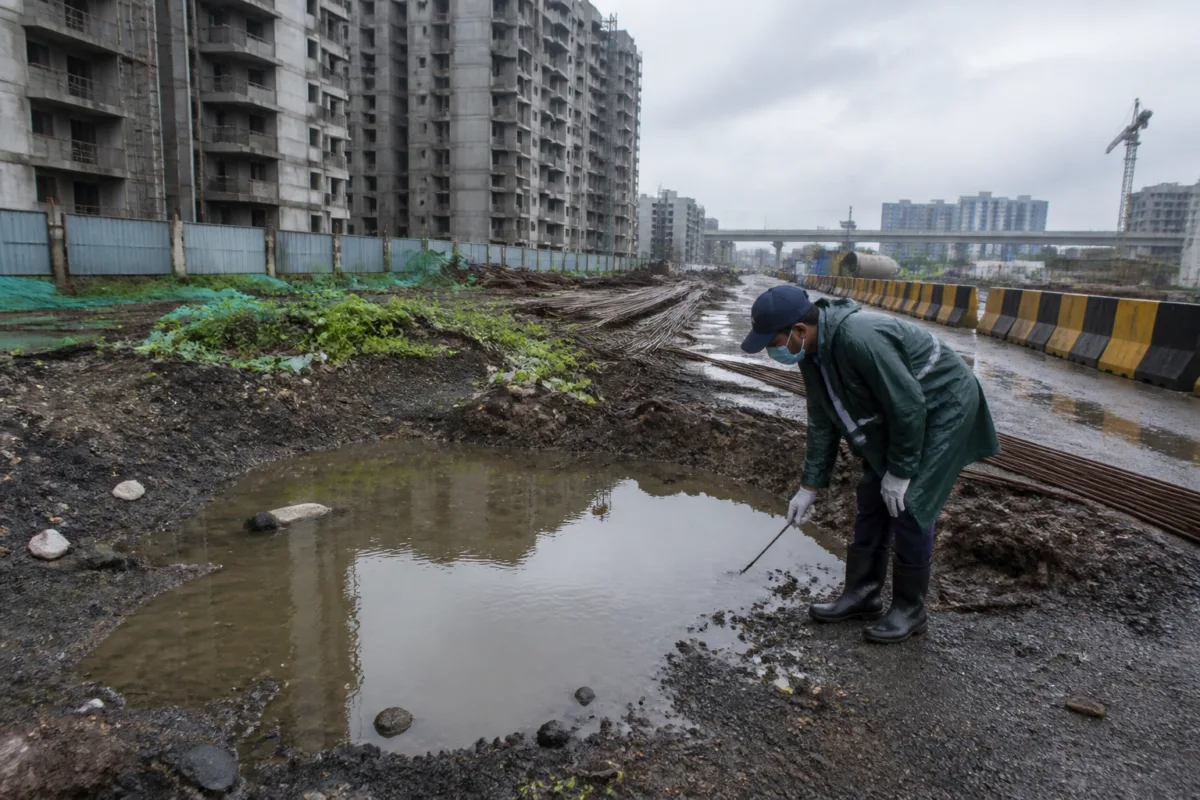
Residents of Pune’s Baner-Balewadi area have raised concerns about a reported rise in dengue and malaria cases, linking the mosquito threat to stagnant water at construction sites, sewage leaks, road excavations and inadequate water supply that has increased dependence on private tankers.
The concerns have emerged as construction activity continues across the rapidly developing corridor. Work on Metro Line 3 between Hinjewadi and Shivajinagar is progressing through parts of Baner-Balewadi, where excavated areas, construction materials and pits collecting rainwater are being identified by residents as potential mosquito-breeding sites.
Residents have also complained of sewage lines breaking at several locations and wastewater flowing onto roads. They have sought intensified preventive action from the municipal corporation and the health department, including mosquito-control drives, fogging and larvicide spraying in housing societies and other vulnerable locations.
The Ramnadi, which flows through Baner, has become another focus of concern. Residents have alleged that sewage entering the river and the spread of aquatic weeds are contributing to increased mosquito nuisance in surrounding neighbourhoods. The report does not establish a consolidated official case count for dengue or malaria in the area, but records local concerns about patients being reported in several housing societies.
Water-storage practices are also a public-health concern in the locality. Several housing societies continue to depend on private tankers because of inadequate municipal water supply, leading them to store larger quantities of water. Uncovered tanks, drums, plant containers, discarded tyres and empty vessels can allow mosquitoes to breed if water is not replaced or drained regularly.
The state health department has directed authorities in highly vulnerable areas to conduct fever surveys, carry out insecticide spraying, introduce guppy fish into permanent water bodies where required and use fogging at necessary locations. These measures are intended to identify suspected cases and reduce mosquito breeding, while local implementation will require coordination between municipal health teams, housing societies, construction sites and residents.
Govind Dangat, assistant commissioner of the Aundh-Baner regional office, advised residents not to allow water to collect in or around their homes. He said water tanks and drums should remain covered, while water in flowerpots, tyres and unused vessels should be changed regularly. Residents experiencing fever symptoms were advised to seek medical examination promptly.
Advocate Parshuram Tare of the Baner-Balewadi Citizens’ Forum called for mosquito-control campaigns, fogging and larvicide spraying in housing societies. The immediate response now rests on identifying stagnant-water points, addressing sewage leaks and ensuring that preventive measures reach the locations where construction and water-storage conditions are creating breeding risks.

