


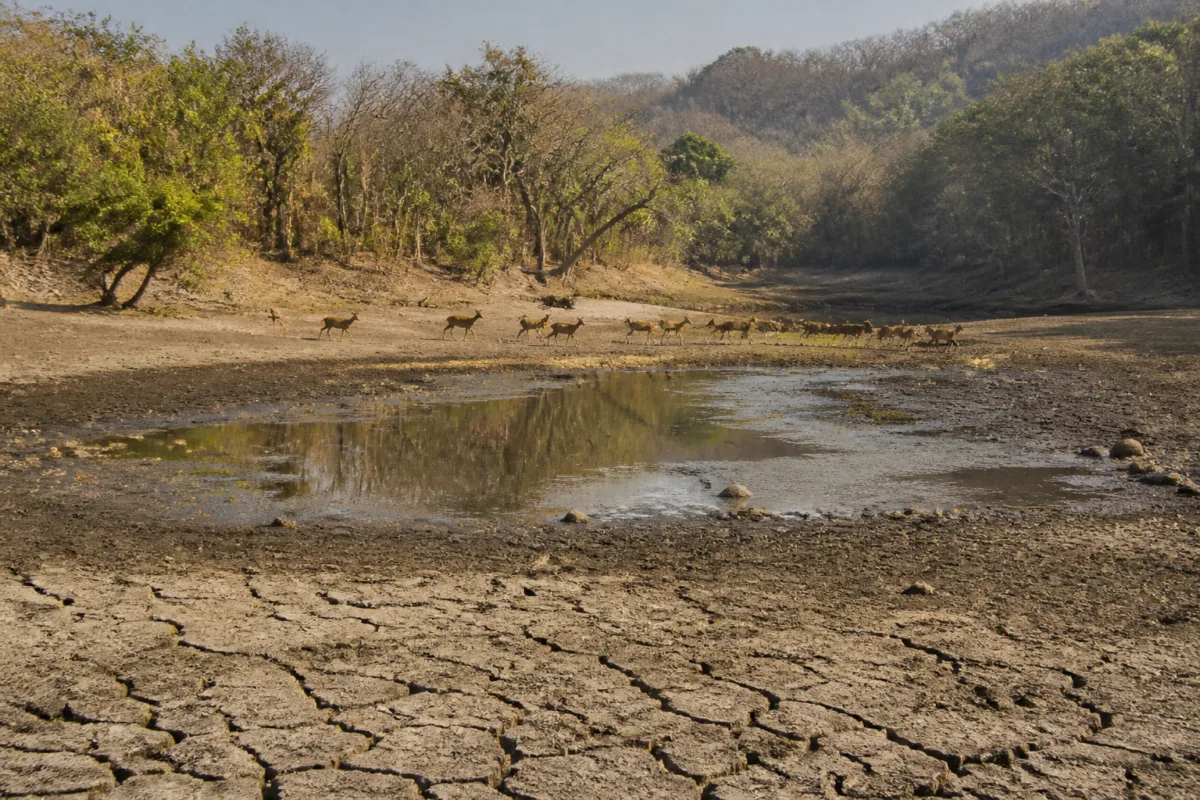
A deficient rainfall season has left most lakes and water bodies in Bandipur Tiger Reserve nearly dry, forcing wildlife to move towards the Kabini and Nugu backwaters in search of water. The forest department has deployed 56 solar-powered borewell pumps to recharge water holes and is monitoring water availability across the reserve daily.
Bandipur typically receives between 900 mm and 1,200 mm of rainfall annually and has 420 lakes spread across 13 ranges. Only 95 of these lakes are perennial, while the remaining 325 depend on rainfall for replenishment. The current dry spell has therefore placed much of the reserve’s water network under pressure, with rising temperatures further depleting water in lakes and tanks.
The movement of wildlife towards the Kabini and Nugu backwaters reflects the uneven distribution of water sources within the reserve. While the backwaters continue to provide accessible water, the forest department is using solar-powered borewell systems to recharge water holes in areas where natural sources have weakened. The intervention is intended to ease scarcity and reduce pressure on the reserve’s remaining water bodies.
L Nandeesh, director of Bandipur Tiger Reserve, told the Times of India that moderate to heavy rain last week had provided some relief to wildlife. However, the department continues to assess water availability in the lakes and monitor conditions on a daily basis.
The shortage has also affected the reserve’s bird activity. Bandipur is home to more than 300 bird species and generally sees migratory birds arrive and nest between July and October. No migratory birds had been sighted so far this year, according to a local bird watcher quoted in the report, who linked the absence to changing weather and rainfall patterns.
The reserve’s water infrastructure is divided between perennial sources and rain-dependent lakes, making rainfall variability a direct operational concern for forest managers. The 56 solar-powered borewell pumps are being used as a response measure while the department tracks whether recent rainfall improves water levels across the 13 ranges.
The current situation also places attention on the role of backwaters and managed water holes in supporting wildlife during dry periods. The department has not announced that the scarcity has ended. Its immediate next steps are to continue daily monitoring, assess lake conditions and use the solar-powered pumps to maintain water availability where required.

