


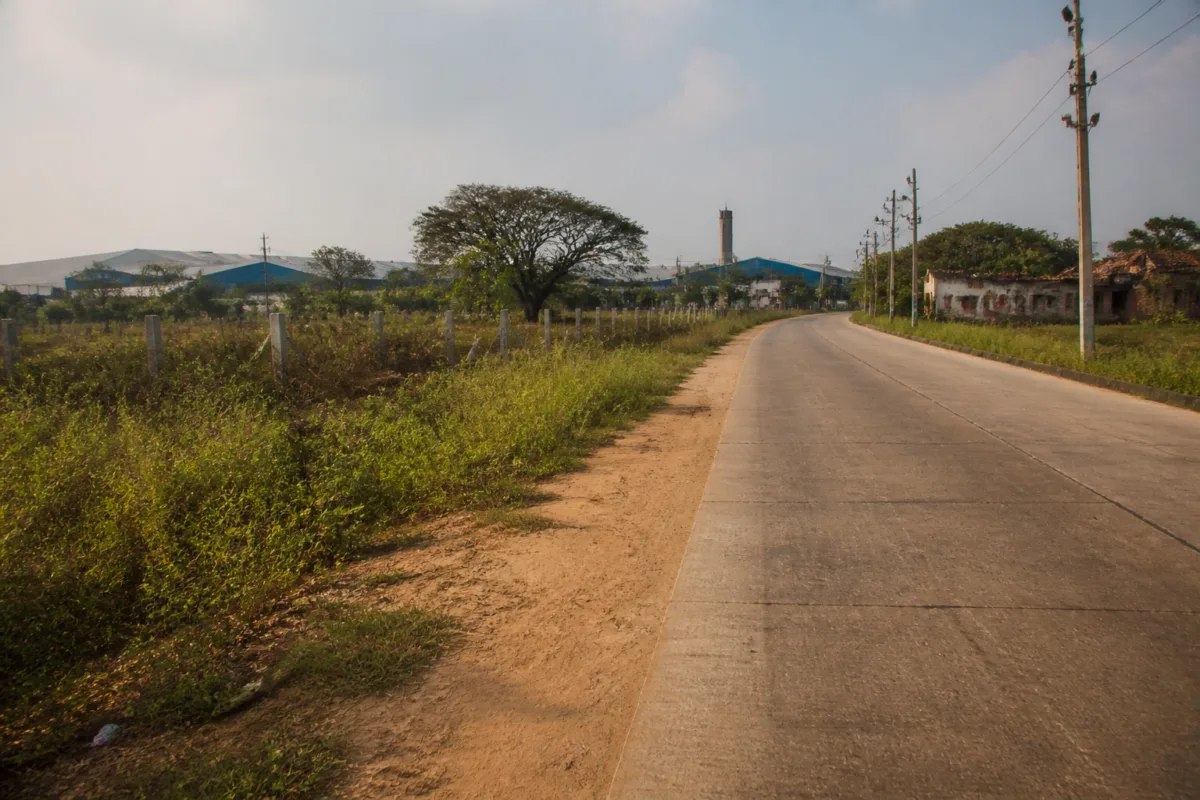
Union minister Sukanta Majumdar has said Ashok Leyland will establish a truck manufacturing plant in Singur, West Bengal, reviving the prospect of industrial activity at the site associated with the abandoned Tata Nano project. The proposed facility has not yet been supported by publicly reported details from the vehicle manufacturer on investment, employment, land, construction or commissioning.
Majumdar, the Union minister of state for education, made the announcement on Saturday after Prime Minister Narendra Modi’s programme at IIT Kharagpur. He said the BJP government was committed to bringing industry back to Singur and that work on the heavy-vehicle project would begin soon.
The statement followed West Bengal Chief Minister Suvendu Adhikari’s disclosure on November 5 that the state government had held preliminary discussions with Ashok Leyland about establishing a heavy vehicle manufacturing unit in Singur. Adhikari had cautioned at the time against premature announcements and said the government would prioritise projects capable of implementation over publicity-driven memorandums of understanding.
The available account does not identify the proposed site, the land arrangement, the scale of the facility, the investment outlay, projected employment or a construction schedule. It also does not report a formal announcement by Ashok Leyland confirming the project. These details will be central to determining whether the announcement represents an industrial commitment or an early-stage proposal.
Singur carries significant political and land-use history. The Left Front government had acquired around 997 acres for Tata Motors’ proposed small-car factory. A prolonged agitation against the acquisition of farmland led Tata Motors to withdraw the Nano project in 2008 and shift production to Sanand in Gujarat.
The agitation became a major political turning point in West Bengal. Mamata Banerjee’s Trinamool Congress, then in opposition, came to power in 2011, ending the Left Front’s 34-year rule. Following a Supreme Court verdict, the state government returned the acquired land to farmers who had been unwilling to part with it. The abandoned factory infrastructure was subsequently dismantled.
The proposed Ashok Leyland facility is therefore being presented against a site whose industrial future has remained politically sensitive. For Singur, a functioning manufacturing unit could have implications for industrial land use, transport requirements, local jobs and supporting commercial activity. Those implications cannot yet be assessed because the project’s physical and financial parameters have not been disclosed.
Majumdar also criticised successive state governments over Bengal’s failure to attract major industrial opportunities, citing the semiconductor sector as an example. He separately accused the Trinamool Congress government of failing to convert industrialisation promises into concrete projects.
The next substantive test for the proposal will be whether Ashok Leyland or the state government releases a formal project description covering the site, approvals, investment, production plans and implementation timeline. Until then, the Singur facility remains an announcement attributed to a Union minister rather than a fully documented manufacturing project.

