


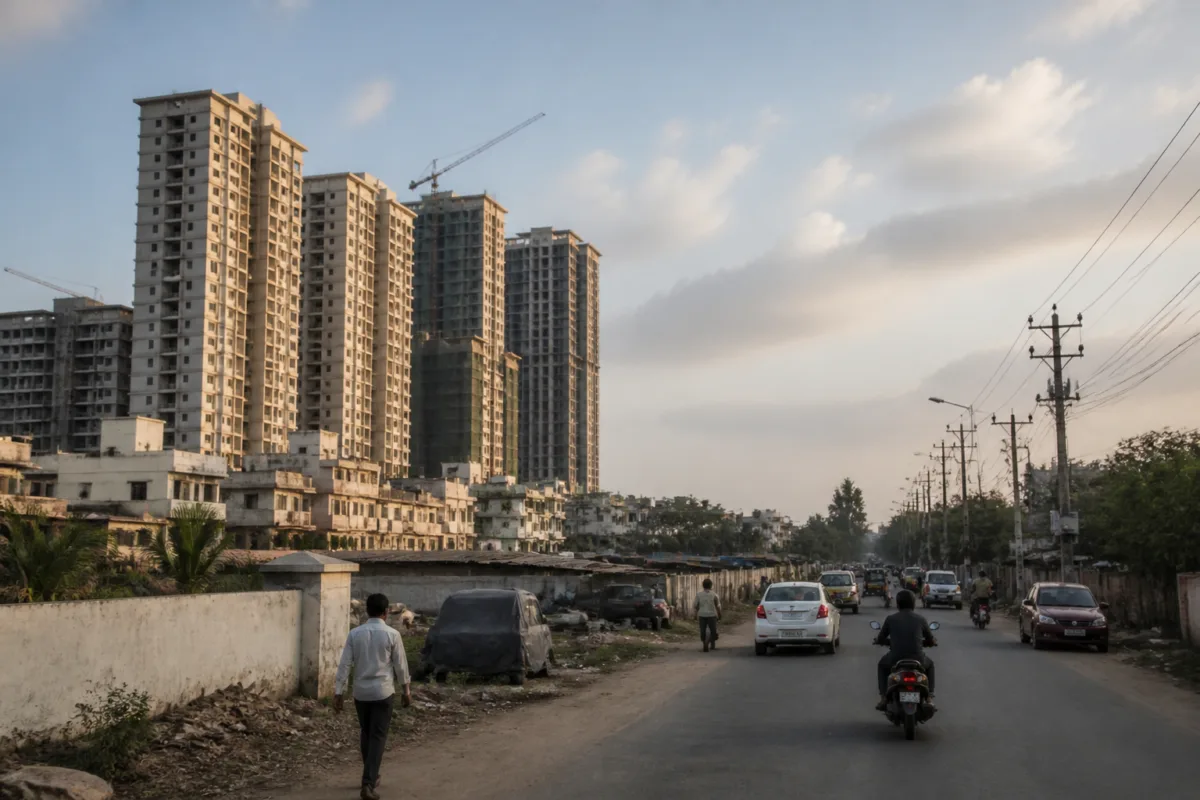
Pune FSI rules came under scrutiny at a Pune Municipal Corporation general-body meeting, where councillors across political parties raised concerns that high-rise construction was expanding faster than the public infrastructure needed to support it.
According to Civic Mirror, councillors said the Unified Development Control and Promotion Regulations (UDCPR) had contributed to a growing concentration of tall buildings while reducing the availability of land for public facilities. They linked the reported imbalance to pressure on roads, parking, water supply and the sewerage network.
The concerns are significant for residents purchasing homes in new developments. The councillors said that although construction activity had accelerated through increased floor space index (FSI) provisions, basic civic services had not developed at the same pace. As a result, residents were being forced to struggle for essential facilities despite spending substantial amounts on housing, the report said.
Ganesh Bidkar, the civic body’s house leader, reportedly said that the “demon” of FSI could overwhelm the city. He called for changes to the UDCPR and said a proposal would be sent to the state government after a broader discussion.
Bidkar also said premium FSI had increased the municipal corporation’s revenue. However, he reportedly linked the use of transferable development rights (TDR) to a slower land-acquisition process, creating difficulties in securing land required for development projects.
Mayor Manjusha Nagpure agreed that the regulations needed improvement from the perspective of citizens’ health and the environment, according to the report. A special meeting is expected to be held to gather members’ suggestions. Following expert study, the civic body would seek regulatory changes under Section 37(1) of the Maharashtra Regional and Town Planning Act, the report said.
City engineer Aniruddha Pawaskar reportedly acknowledged that the UDCPR had reduced the proportion of parking, amenity spaces and open areas, while increasing pressure on roads, water supply and sewerage infrastructure.
The city is also pursuing transport projects, including the High Capacity Mass Transit Route (HCMTR), inner and outer ring roads, and metro expansion. Pawaskar said additional FSI had been provided around metro corridors to encourage metro use. He also said increasing housing availability was one of the objectives behind the provision.
The discussion highlights a central planning challenge: higher development potential can support housing supply and municipal revenue, but its benefits depend on whether land for public facilities and the capacity of civic networks keep pace. The immediate next steps identified in the report are a special municipal discussion, an expert study and preparation of a proposal for the state government. The final status of any amendment was not reported.

