


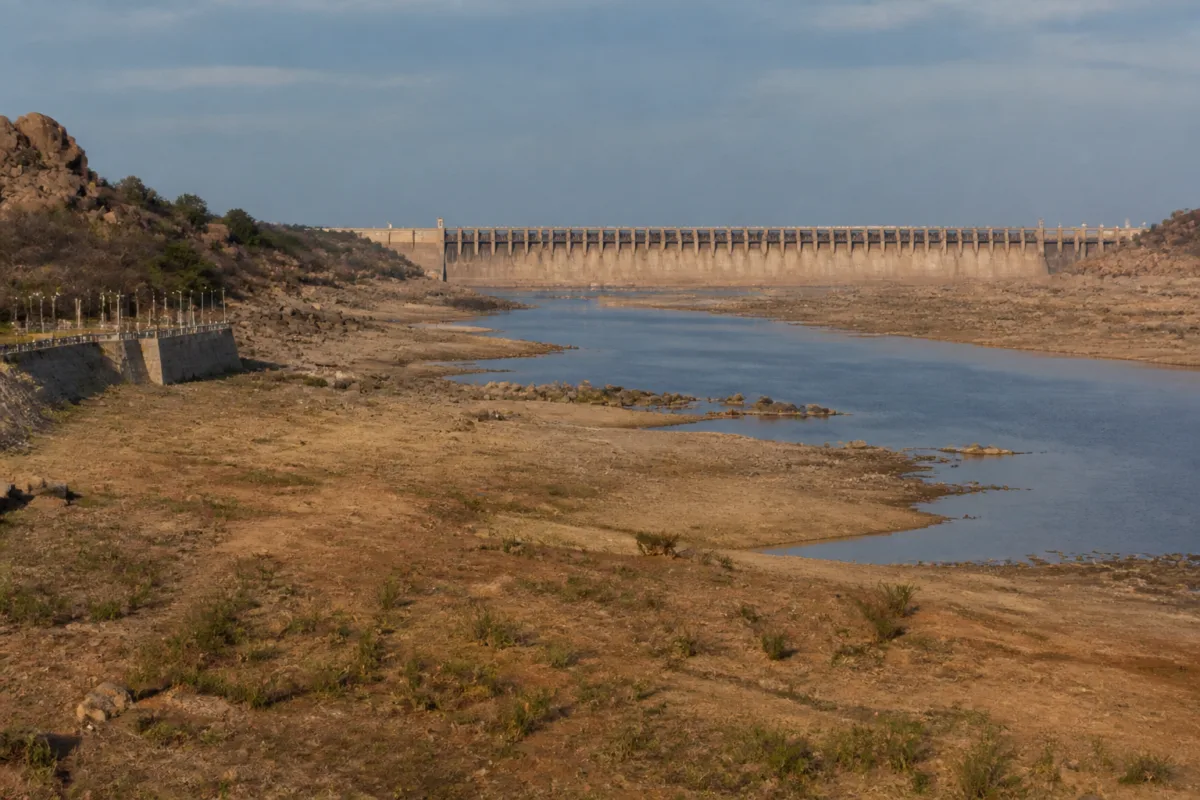
Andhra Pradesh reservoir storage has fallen sharply across several water systems, raising concern over drinking-water availability and forcing reductions in agricultural allocations, according to a report by Deccan Chronicle. The Tungabhadra dam was holding 24 tmc-ft, compared with more than 73 tmc-ft during the corresponding period last year.
Official sources cited in the report said the reservoir had received no inflows and attributed the situation to the adverse impact of El Nino. Despite the shortage, 6,765 cusecs was being released to dependent canals. The report said the Tungabhadra river was almost dry at several stretches between Hampi and Srisailam, after water released a few weeks earlier for the KC Canal and Rajolibanda diversion scheme had receded.
The Srisailam reservoir, which supplies water to the Handri-Neeva project, was reported to hold 45.24 tmc-ft, or 20.96 per cent of its gross storage capacity of 215 tmc-ft. It had no inflows, while outflows stood at 3,854 cusecs.
The Handri-Neeva Sujala Sravanthi project sources cited by the report said reservoirs at Jeedipalli, Gollapalli and Marala, along with the Bukkapattanam and Parigi tanks, had been filled with Krishna water to meet drinking-water requirements until the next season. The report did not provide a separate storage figure for these facilities.
The Penna Ahobilam reservoir in Kudair mandal, the main drinking-water source for Anantapur and Sri Sathya Sai districts, was reported to have 4.16 tmc-ft. It is being maintained to meet the requirements of Anantapur city and the Srirami Reddy drinking-water project, which serves Madakasira and Hindupur.
The Chitravati balancing reservoir on the Anantapur-Kadapa district border had 2.89 tmc-ft against its full storage capacity of 10.22 tmc-ft. It is a major water source for Tadipatri and Pulivendula.
Tungabhadra sources said releases were being made mainly for drinking-water requirements, with allocations determined by availability. An official cited in the report said the region faced a deficit of more than 50 tmc-ft during the current season and that allocations for agriculture had been reduced.
The reported storage levels highlight the competing demands placed on Andhra Pradesh’s reservoir network, which supports cities, towns, irrigation systems and diversion projects. With no inflows reported at Tungabhadra and Srisailam, the immediate management priority described by officials is to preserve available water for drinking-water supply through the next season.

