


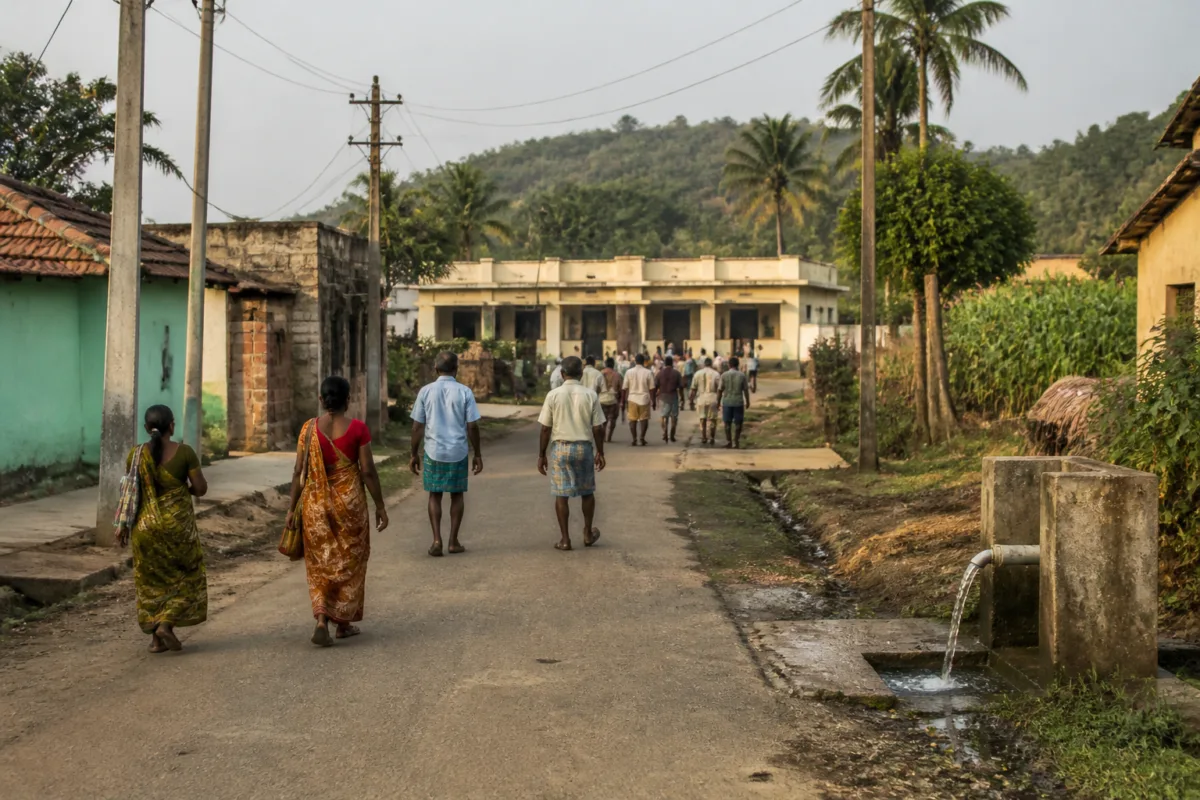
Residents of several Odisha villages along the Andhra Pradesh border reportedly travelled to polling stations in Andhra Pradesh for local-body elections, renewing questions about public-service delivery and administrative engagement in the border settlements of Ganjam district.
The report by Dharitri said families from Gudikhala under Buratal panchayat, Kuladi and Satapuri under Tumba panchayat, and Balarampur and Sardapur under Gudipadar panchayat went to polling centres in neighbouring Andhra Pradesh to vote in sarpanch and ward-member elections. It did not provide an independently verified total for the number of Odisha residents who voted.
Among the reported cases, residents of Gudikhala travelled to the Budarasingi panchayat school polling station in support of Shankar Sabar, who was contesting for a ward-member post there. Lalita Sabar of Kuladi was contesting from the Sanakrishna ward under Talaguranthi panchayat, and more than 50 people from Kuladi and Satapuri reportedly travelled by tractor to the Sanakrishna polling station.
The report said residents of some of the same border villages had also voted in Andhra Pradesh’s zilla parishad and samiti elections around 20 days earlier. It did not establish the legal or electoral status of individual voters, including whether they were registered in more than one jurisdiction.
The immediate political activity is being presented in the report as a symptom of wider service-delivery concerns. Some residents claimed that Andhra Pradesh authorities had provided roads, electricity, drinking water, pensions and land titles in their settlements. They alleged that pensions and ration benefits had been discontinued in Odisha and that land titles had not been issued.
Residents also claimed that electricity faults were addressed more quickly in Andhra Pradesh, while some Odisha settlements faced outages lasting months. They further alleged that drinking water supplied through gravity-flow systems was contaminated. These claims were attributed to local residents and were not accompanied in the report by government records, utility data or an official response from either state.
Education was another point of comparison. Residents told the publication that some Odisha schools lacked adequate buildings, teachers and mid-day meals, while schools in Andhra Pradesh were perceived to offer better facilities, nutrition support and financial assistance. The report attributed claims of assistance of ₹15,000 per child and allowances of more than ₹4,000 to villagers, without identifying the specific schemes or setting out their eligibility conditions.
The reported voting follows earlier efforts by the Ganjam district administration. According to the article, the administration had conducted awareness camps during the previous two Andhra Pradesh elections and advised residents of the border villages not to participate in Andhra elections. Residents alleged that no comparable administrative presence or awareness programme was visible during the latest poll.
The report also said some Telugu-speaking residents of B. Nuagaon and Gudipadar panchayats had voted in Andhra Pradesh. It did not include a response from the Ganjam district administration, Odisha’s election authorities, Andhra Pradesh authorities or the concerned panchayats.
For the border settlements, the episode points to a practical governance question: residents appear to compare public services across an administrative boundary that may not match their daily social and economic links. Roads, reliable power, safe drinking water, welfare continuity, land documentation and functioning schools can influence where communities seek political representation and state support.
The available report does not establish whether the alleged service gaps are widespread, how many households are affected or whether the reported benefits in Andhra Pradesh are formally available to all residents. Those questions would require official records, field verification and responses from both state administrations. What is clear from the account is that infrastructure and welfare delivery have become part of the political contest over the border villages, where administrative visibility is being judged through everyday public services.

