


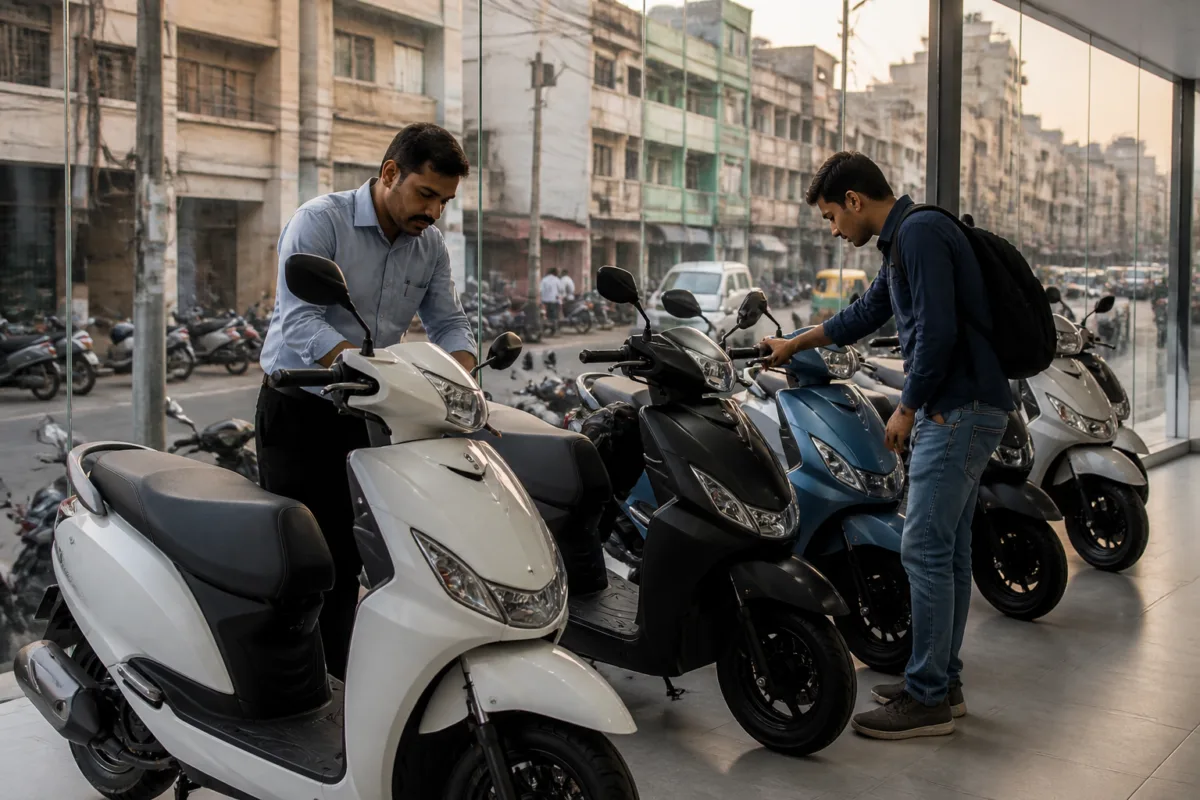
Ampere electric scooters are set for a major expansion as Greaves Electric Mobility targets a doubling of sales volume in the current financial year and plans to widen its retail network to 1,000 stores over the next six months.
The company has already increased its network to more than 600 outlets from about 300 in the previous financial year, Managing Director Vikas Singh told PTI. He said registrations for Ampere scooters had risen 92 per cent year-on-year up to October, with more than 72,000 units registered in FY27 so far, compared with 62,644 units in the previous financial year.
Singh said the company expected its sales volume to “easily double” during the full financial year. He also said Greaves Electric was aiming for a double-digit market share over the next two years. These are company targets and have not been independently assessed in the report.
The expansion reflects the importance of retail access in the electric two-wheeler market. Greaves Electric said it had reviewed its earlier dealer network and removed or corrected locations it considered unviable. According to Singh, throughput per dealer has also doubled after the changes.
For urban buyers, a larger sales and service footprint could make electric scooters more accessible beyond the company’s existing locations. However, the report does not provide details on service capacity, spare-parts availability, charging access or after-sales performance, all of which influence the practical adoption of electric two-wheelers.
Ampere’s current portfolio includes the entry-level Reo 80 and higher-priced products such as the Nexus. The G-MAX scooter, launched in January, contributes nearly half of the company’s sales volume, Singh said. The model has a 3-kWh battery, increased boot space and connected features, and is positioned for mass-market buyers.
Greaves Electric plans to launch another value-segment scooter within the next two to three months. The company said the product would be priced below Rs 1 lakh and positioned as a possible alternative to petrol two-wheelers. The report does not specify the planned model’s range, charging time, battery warranty or final price.
The company is also developing customised electric two-wheelers for gig-economy workers. These could include low-speed and high-speed versions as well as swappable batteries. Such configurations may address the longer and more intensive daily use associated with delivery and other platform-based work, but the report gives no details on pricing, battery-swapping partnerships or launch locations.
The planned expansion faces supply-chain constraints. Singh said production was being increased but that the supply chain needed to develop at the same pace as the company’s growth. This places a practical limit on how quickly the proposed sales and retail expansion can translate into vehicles available to buyers.
Greaves Electric’s plans therefore point to a push for wider electric two-wheeler distribution, particularly in value and utility segments. Whether the strategy improves urban mobility choices will depend on the company’s ability to maintain supply, support its enlarged dealer network and deliver reliable ownership conditions alongside new vehicle sales.

