


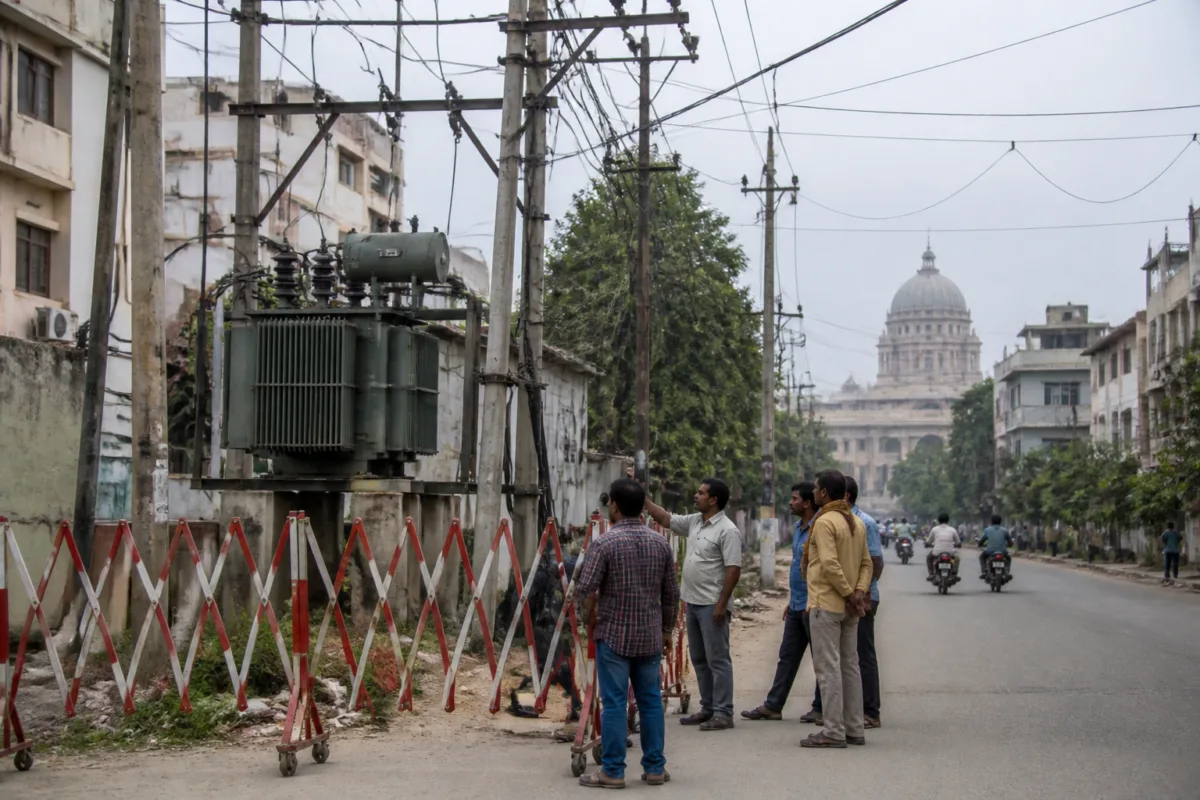
The Allahabad High Court has held that the Uttar Pradesh State Human Rights Commission can recommend additional compensation for human rights violations even when a victim has already received payments under other statutory provisions. The ruling came in a case involving an electrocution victim and Madhyanchal Vidyut Vitran Nigam Ltd.
A Lucknow bench comprising Justice Shekhar B Saraf and Justice Amitabh Kumar Rai dismissed the electricity corporation’s writ petition challenging an order of the Uttar Pradesh Human Rights Commission. The commission had directed the corporation to pay an additional Rs 10 lakh to a victim who suffered electrocution in 2011.
The victim’s father had earlier received Rs 65,000 in 2017, while the victim was paid Rs 1 lakh in February 2025. The human rights commission nevertheless recommended a further payment of Rs 10 lakh, prompting the electricity corporation to approach the high court.
The corporation argued that the complaint filed before the commission in 2024 was barred by limitation because the electrocution incident had occurred in 2011. The court rejected that argument, observing that non-payment of compensation could constitute a continuing violation of human rights.
The bench also held that the corporation’s payment of Rs 1 lakh after the complaint had been filed amounted to an acknowledgement under the Limitation Act. This finding was relevant to the limitation objection raised by the utility company.
Interpreting the Protection of Human Rights Act, the court said the commission’s power to recommend compensation was independent of, and additional to, other legal remedies. Compensation already paid under another statutory mechanism could not restrict the commission’s jurisdiction to recommend further relief, according to the ruling.
The judgment establishes that an initial payment by a public utility or another authority does not automatically settle the question of relief in a human rights case. For victims of electricity-related incidents, the ruling keeps open the possibility of additional compensation where the State Human Rights Commission finds that the circumstances warrant it.
The case also places continuing importance on how electricity corporations respond after incidents involving electrocution. In this matter, the court specifically considered the timing of the later payment and its legal effect on the limitation issue. The high court’s dismissal of the corporation’s petition leaves the additional Rs 10 lakh recommendation in place.

