


Subheadline: The AAIB’s preliminary findings link the August incident to a cascading hydraulic failure, operational decisions and a separate crew-fitness concern, but the investigation is not complete.
Standfirst: The Air India Phuket-to-Delhi flight classified as an accident after an altitude upset injured 24 people has raised two distinct safety questions. One concerns the aircraft: all three hydraulic systems were lost within seconds, the autopilot disengaged and the aircraft briefly deviated from its assigned altitude. The other concerns the operating environment: the aircraft had been dispatched with a Power Transfer Unit item deferred under the Minimum Equipment List, while the Aircraft Accident Investigation Bureau reported a non-negative confirmatory test for psychoactive substances involving the pilot-in-command. The preliminary report does not establish a final cause. It does, however, show how technical resilience, operational judgement, passenger protection and crew fitness intersect in commercial aviation safety.
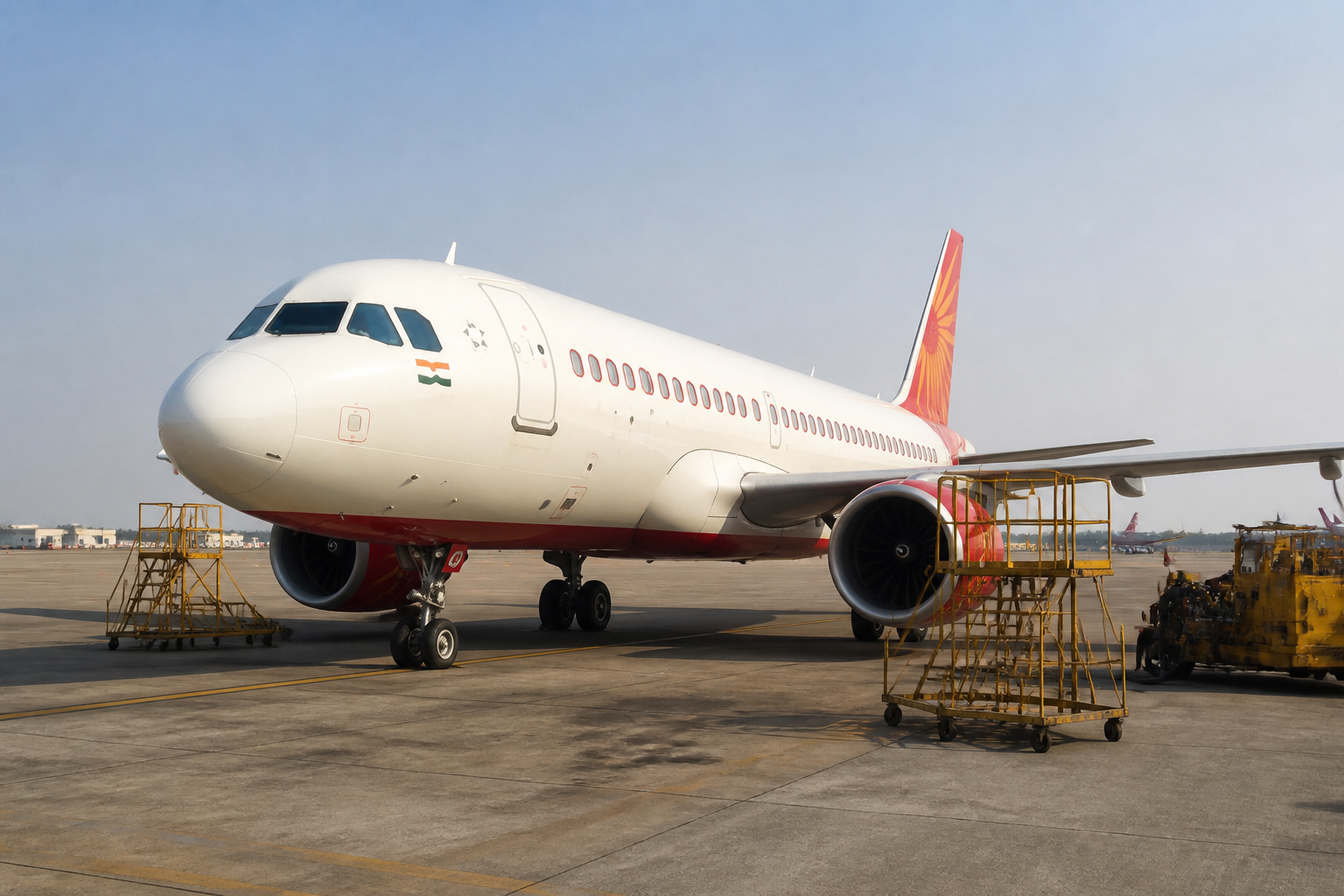
The Air India Phuket flight incident was not a single-system failure. According to the AAIB preliminary report released on September 4, the Airbus A320neo operating flight AI2379 from Phuket to Delhi detected the loss of its green hydraulic system at 04:02:43 UTC while cruising at 36,000 feet in the Kolkata Flight Information Region. Four seconds later, the aircraft detected the loss of its blue and yellow hydraulic systems as well.
The sequence immediately affected the aircraft’s handling systems. The autopilot disengaged five seconds after the initial hydraulic-system alert, followed by a continuous repetitive chime. A stall warning was triggered three seconds later. The co-pilot, who was flying the aircraft, first attempted to control the situation before the pilot-in-command took over. The aircraft climbed 372 feet and then lost 292 feet from its assigned flight level, an event the report described as an altitude upset.
The aircraft eventually recovered the blue hydraulic system, followed by the yellow and green systems. That allowed the flight-control surfaces to return to normal operation, the AAIB said. The pilots continued to Delhi rather than diverting to a nearer airport and requested medical priority from Delhi air traffic control. The aircraft landed safely, but the incident had already caused injuries and damage inside the cabin.
There were 145 people onboard: 137 passengers, six cabin crew members and two pilots. Twenty passengers and four cabin crew members received medical assistance after landing. Twenty of those treated were discharged after initial care, while four people with serious injuries were hospitalised. The aircraft sustained damage to overhead bins, ceiling panels and other cabin fixtures.
The injuries were linked to the conditions inside the cabin at the time of the altitude upset. The seatbelt signs had been switched off, according to the preliminary report. That detail matters because it connects an aircraft-control event to the passenger interface: when an aircraft experiences a sudden climb, descent or change in attitude, the cabin environment can rapidly become hazardous even if the aircraft remains controllable and ultimately lands safely.
The report also identifies a pre-existing maintenance and dispatch detail that investigators are examining. The aircraft had been operating with a Power Transfer Unit item deferred under a Minimum Equipment List provision invoked on July 28. The PTU acts as an auxiliary pressure source for the green and yellow hydraulic systems without transferring hydraulic fluid between them. The A320 has three independent hydraulic systems—green, blue and yellow—that power different flight controls and other aircraft systems.
The presence of a deferred item does not, by itself, establish that the item caused the incident. Minimum Equipment List procedures are designed to permit an aircraft to operate with specified equipment inoperative or deferred subject to conditions. In this case, however, the AAIB has removed relevant hydraulic components for analysis. The technical examination, together with the flight-recorder data, will determine how the systems failed, why they recovered and whether the deferred PTU item had any connection with the sequence.
The preliminary findings therefore leave an important distinction between correlation and causation. The aircraft was dispatched with the PTU item deferred, and the hydraulic systems later failed in rapid succession. The supplied report does not say that the deferral caused the failure. It says that the relevant components are being examined and that the detailed investigation remains underway. France’s BEA and Airbus technical experts are assisting the investigation, with the Airbus team inspecting the aircraft between August 13 and August 15.
The second safety issue in the report concerns the crew. Both pilots underwent post-flight medical examinations in Delhi. Breath-analyser tests were satisfactory for both, but subsequent samples from both pilots were tested for psychoactive substances. The pilot-in-command’s initial sample was found to be non-negative. Blood samples were then sent for confirmatory testing, which the AAIB also described as non-negative. The co-pilot tested negative in both tests.
The wording is significant. A non-negative test result is a reported finding from the preliminary investigation, not a final public determination of impairment, responsibility or the circumstances surrounding the result. The AAIB said confirmation of psychoactive-substance use by one member of the flight crew was a serious concern and recommended that the Directorate General of Civil Aviation take appropriate action to prevent abuse of psychoactive substances.
The report does not establish, on the supplied evidence, that the test result caused or contributed to the altitude upset. The technical failure and the crew-fitness finding are separate investigative strands at this stage. Treating them as one established causal chain would go beyond the preliminary report. The final investigation will need to examine the aircraft systems, operational decisions, crew performance, medical findings and applicable regulatory requirements together.
That separation is central to understanding the case. Aviation accidents often involve several safeguards operating at once: equipment redundancy, maintenance controls, dispatch rules, pilot response, air-traffic support and cabin procedures. A failure in one layer does not automatically mean that every later event had the same cause. The AAIB’s account instead presents a chain of events in which the aircraft’s systems failed, the crew responded, passengers and crew were injured, and a separate post-flight test generated a regulatory concern.
The decision to continue to Delhi rather than divert is another area that investigators will need to assess against the circumstances known to the pilots at the time. The report states that the aircraft recovered its hydraulic systems and that the pilots sought medical priority for landing in Delhi. It does not, in the supplied material, provide the full operational assessment behind the decision, the availability of alternate airports or the precise condition of the aircraft during the remainder of the flight. Those facts will be necessary before the decision can be evaluated.
The same caution applies to the deferred PTU item. The report establishes that the item had been deferred under the MEL and that hydraulic components were removed for analysis. It does not yet establish whether the deferral was compliant with all applicable conditions, whether it altered the aircraft’s resilience in this event or whether another component or failure mode initiated the sequence. Those questions belong to the continuing investigation rather than to a settled account of the accident.
The institutional response is already visible. The AAIB has classified the August 4 incident as an accident because people were injured and evidence of damage was recorded. It has issued an interim safety recommendation to the DGCA concerning psychoactive-substance abuse. Air India said it would continue cooperating with the investigation and provide access to operational, maintenance and technical records. The airline also said it had begun voluntary testing of 100% of its pilots after the incident.
That response creates two different accountability tracks. The first is technical and operational: establishing what happened to the hydraulic systems, whether dispatch and maintenance procedures were followed, and whether the flight crew’s response was appropriate to the conditions. The second is regulatory and medical: determining what the test results mean, what action is warranted and whether existing controls adequately identify and address psychoactive-substance use among flight crew.
The incident also demonstrates why preliminary reports are useful but incomplete. They make urgent facts public while investigators continue to examine components, recorder data, medical evidence and operational records. They can identify immediate safety concerns without presenting a final causal narrative. In this case, the report provides a detailed timeline of the hydraulic-system losses and altitude deviation, but it leaves the relationship between the deferred PTU item, the triple-system failure and the crew response unresolved.
What the evidence confirms is that flight AI2379 experienced a near-simultaneous loss of all three hydraulic systems, an autopilot disengagement, a stall warning and an altitude upset at cruise altitude. It confirms that 24 people received medical assistance after landing, that the aircraft sustained cabin damage and that the pilot-in-command returned a non-negative result in confirmatory psychoactive-substance testing as described by the AAIB. What remains uncertain is the final technical cause, the relevance of the MEL deferral, the precise contribution of human and operational factors, and the regulatory consequences of the medical finding.
The next significant developments will be the AAIB’s examination of the removed hydraulic components and flight-recorders, the continuing work with Airbus and France’s BEA, and the DGCA’s response to the interim safety recommendation. Until those steps are completed, the Phuket flight should be understood not as a closed explanation but as a documented safety event with multiple investigative strands still open.
