


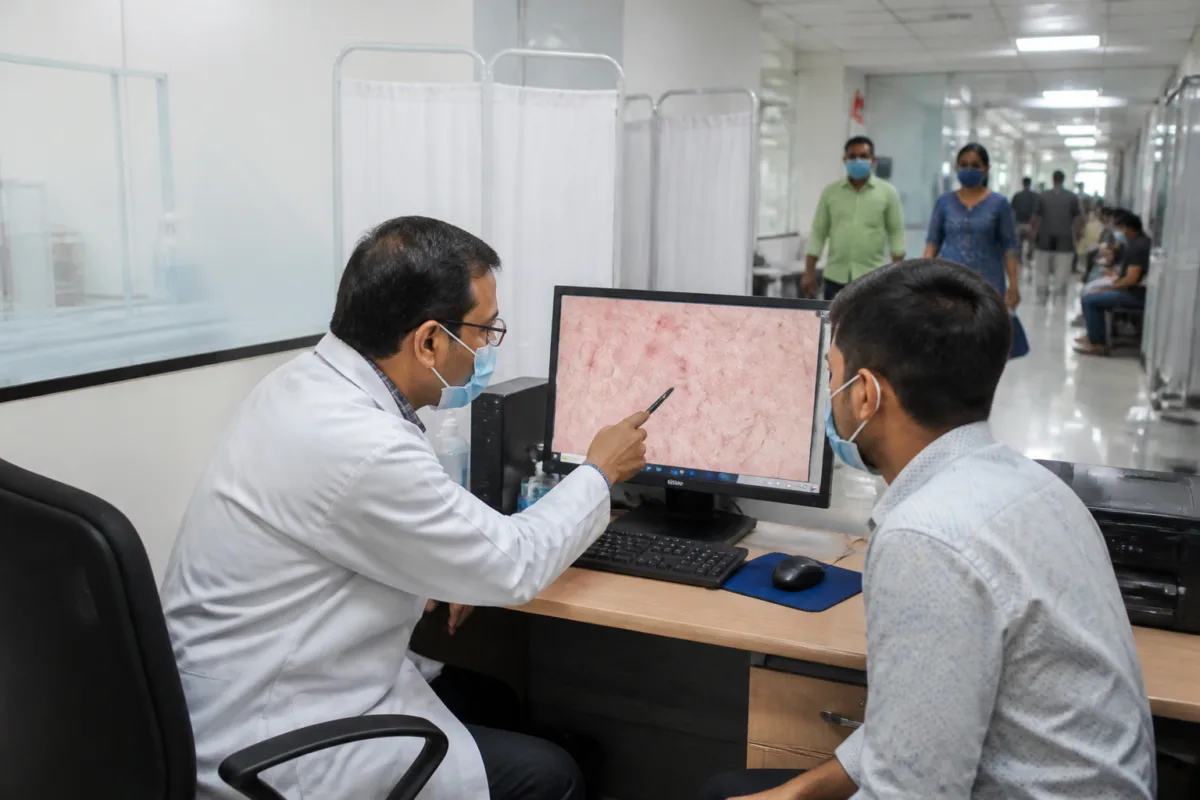
AIIMS and Google have developed two artificial intelligence tools to support skin disease detection and outpatient prioritisation, with pilot projects currently under way at AIIMS in New Delhi. The tools, called IndusDerma and Arogyam, are designed to help doctors identify possible conditions, assess urgency and reduce delays before patients see specialists.
IndusDerma will use photographs of a patient’s skin along with information such as age, symptoms and the duration of the condition. The tool is intended to assist doctors in identifying possible skin diseases, deciding whether further tests may be needed and determining whether a patient should be referred to a specialist.
The system has been developed with Indian patients in mind, including variations in skin tone and the skin diseases commonly seen in the country, according to the report citing information from AIIMS. This is significant for clinical technology designed for Indian healthcare settings, where tools trained or developed for other populations may not reflect local patient profiles.
AIIMS and Google said IndusDerma could also support healthcare workers in locations where dermatologists are not readily available. However, the tool will remain an aid for medical professionals. Patient examination, diagnosis and treatment decisions will continue to be taken by doctors, according to the report.
The second tool, Arogyam, is intended for use in outpatient departments. It will analyse preliminary medical information and test results to help doctors determine which patients need to be seen first and which can wait. The stated objective is to prioritise serious cases and reduce their waiting time.
Information from AIIMS cited in the report said the initiative aims to reduce the waiting time for patients before they are seen by a specialist by up to 40 per cent. The tools are also being developed with a potential capacity to assess the status of up to 15,000 outpatient patients a day, although the report does not state that this scale has already been achieved in routine operations.
The pilot projects at AIIMS will determine how the tools perform in actual clinical workflows. Their use will involve the interaction of doctors, patient information and AI-generated assistance rather than replacing medical assessment. Further operational details, including the timeline for wider deployment and performance results from the pilot, were not provided in the report.

