


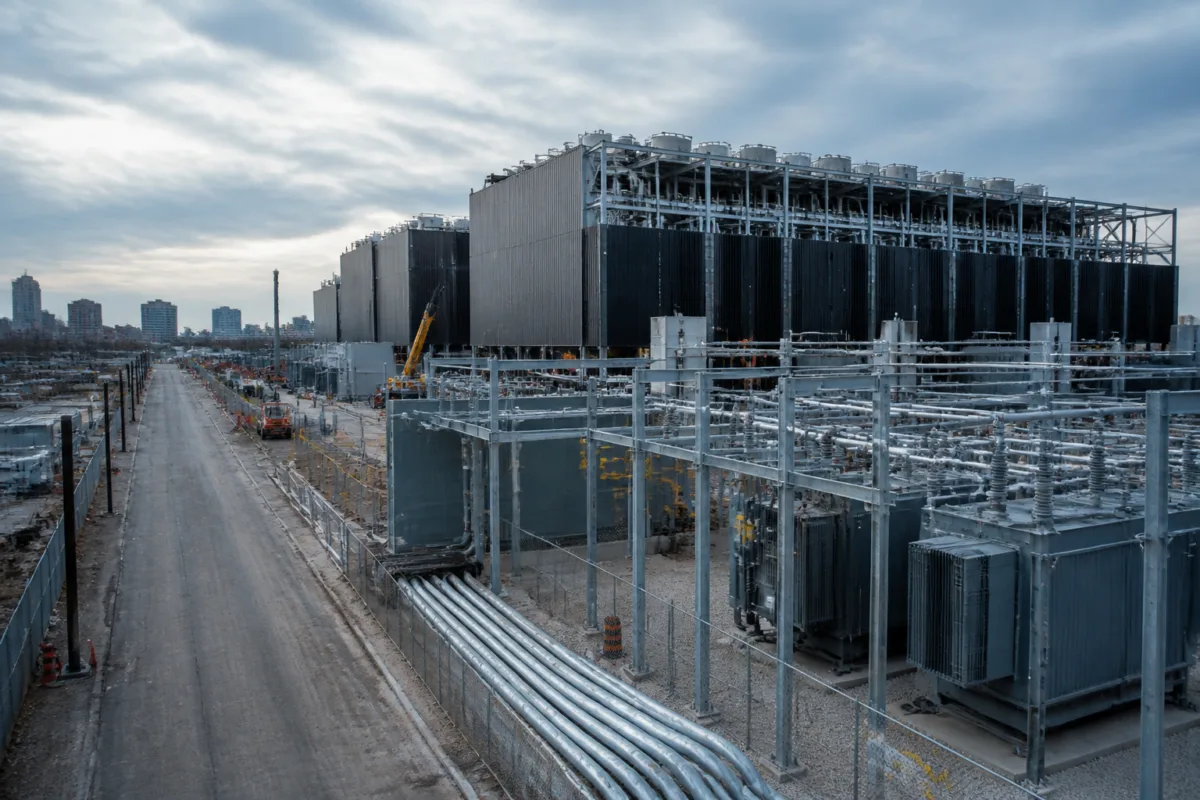
Siemens is betting that the AI data-centre boom will continue despite growing political opposition in the United States, offering an important signal about how quickly artificial intelligence is reshaping the infrastructure business. The company’s latest results show that the expansion is not limited to software and chipmakers: it is also creating substantial demand for the electrical and cooling systems required to build and operate large computing facilities.
The German industrial group reported record profits for the fiscal year ending in September, with core profit rising 13 per cent to 13.3 billion euros ($14.7 billion). Its smart infrastructure division, which supplies equipment used in buildings and industrial facilities, recorded a sharper indication of the data-centre effect. Orders in the division rose 40 per cent in the fourth quarter to 8.67 billion euros, helped by triple-digit growth in orders from data-centre customers.
Those figures make data centres more than a technology-sector story. They place the facilities within the wider urban infrastructure system, where demand for computing capacity translates into demand for electricity equipment, cooling systems, construction sites and industrial supply chains. Siemens’ performance suggests that the physical infrastructure surrounding AI is becoming a significant source of growth for companies that may not develop AI models themselves.
At the same time, the expansion is facing a political test in the United States. The source report said fears that Democrats could restrict data-centre construction after gaining control of Congress had hit stock markets worldwide. The concern reflects a tension at the centre of the current investment cycle: data centres are being presented as engines of economic growth, but their construction and operation can generate pressure on local infrastructure and trigger opposition from communities and policymakers.
Siemens chief executive Roland Busch said on an earnings call that the company expected the AI boom to continue even after the elections revealed growing opposition to data centres. “There are discussions on the one side, on the other side there’s bipartisan acknowledgment that a big driver of economic growth in the United States is data centres,” Busch said. “There’s nothing that worries us, at least not for the next couple of years,” he added.
The comments are significant because Siemens is positioned upstream of the data-centre industry. US technology companies such as Microsoft and Meta have invested hundreds of billions of dollars in AI data centres, according to the supplied report. That investment creates a second layer of demand for companies making the systems that allow these facilities to function. Electrical infrastructure and cooling equipment are not peripheral components in this model; they are part of the basic industrial capacity required to expand computing facilities.
The order data provides a clearer view of that demand than share-price movements alone. Siemens said the fourth-quarter orders at its smart infrastructure business increased 40 per cent, while data-centre orders grew at a triple-digit rate. Orders are an indicator of future sales, so the figures point to a pipeline rather than only completed projects. However, the supplied material does not establish how many facilities those orders represent, where they are located, or how much electricity and land they will require.
That limitation matters for understanding the urban consequences of the AI buildout. The evidence confirms strong commercial demand for data-centre-related equipment, but it does not provide a project-by-project account of planning approvals, power availability, water use, construction timelines or local employment. The political opposition described in the report is similarly not broken down by jurisdiction or specific infrastructure concern. What can be established is that the investment boom is meeting a policy debate before its full local effects are documented in the supplied material.
Siemens is not alone in reading the market as durable. Swiss engineering company ABB reported 40 per cent order growth for the three months ending in September, while France’s Schneider Electric said sales growth during the same period had exceeded expectations. German semiconductor manufacturer Infineon also said it expected more data centres to be built globally, even if construction in the United States became more complicated.
The parallel statements from companies across the supply chain are important because they show that expectations are not based solely on the outlook of one industrial group. Electrical systems, energy management, cooling and semiconductor manufacturing are all connected to the expansion of data-centre capacity. The evidence supplied does not prove that every part of the supply chain will grow at the same pace, but it does show that several major European industrial companies currently regard data-centre demand as a sustained commercial opportunity.
There is also a difference between the global AI market and the geography of its physical infrastructure. Infineon’s expectation of continued global construction suggests that a more complicated US approval environment would not necessarily end the expansion. It could instead affect where facilities are built and how quickly projects move forward. The report does not identify alternative locations or quantify any relocation effect, so that possibility cannot be treated as an established outcome. It does, however, underline the importance of local planning and infrastructure conditions to the next phase of AI investment.
For cities and regions, the political question is therefore not only whether data centres bring investment. It is also whether the supporting systems required by those facilities can be planned and delivered at the same pace as private capital. The supplied evidence shows that demand for the equipment is accelerating. It does not show whether power networks, cooling arrangements, land-use systems or permitting authorities are prepared for the scale of that demand.
That gap between corporate orders and local infrastructure information is central to interpreting the Siemens results. Financial statements can reveal the speed at which the market is expanding, but they do not by themselves explain how projects affect neighbourhoods or municipal systems. The report’s reference to growing opposition indicates that those local questions are beginning to influence the broader investment conversation, even as companies continue to describe data centres as a major economic-growth driver.
Siemens has responded with an optimistic forecast. For the current business year, it expects sales to rise between 9 and 11 per cent, with broadly stable or higher profit margins at its two biggest divisions. Its shares opened 4.1 per cent higher in Frankfurt, and their price has more than doubled since the release of ChatGPT in November 2022.
The share-price increase illustrates how strongly investors have associated Siemens with the AI infrastructure cycle, but it does not settle the policy debate around data centres. The company’s own position is that bipartisan recognition of their economic role will support continued growth. The election result and reported opposition show that economic support is being weighed against concerns about construction and local infrastructure, although the supplied material does not specify the regulatory measures under consideration.
The clearest conclusion from the evidence is that AI’s physical expansion is already visible in industrial orders. Siemens’ record profits, 40 per cent rise in smart-infrastructure orders and triple-digit growth in data-centre orders demonstrate the strength of the current commercial cycle. The unresolved issue is how that growth will be reconciled with local political resistance and the infrastructure capacity required to support new facilities. Further developments in US data-centre policy, project approvals and the performance of the wider electrical and cooling-equipment supply chain will determine whether the current boom can maintain its pace.

