


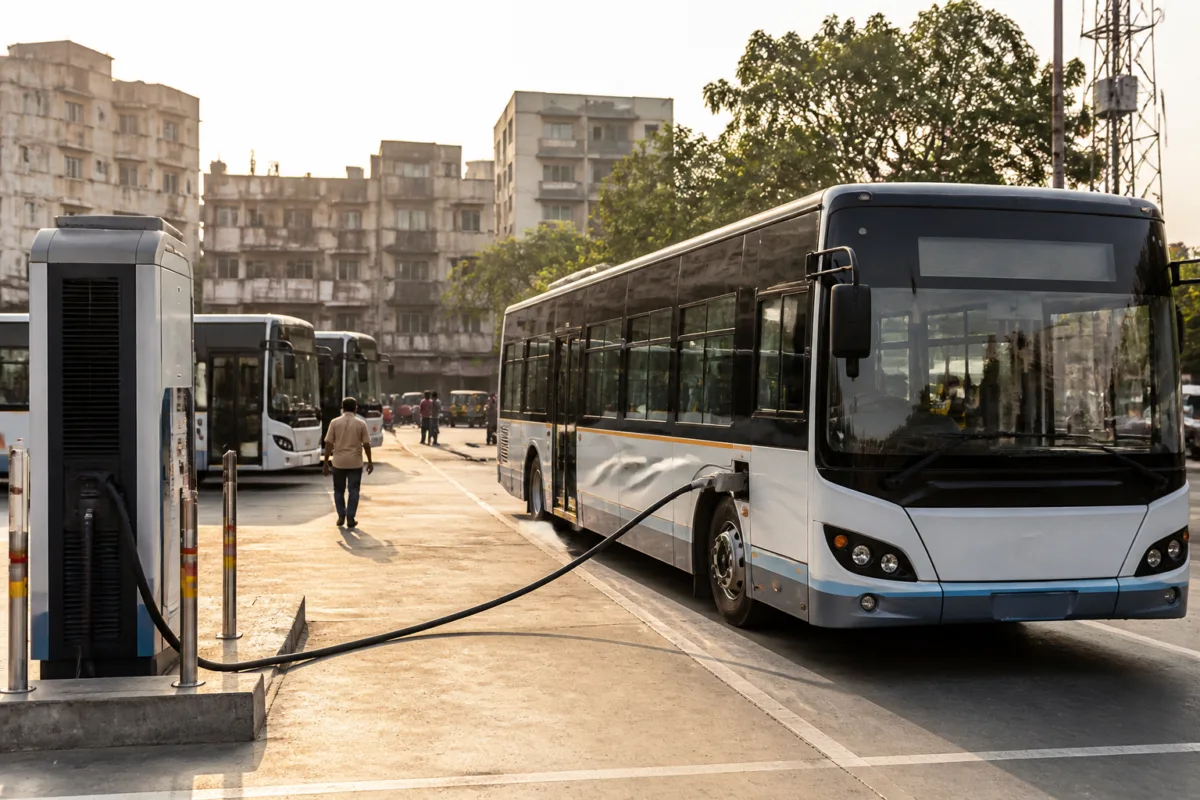
Ahmedabad Municipal Transport Service (AMTS) is planning electric-bus charging stations at six locations despite not owning an electric bus, according to a report by Gujarat Samachar. The proposed network is expected to cost about Rs 30 crore and would support buses operated by private contractors.
The locations identified in the report are Lal Darwaja, Paldi, Vasna, Wadaj, Sarangpur and Ashram Road. At Lal Darwaja, the work has reportedly been assigned to Prachi & Company at a cost of Rs 4.87 crore.
The arrangement highlights the growing role of municipal infrastructure in Ahmedabad’s contracted bus operations. Gujarat Samachar reported that AMTS currently has around 100 electric buses in service, while another 300 are expected in the future. The buses are operated by private contractors rather than owned by AMTS.
According to the report, the municipal system pays private operators between Rs 81 and Rs 84 per kilometre for operations. It also reported that the proposed charging service would be offered to the operators at Rs 8 per unit of electricity, while market rates were cited as being between Rs 18 and Rs 22 per unit.
The proposal therefore places the capital cost of charging infrastructure with the public transport system while the immediate users would be privately operated buses. Such an arrangement can help create the infrastructure required for electric public transport, but its public value depends on the terms governing access, electricity recovery, maintenance and the allocation of operating risks.
The reported structure also raises a basic asset-ownership question. AMTS would invest in fixed infrastructure even though the buses using it are not municipally owned. The long-term outcome would depend on whether the charging stations remain available to the public system under future contracts, how utilisation is measured and whether the charging tariff covers the cost of electricity and infrastructure over time.
The six proposed sites could make charging capacity more accessible across the existing AMTS network, particularly if they are integrated with bus depots and route schedules. However, the report does not provide details on the planned electrical capacity, the number of chargers, land arrangements, construction timelines, maintenance responsibilities or the contractual period for private operators.
It also does not include the tender documents, the approval issued by the Ahmedabad Municipal Corporation or a response from AMTS explaining the proposed Rs 8-per-unit tariff. Those documents would be necessary to assess the project’s total cost, expected utilisation and financial impact on the transport undertaking.
The reported plan illustrates a wider challenge in the transition to electric buses: municipalities may need to build and finance charging infrastructure even when vehicle operations are outsourced. For Ahmedabad, the central governance issue will be whether the proposed investment improves service reliability and reduces operating costs while protecting public finances. The answer will depend on the final contracts, tariff structure, performance standards and disclosure of project costs.

