


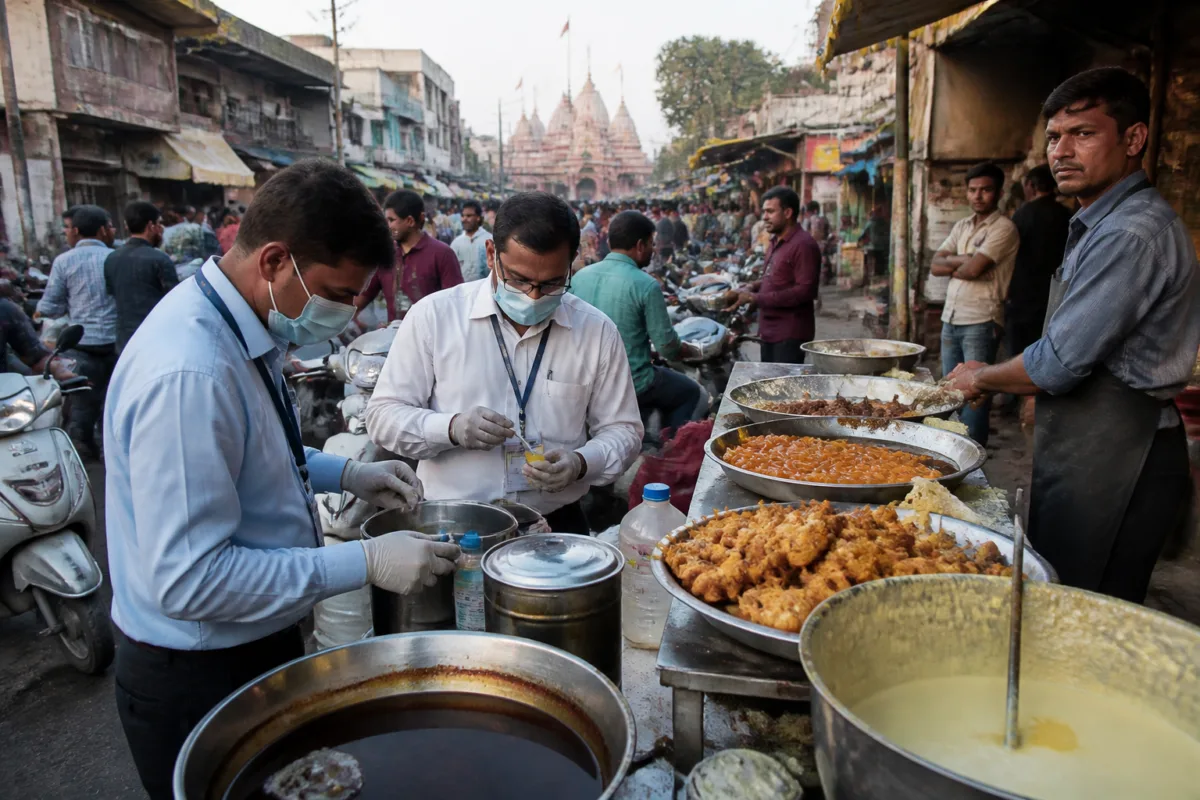
The Ahmedabad Municipal Corporation’s Food Department collected samples of fafda, jalebi and related ingredients from more than 50 outlets during the Dussehra festival, while roadside stalls and customer parking created traffic problems across parts of the city.
The inspection campaign began late on Monday night and continued through Dussehra, according to a report by Nav Gujarat Samay – Ahmedabad. Teams visited small and large stalls operating across different parts of Ahmedabad and collected food samples for laboratory testing.
Officials also checked the quality of cooking oil used to prepare fafda, along with jalebi batter, food colours and other raw materials. Vendors selling from temporary stalls were checked for registration or certification under the Food Safety and Standards Authority of India (FSSAI), the report said.
The campaign followed heavy early-morning crowds at fafda-jalebi outlets as residents bought the traditional Dussehra foods. The inspections were conducted across the city’s zones, with the Food Department examining approximately 50 establishments and sending the collected samples to laboratories.
The AMC Food Department said legal action would be taken against vendors found violating food-safety rules after the laboratory reports are received. The report did not provide the names of the establishments inspected or specify when the test results would be released.
The inspection also highlighted the division of responsibilities within municipal administration. While Food Department teams carried out checks, the report said the civic body’s Estate Department did not take action against temporary stalls operating on public roads, footpaths and the parking areas of private shops.
The temporary structures and customer vehicles reportedly obstructed roads in several locations, leading to traffic congestion and inconvenience for motorists and other residents. The report described the Estate Department as inactive during the festival operation, but did not include a response from that department.
The episode placed two immediate urban functions alongside each other: food-safety enforcement at the point of sale and management of public space around high-demand seasonal markets. The Food Department’s next stated step is to act against rule-breaking vendors after laboratory testing is completed.

