


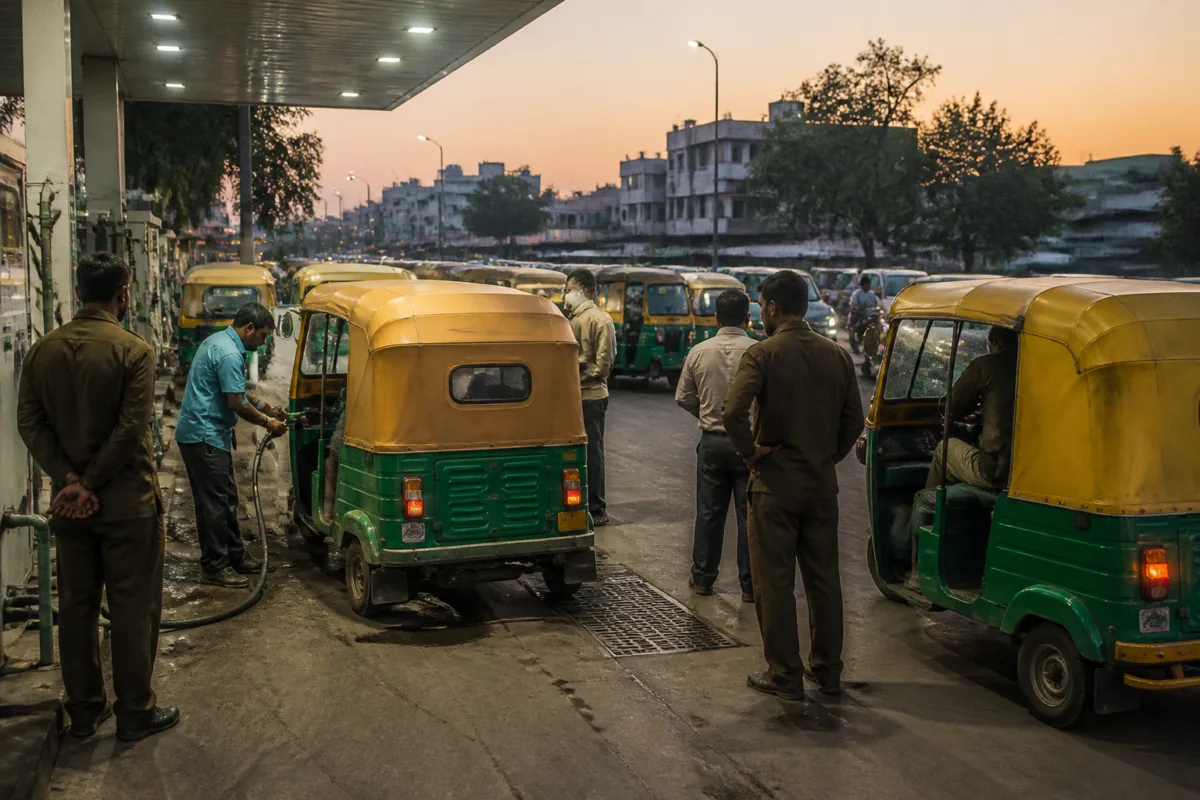
CNG prices in Ahmedabad have risen to Rs 98.47 per kg after a Rs 4.45 increase in a single day, putting renewed pressure on autorickshaw and taxi drivers and prompting unions to seek government relief before Diwali.
The price increased from Rs 94.02 to Rs 98.47 per kg on Friday, according to figures cited by the Gujarat Sarthi Sangh (GSS), an autorickshaw drivers’ union. The increase applies to CNG vehicles, including autorickshaws, cabs and private cars, supplied by Adani Total Gas Ltd in the city.
GSS said CNG prices had risen by about Rs 20 through phased increases during the year. The latest increase follows a Rs 3.75-per-kg hike in August, adding to the operating costs of commercial vehicle owners who also have to meet vehicle maintenance, insurance and household expenses.
In a representation to the government, the union sought an immediate reduction in CNG prices and targeted relief for commercial autorickshaw drivers. It also called for greater transparency in the way CNG prices are set and a review of the reasons behind successive increases.
The union said drivers faced a difficult choice over fares. Increasing autorickshaw fares could transfer the higher fuel cost to passengers, including students, working people, senior citizens and families already dealing with rising living expenses. GSS therefore asked for a special scheme to reduce CNG costs for commercial autorickshaw drivers and periodic fare reviews based on operating expenses.
The demands place the fuel-price increase within the wider functioning of Ahmedabad’s public transport system. Autorickshaws and taxis serve as important last-mile and point-to-point transport options, but their operating economics affect both driver incomes and the fares paid by passengers. The union said drivers and passengers were bearing the impact of inflation and urged authorities to treat the issue as one involving affordable public transport and livelihoods, rather than only as a question of fare revisions.
Adani Total Gas attributed the increase to reduced availability of new well gas from state-owned companies such as ONGC and lower supplies of high-pressure, high-temperature gas following a government order. According to the company, these changes have reduced the share of competitively priced domestic gas available to meet CNG demand and increased its weighted-average procurement costs.
An ATGL spokesperson said the company continued to focus on limiting the impact on consumers while maintaining uninterrupted CNG availability. The spokesperson also described CNG as an economical and environmentally friendly fuel choice.
GSS has called for coordinated measures by the state government and relevant authorities to reduce public transport costs. Its representation includes demands for commercial-driver relief, transparent price-setting and periodic fare reviews, while the immediate fuel price remains close to the Rs 100-per-kg mark.

