


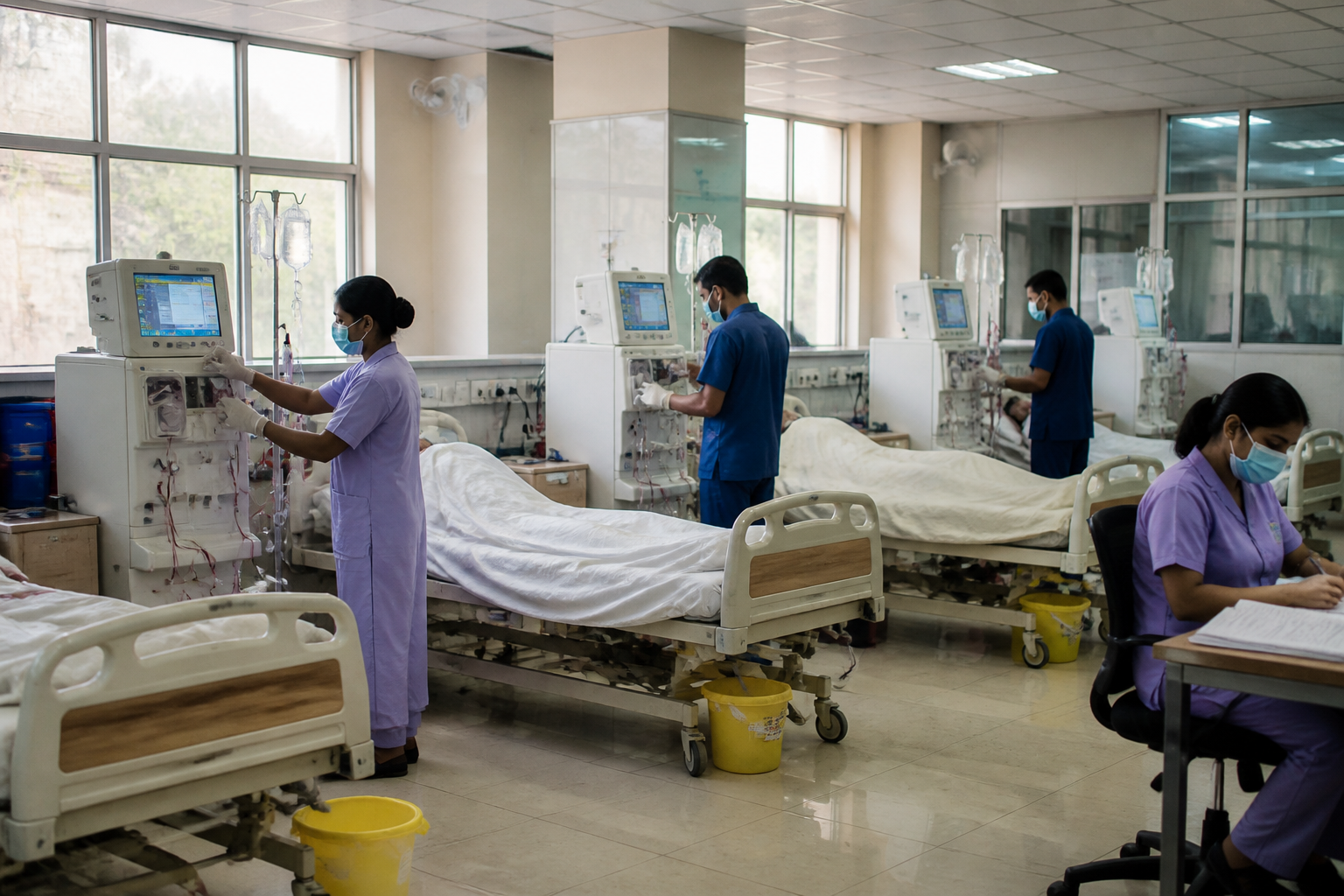
The Municipal Corporation of Delhi will expand affordable dialysis services to seven hospitals under a public-private partnership model, with the new facilities expected to provide treatment at rates below those prescribed under the Central Government Health Scheme. The service is expected to begin within the next four to five months, according to MCD officials quoted by Jagran.
The expansion will build on a pilot facility at MCD’s Tilak Nagar Colony Hospital, where dialysis services were introduced through a PPP arrangement. The civic body said the pilot had been successful and that the tender for the larger programme would incorporate improvements based on that experience.
Under the plan, 10 dialysis units will be installed at each hospital. The facilities will operate from Monday to Saturday and are expected to handle around 140 patients a day across the network. Using an average of 120 patients daily, the MCD estimates that approximately 3,600 patients could receive dialysis services every month.
The hospitals identified for the expansion include the centre at Fatehpuri Beri, Balak Ram Hospital, Swami Dayanand Hospital, Hindu Rao Hospital, Purnima Sethi Hospital and Mata Gujri Hospital. Together with the existing facility at Tilak Nagar Colony Hospital, these locations will form the seven-hospital network described by the civic body.
The tender will be awarded to the agency or institution offering the lowest rate below the applicable CGHS charges, the MCD official said. Dialysis at CGHS rates currently costs between Rs 2,500 and Rs 3,000 per session, depending on the patient category. The MCD said its tender would be structured to secure a lower rate, making the service cheaper than comparable private and charitable facilities in Delhi.
The service will also be available to eligible patients receiving treatment under the Pradhan Mantri Jan Arogya Yojana, or PM-JAY, popularly known as Ayushman Bharat. This provision is intended to allow beneficiaries of the national health insurance programme to access dialysis at the participating MCD hospitals.
Dialysis is required in cases including chronic kidney disease, kidney failure, acute kidney injury, severe nephrotic syndrome and end-stage polycystic kidney disease. For patients who require repeated sessions, the cost and availability of treatment can directly affect continuity of care. The MCD’s planned expansion places the tender process, selection of the service provider and the four-to-five-month implementation timeline at the centre of the next steps.
