


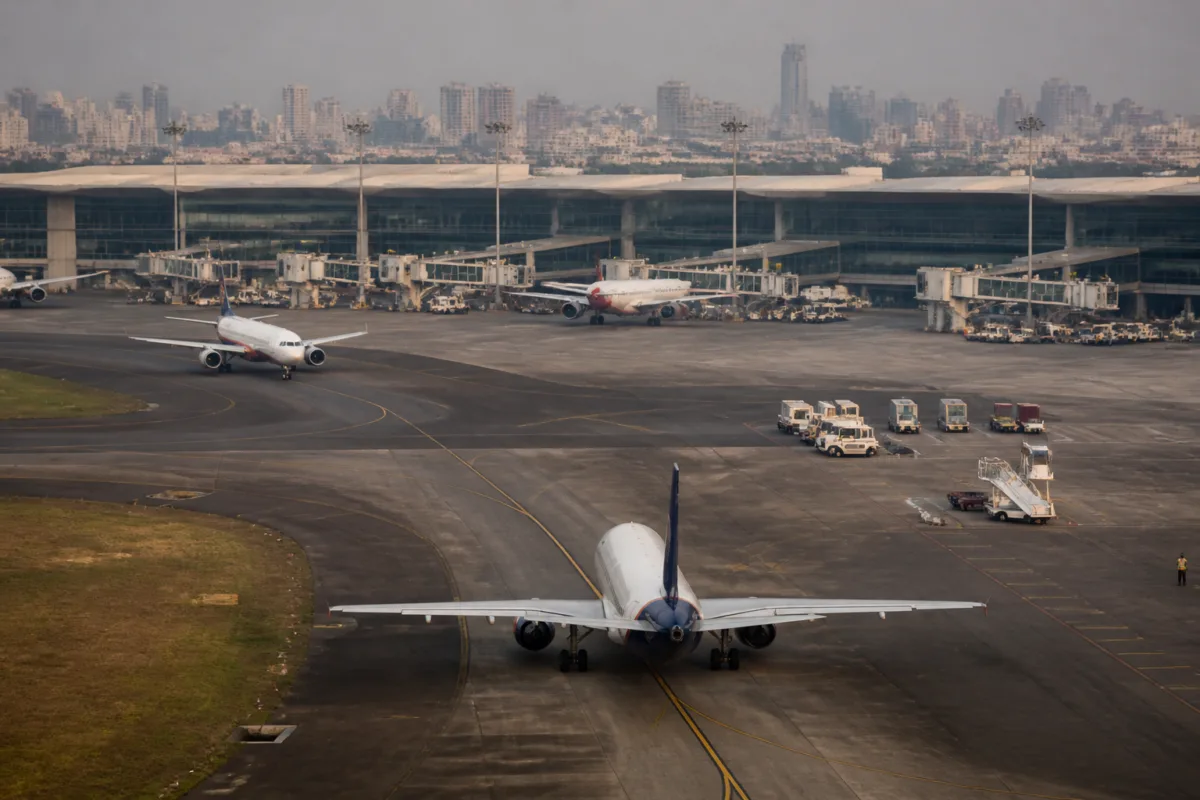
Adani Group has asked the government to allow it to invest in airlines, a move that could add a new player to India’s highly concentrated aviation market, the company’s chief financial officer Jugeshinder Robbie Singh said on Friday.
The group operates eight airports in India and said it wants to support the development of airlines as passenger demand expands. Speaking on the sidelines of the India Debt Capital Market Summit in Mumbai, Singh said more than 60 crore people in the country could eventually fly and that daily flights would need to increase nearly tenfold to 30,000.
“And that’s why we requested the government to at least allow us to invest, so that we can facilitate the development of airlines,” Singh said, according to PTI. He added that the group could invest through a fund, another airline company or an entrepreneur entering the sector.
The statement marks a change from earlier public positions by Adani executives. In July, the group denied a regulatory filing report that it was evaluating a plan to enter the airline business. On November 3, Adani Airport Holdings chief executive Arun Bansal also said entering airlines was not being considered, arguing that competing with airport customers was not a sound strategy.
The government has previously indicated that airport operators are not subject to a general policy ban on operating scheduled airlines. In August, it told the Rajya Sabha that no policy prevents airport operators from running airlines, although certain restrictions apply through agreements covering airports operated under public-private partnerships.
Adani’s airport portfolio includes Mumbai, Navi Mumbai, Ahmedabad, Lucknow, Jaipur, Guwahati, Thiruvananthapuram and Mangaluru. Together, these airports handle more than one-fourth of India’s air passenger traffic, according to the report.
The proposed entry would come as India’s airline market has consolidated. Jet Airways and Go First have shut down in the past seven years, while Vistara and erstwhile AirAsia India were merged with Air India and Air India Express in 2024. SpiceJet has also faced continuing operational difficulties. The Tata Group-led Air India and IndiGo now account for around 90 per cent of total domestic air passenger traffic, PTI reported.
The concentration has renewed calls for more airlines, particularly after operational problems at IndiGo last year resulted in thousands of flight cancellations. Any future investment by an airport operator would therefore be relevant to the structure of competition, but would also need to be assessed against airport concession conditions and the potential relationship between airlines and the airports they use.
Singh also said Adani’s airport business was expected to be ready for a listing from a business-model perspective in calendar year 2027. The relevant boards will decide whether to pursue an initial public offering or another restructuring route.
Non-aeronautical revenue, including earnings from activities beyond core aircraft operations, currently accounts for about 60 per cent of the airport business, Singh said. The company expects this share to remain between 60 and 65 per cent as its business cases develop over the next six to nine months.

