


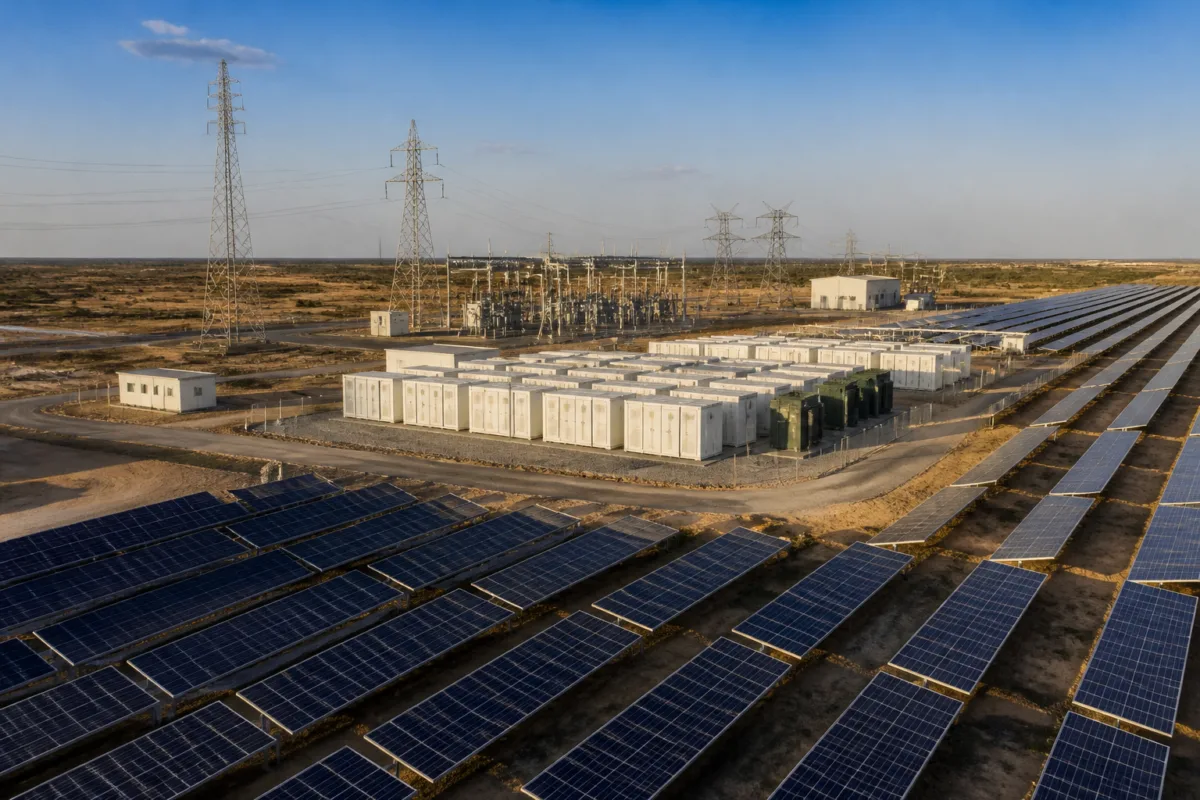
Adani Green Energy’s net debt rose 35 per cent year-on-year to ₹1.03 lakh crore at the end of September 2026 as the renewable energy company continued investing in new generation and battery-storage capacity, while management said fixed-rate loans and long-term power contracts were limiting exposure to interest-rate volatility.
The company’s net debt stood at ₹1,02,973 crore in September, compared with ₹76,071 crore in the first half of FY26 and ₹91,252 crore at the end of March 2026. The increase came as borrowings linked to projects under construction grew faster than debt associated with operational assets.
Debt attributable to operational assets rose 27 per cent year-on-year to ₹78,656 crore. Debt associated with projects under construction increased 73 per cent to ₹24,317 crore. Net debt was 5.6 times run-rate EBITDA.
Around 72 per cent of Adani Green’s project loans carry fixed interest rates for medium- to long-term periods of three to five years, a senior company executive said during an earnings call. “So, the rate-cycle effect does not happen for a very substantial portion of our loans,” the executive told investors.
The company also relies on 25-year fixed-tariff power purchase agreements, which management said provide revenue visibility and reduce the impact of short-term movements in interest rates on project returns. The company said its average interest cost declined to 8.9 per cent in September 2026 from 11.1 per cent in 2019, a reduction of more than 220 basis points.
Adani Green said projects under construction typically receive ratings in the BBB- to A range and can move towards the AA category after becoming operational. The resulting improvement in credit quality can reduce borrowing costs by around 50 basis points, according to the executive.
The company cited AG 23L, a special purpose vehicle contributing nearly 15 per cent of its overall EBITDA, as an example. Its rating has risen by seven notches over five years to AAA, while its interest cost declined from around 10-11 per cent to 8.4 per cent, the executive said.
About 30 per cent of Adani Green’s portfolio is currently under construction, including battery-storage projects. Management expects this share to decline to 10-20 per cent once operational capacity reaches 30 GW, as more projects move from construction into revenue-generating operations.
Adani Green had 20.8 GW of operational capacity as of September 2026 and is targeting 50 GW by 2030. It added 4,083 MW of capacity in the first half of FY27 and operationalised 3,081 MWh of battery energy storage capacity at Khavda during the September quarter, taking installed storage capacity to 6,632 MWh.

