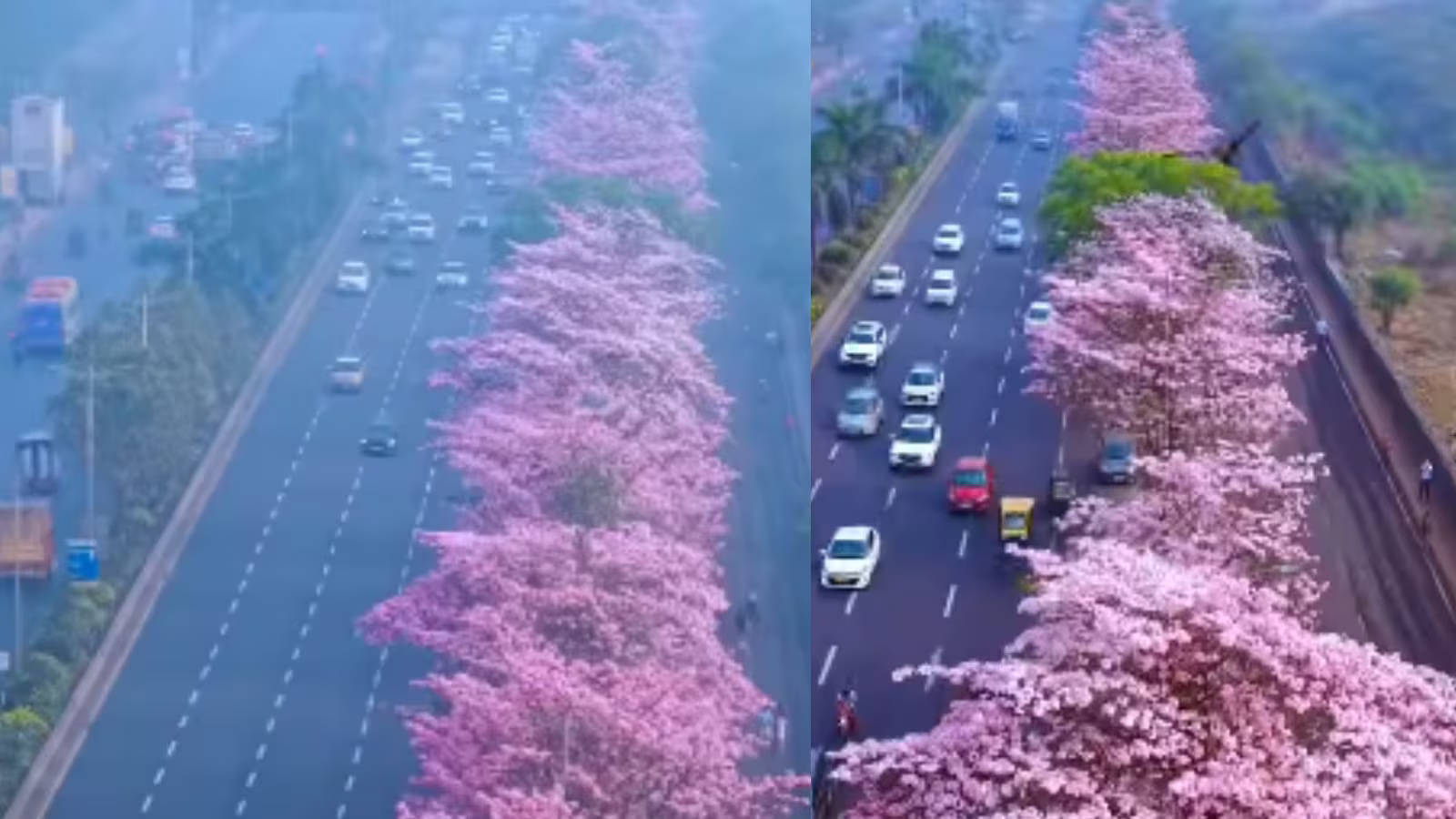
Mumbai’s push to ease congestion along one of its busiest arterial corridors has reignited a familiar urban dilemma: how to balance large-scale transport infrastructure with the city’s fragile green cover. More than 700 trees are proposed to be removed along the Eastern Express Highway as part of a 12.95-kilometre elevated road linking eastern suburbs to Thane, prompting legal intervention and sustained citizen concern.
The proposed corridor, designed to connect Chedda Nagar in Ghatkopar with Anand Nagar in Thane, is being positioned as a critical mobility upgrade for daily commuters travelling between Mumbai and its northern metropolitan edge. Transport planners involved in the project say the elevated alignment will help decongest surface traffic, improve freight movement and shorten travel times on a stretch that frequently experiences bottlenecks during peak hours. For a city grappling with productivity losses linked to congestion, the economic rationale is clear. However, the ecological cost has become the focal point of public debate. Environmental groups have approached the national environmental adjudicator, seeking a halt to the tree felling process cleared by the municipal tree authority. Among the affected trees are over a hundred pink trumpet trees, which have become a seasonal landmark in the Vikhroli–Ghatkopar belt. Each year, their flowering briefly transforms the highway into a shared civic space, drawing pedestrians, cyclists and photographers despite the heavy traffic.
Urban ecologists argue that the issue extends beyond aesthetics. Mature roadside trees play a critical role in moderating heat, absorbing pollutants and supporting urban biodiversity. On a highway corridor that cuts through dense residential and industrial neighbourhoods, the loss of canopy could intensify heat stress and reduce air quality resilience, particularly as Mumbai faces longer and harsher summers. Project authorities have pointed to mitigation measures, including compensatory plantation of over 4,000 saplings and the transplantation of select trees to designated sites near Bhandup and along the periphery of the city’s national park. While such measures are standard practice, experts caution that saplings take years to replicate the ecological services of mature trees, and survival rates depend heavily on long-term maintenance rather than initial planting numbers.
For residents living along the corridor, the debate reflects a broader question about how infrastructure decisions are made in a land-scarce megacity. Community volunteers have historically watered and protected many of the younger trees, seeing them as shared urban assets rather than roadside obstructions. Their concerns highlight the need for planning processes that integrate community stewardship, climate resilience and transport efficiency from the outset. As Mumbai continues to expand its road and transit networks, the elevated road project may set an important precedent. The outcome will likely influence how future infrastructure balances speed, sustainability and the lived experience of the city’s streets—an equation that will only grow more complex as climate and mobility pressures intensify.
Mumbais Pink Flowering Trees Face Removal For Road Project