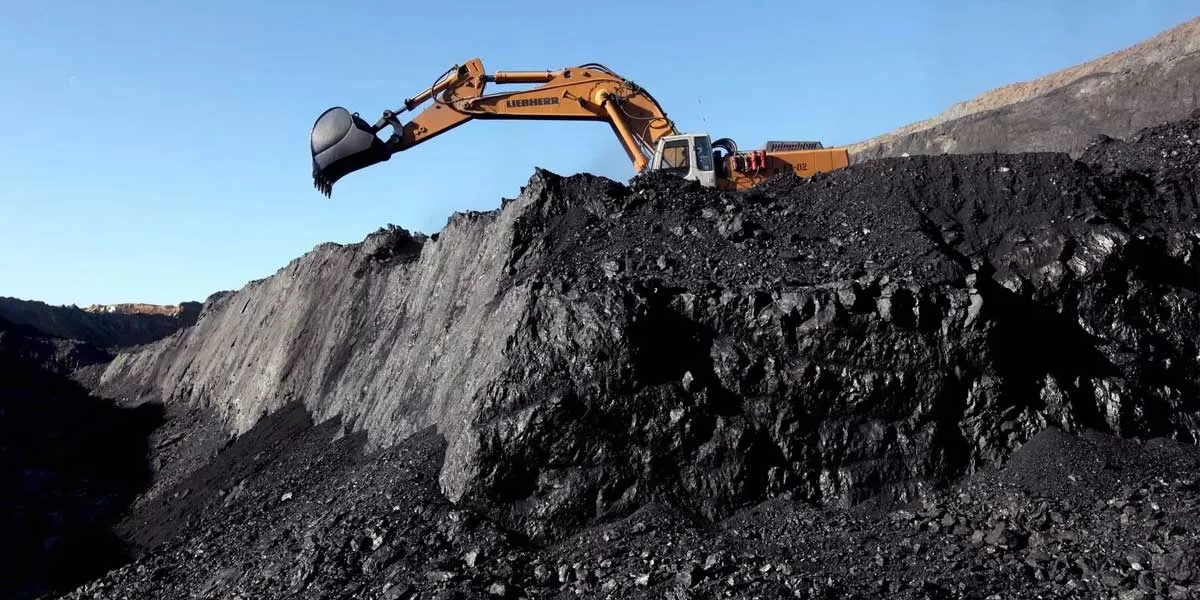
Dhanbad Coal Operations Hit By Nationwide Labour Strike
India’s roadmap to reach net zero greenhouse gas emissions by 2070 will require unprecedented capital mobilisation and strategic energy transitions, including a continued reliance on coal in the medium term, according to the latest analysis from the country’s premier policy think tank. The framework, released by NITI Aayog, sets out a development-first approach that balances economic expansion with climate imperatives — a complex task for a rapidly urbanising economy.
The comprehensive study estimates that cumulative investments of about USD 22.7 trillion are needed through 2070 to achieve net zero — up from current investment flows steeped heavily in traditional energy systems. Annualised, this translates to roughly USD 500 billion per year, compared with current levels nearer USD 135 billion, of which only a fraction supports clean energy deployment.Crucially, the report recognises a financing gap of over USD 6.5 trillion, pointing to the need for deeper integration with international capital markets and concessional global finance. Domestic sources are expected to cover approximately USD 16.2 trillion of the total, but the scale and complexity of the transition will necessitate sustained external support through public and private channels.
For urban economies and infrastructure planners, the financing challenge underscores the scale of transformation required across energy, transport, buildings and industry. Cities account for a growing share of energy demand and emissions, and how they decarbonise will shape not only climate outcomes but also economic competitiveness and liveability. This investment horizon also coincides with India’s ambition to become a developed economy by 2047, creating an imperative for synchronised policy and finance frameworks.The net-zero scenarios modelled by NITI Aayog envision advanced deployment of renewable energy, demand moderation, electrification and deeper energy efficiency. However, in a departure from many global trajectories, coal consumption — India’s dominant energy source — is expected to increase through at least the mid-2040s before gradually declining. This reflects the ongoing need to meet expanding power and industrial demand while cleaner energy capacity scales up.
Experts say this near-term reliance on coal, even within a decarbonisation strategy, highlights a core reality of large emerging economies: energy security and affordability remain central to development, and a too-rapid phase-out could risk supply disruptions or cost inflation that stifle growth. Coal plants and related supply chains currently underpin electricity generation, cement production, steelmaking and other sectors tied to urban infrastructure expansion.To navigate this dual challenge, the policy framework emphasises a “development-first” transition that layers efficiency, technological upgrades, clean power build-out and institutional reforms. It recommends establishment of a National Green Finance Institution, streamlined climate finance taxonomies, and district-level transition planning to unlock capital and coordinate action across ministries and states.
The report also integrates spatial considerations, noting that sub-national energy mixes, divergent urban growth rates and local industry profiles will shape how emissions pathways unfold across India’s regions.For policymakers and urban stakeholders, the NITI Aayog analysis points to an investment ecosystem that must evolve alongside infrastructure, workforce capacity and regulatory frameworks. The immediate outlook suggests that bridging the financing gap, accelerating clean energy deployment and managing coal’s role remain key focal points for India’s climate and urban transition in the decades ahead.