India Thermoplastic Marking Paint Demand Climbs With Infrastructure
India’s emerging road infrastructure and smart mobility ambitions are catalysing growth prospects for the thermoplastic marking paint market, as demand for durable, high-visibility road coatings rises alongside major highway projects and autonomous-ready transport systems. Market research points to the global segment reaching an estimated US$ 3.43 billion by 2031, driven by sustained investment in infrastructure and evolving mobility technologies.
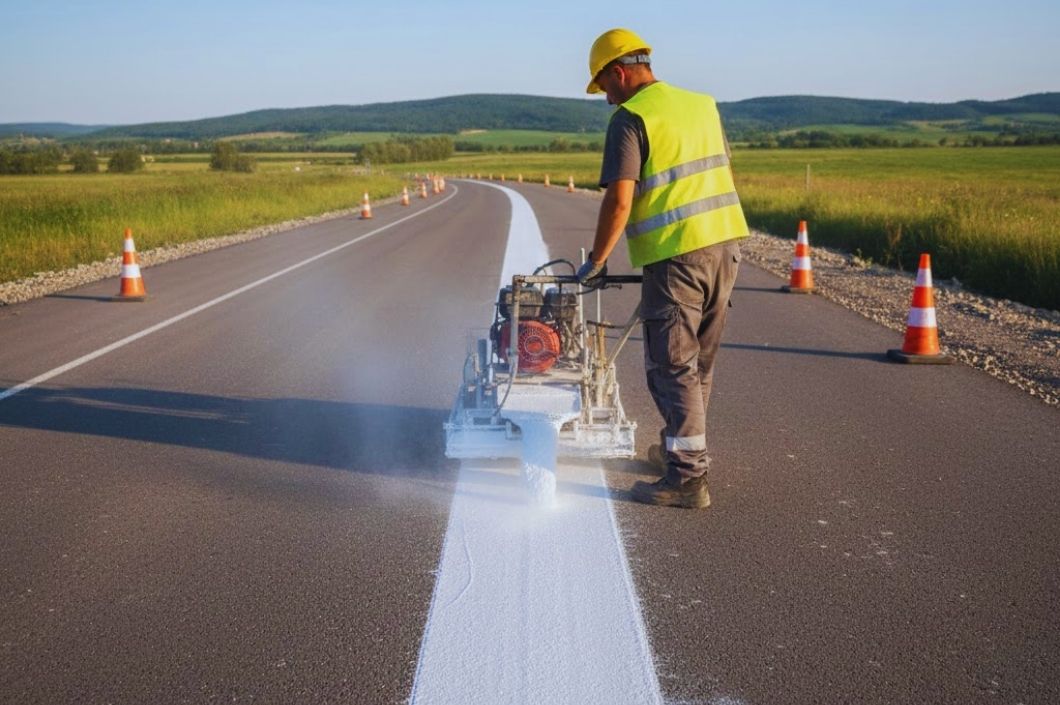
Thermoplastic marking paints — specialised coatings used to delineate road lanes, pedestrian crossings, airport runways and urban transport corridors — are gaining traction in India as public and private sector spending scales up on transportation networks. These paints are prized for durability, retroreflectivity and resilience to wear from heavy traffic and environmental stressors — attributes that align with national priorities on road safety and long-term asset performance.Urban development planners and civil engineers note that modern road systems increasingly incorporate thermoplastic road markings to meet higher safety standards and support advanced vehicle guidance systems, including those used by autonomous and semi-autonomous vehicles. Clear, high-contrast markings help onboard sensors and visual recognition systems detect lanes and navigational cues, making them a critical component of future-ready transport infrastructure.
In the Indian context, large-scale programmes like national highway expansions, expressway upgrades and urban rapid transit projects are expanding the surface area over which thermoplastic marking paints are applied. India’s road marking and related equipment markets are forecasted to grow steadily, buoyed by ongoing and planned infrastructure investments that tighten links between urban hubs and economic corridors.Industry experts point out that coatings demand in India is also supported by broader growth in the paints and coatings sector, which includes protective and industrial applications tied to construction and manufacturing. Recent analyses estimate the country’s overall industrial paints and coatings market will expand further over the next decade, with infrastructure-driven growth underpinning demand for specialised products like marking paints.
Regulatory emphasis on reduced volatile organic compound (VOC) emissions and the adoption of low-emission formulations are shaping product development. Environmentally safer marking solutions — including water-based and solvent-free systems with lower VOC content — are gaining preference among agencies seeking to balance performance with climate-responsible practices.Yet challenges remain. Thermoplastic marking paints require specific application expertise and equipment, and their effectiveness is tied to proper substrate preparation and longitudinal maintenance cycles. In many urban and rural districts, these technical requirements can strain local institutional capacity and project budgets, particularly in the face of competing infrastructure priorities.
For cities, the evolving market signals both an opportunity and an imperative: investing in high-performance road markings not only improves safety and navigation but also underpins the interoperability of future mobility technologies. As India pushes forward with ambitious infrastructure goals, integrating advanced marking systems into planning frameworks will be key to achieving resilient, equitable and technology-ready transport ecosystems.