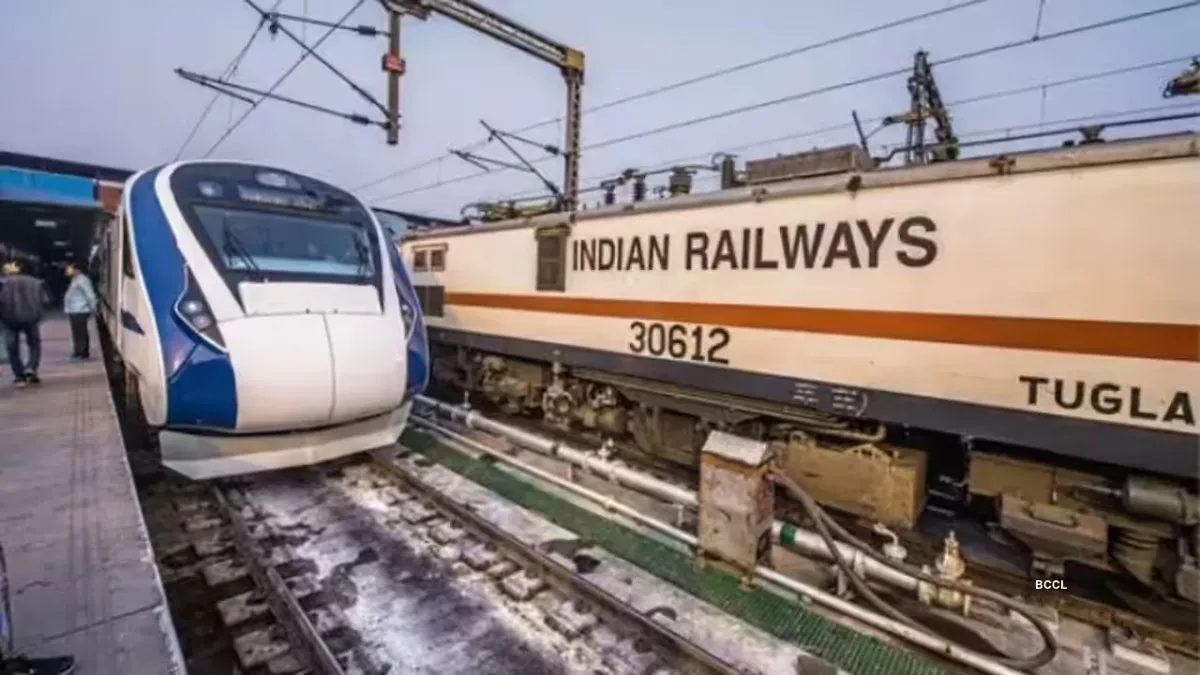
Indian Railways has temporarily expanded passenger capacity on the Delhi–Udaipur rail corridor, responding to sustained demand pressures on one of North India’s busiest intercity routes. The move reflects a broader operational push to fine-tune capacity on long-distance trains during peak travel windows, particularly those connecting national urban centres with high-growth tourism and heritage cities.
Additional sleeper-class coaches have been attached to both directions of the Delhi Sarai Rohilla–Udaipur City service for a defined period across February, extending marginally into early March on the return leg. Rail officials indicated that the decision was based on booking trends and passenger load patterns, which typically rise during the late winter and early spring travel season. The Delhi–Udaipur rail link serves a diverse ridership profile, including migrant workers, students, tourists, and small business travellers. Udaipur’s role as a tourism-driven economy, combined with Delhi’s position as a national employment and transit hub, places consistent pressure on this corridor. Temporary capacity augmentation is increasingly being used as a tactical tool to avoid overcrowding while maintaining schedule integrity.
Transport economists note that such incremental adjustments are often more efficient than running special trains, particularly on routes where platform availability and yard capacity are constrained. Adding coaches allows the railways to scale capacity without altering timetables, signalling priorities, or energy consumption patterns significantly an approach aligned with operational efficiency and lower marginal emissions per passenger. From an urban development perspective, the decision highlights the continuing importance of rail connectivity in balancing regional economic flows. Cities like Udaipur depend heavily on affordable, overnight rail services to sustain tourism-linked employment and supply chains. For Delhi, improved rail capacity helps distribute outbound travel demand more evenly, easing pressure on roads and short-haul flights.
Urban mobility planners point out that sleeper-class additions are particularly significant from an inclusion standpoint. Unlike premium classes, sleeper coaches remain the backbone of long-distance rail travel for middle- and lower-income passengers. Ensuring availability during peak periods supports equitable access to intercity mobility, a key pillar of sustainable transport planning. The temporary nature of the augmentation also underscores the data-driven shift underway within Indian Railways. Passenger analytics, reservation patterns, and seasonal demand forecasting are increasingly guiding operational decisions, replacing blanket capacity deployment with targeted interventions.
Looking ahead, infrastructure specialists suggest that sustained demand on routes like Delhi–Udaipur may warrant more permanent solutions, including rakes with higher baseline capacity or improved turnaround efficiency at terminal stations. However, short-term measures such as this provide valuable insights into evolving travel behaviour and corridor performance. As India’s intercity travel demand continues to rise alongside urban expansion and domestic tourism, such calibrated capacity responses are likely to become a regular feature of railway operations bridging immediate passenger needs while longer-term network upgrades take shape.
Delhi Udaipur Rail Link Gets Capacity Boost