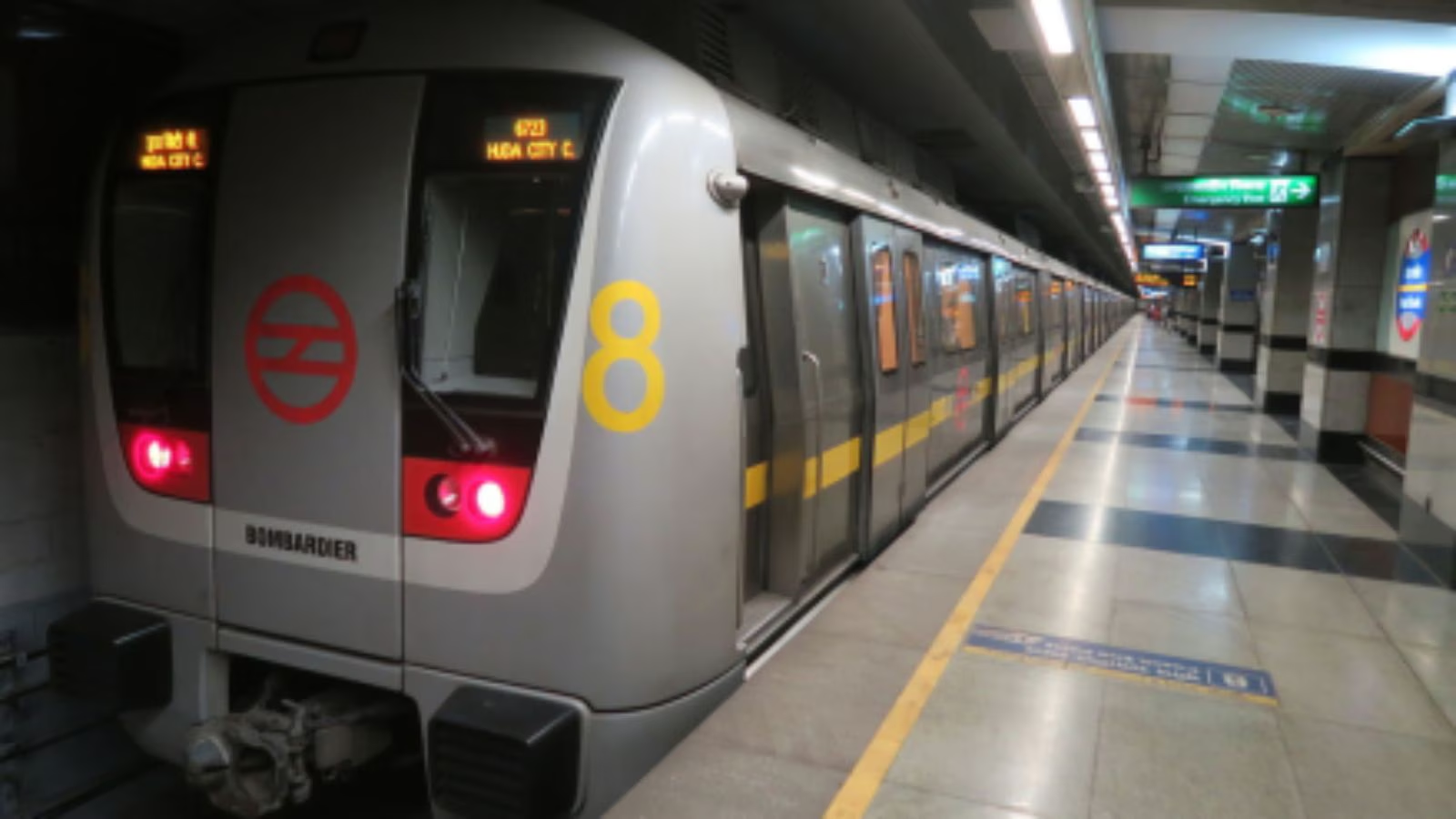
A security breach on Delhi’s premium Airport Express corridor briefly disrupted one of the capital’s most critical mobility links on Monday, underlining the fragile interface between urban infrastructure and public safety. An attempted theft of signalling cables on a central stretch of the line forced operational restrictions, slowing trains and unsettling thousands of airport-bound commuters during peak travel hours. The disruption occurred between two key stations connecting central Delhi with the international airport, where damage to nearly a kilometre of signalling cables was detected during routine monitoring.
Although the cables were not removed from the site, the physical cuts impaired the automated systems that regulate train movement and ensure safe high-speed operations. As a precaution, metro authorities imposed speed limits on trains passing through the affected section, extending travel times and reducing network efficiency. For a corridor designed to offer predictable, time-sensitive connectivity to the airport, even minor slowdowns carry outsized consequences. Transport planners note that the Airport Express Line plays a strategic role not just for passengers, but also for Delhi’s business ecosystem, enabling reliable movement for airline staff, logistics workers and time-critical travellers. Any disruption, even temporary, undermines confidence in public transport as a dependable alternative to private vehicles and taxis.
Repair work, however, could not be undertaken immediately. The Airport Express operates at high frequency through the day, leaving little scope for intrusive maintenance without triggering wider service suspensions. Engineers therefore deferred cable replacement to non-operational hours, while conducting preparatory inspections during the day. This approach reflects a growing challenge for dense urban rail systems: balancing uninterrupted service delivery with the need for rapid response to infrastructure damage. Urban infrastructure experts point out that cable theft and vandalism are not isolated incidents but recurring risks across Indian cities. Exposed or poorly secured signalling and power systems often become targets due to the resale value of metals, creating safety hazards far beyond the immediate loss. In high-capacity transit networks, even small acts of sabotage can ripple into citywide delays, productivity losses and increased carbon emissions as commuters shift to road-based alternatives.
By late evening, metro authorities confirmed that the damaged section had been restored and full-speed operations resumed across the Airport Express Line. Law enforcement agencies have been alerted, and additional surveillance and patrol measures are expected to be reviewed along vulnerable stretches.
The incident has renewed calls for smarter infrastructure protection, including better fencing, sensor-based intrusion detection and closer coordination between transit operators and policing agencies. As Delhi continues to expand its rail network as a cornerstone of low-carbon urban mobility, ensuring the physical security of critical systems will be as important as adding new lines. The episode serves as a reminder that resilient cities depend not only on scale and speed, but also on safeguarding the assets that keep daily urban life moving.
Delhi Metro Airport Line disruption raises security concerns