


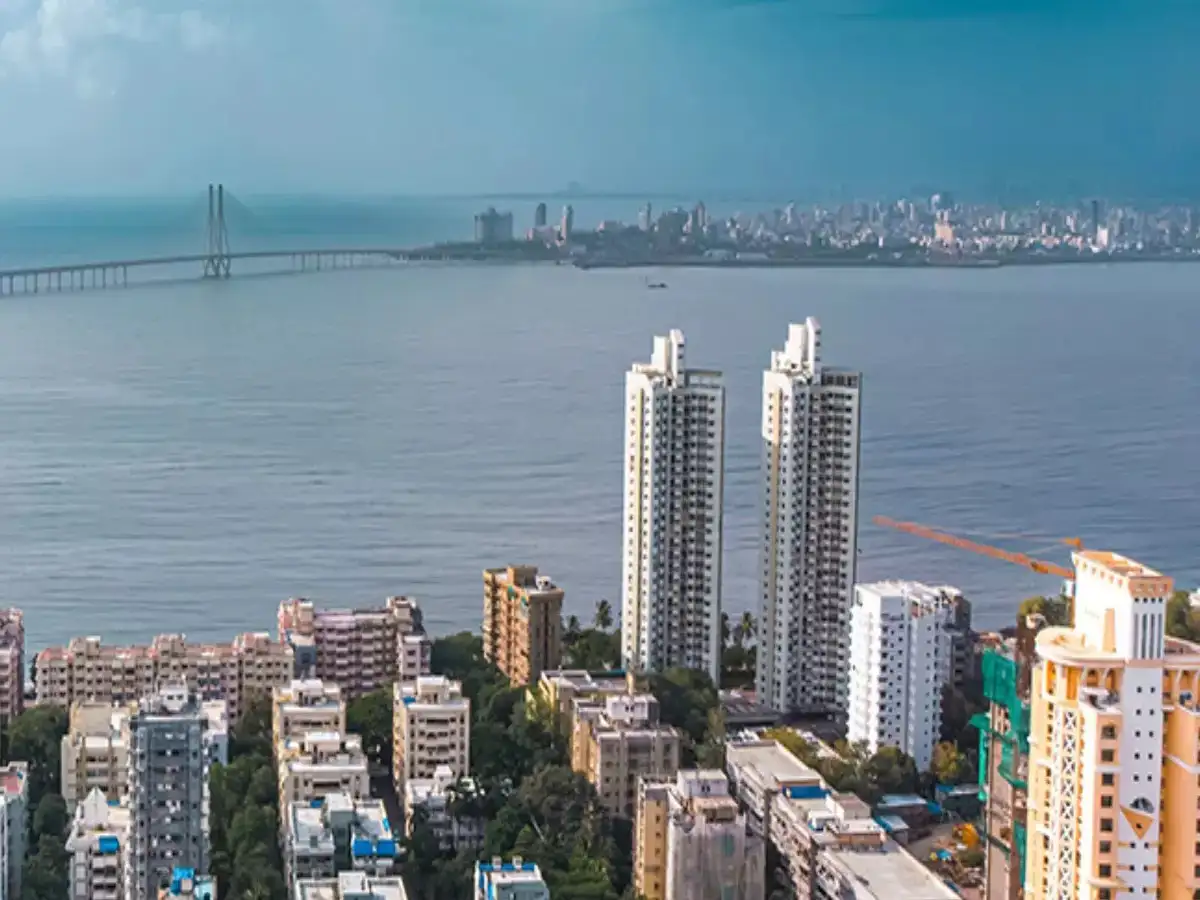
Mumbai’s real estate market concluded 2025 with an uncommon but significant outcome: stability. In a year shaped by global economic uncertainty and shifting work patterns, the country’s largest metropolitan property market avoided sharp corrections or speculative surges, instead demonstrating measured growth across both office and residential segments. For a city long associated with cyclical volatility, this steadiness carries wider implications for urban resilience and long-term planning.
Office demand remained a central anchor. Leasing activity stayed close to recent historical highs, signalling that occupiers continue to view Mumbai as a strategic business base rather than a cost centre. Market observers note that companies increasingly prioritised operational efficiency, scalability and workforce accessibility over legacy central business addresses. This shift reinforced the rise of suburban and peripheral business districts, where newer buildings offer larger floorplates, improved energy performance and proximity to expanding residential catchments. A notable structural change emerged in the composition of office demand. Global enterprises expanded their footprint for high-value functions such as analytics, engineering support and shared services. Urban economists suggest this reflects Mumbai’s evolution from a regional office hub to a city supporting global business operations. At the same time, domestic firms remained active, though with a more selective approach, favouring cost discipline and long-term occupancy certainty. Rental values edged upward across key corridors, supported by limited new supply and sustained absorption. Importantly, vacancy levels remained contained, indicating that price movement was driven by real demand rather than speculative withholding. For urban planners, this balance underscores the importance of aligning commercial development with transit investment and workforce housing, particularly as employment decentralises.
On the residential side, housing demand held firm despite rising prices. Homebuyers appeared increasingly focused on quality, liveability and future value rather than entry-level pricing alone. Mid-to-premium homes gained prominence as households sought better layouts, community amenities and locations linked to infrastructure upgrades. In contrast, the share of lower-priced homes declined, reflecting land constraints and rising construction costs rather than a collapse in need. Developer behaviour also contributed to market equilibrium. New housing launches were calibrated closely to sales volumes, preventing inventory overhangs and supporting gradual price appreciation. Analysts argue that this restraint marks a departure from earlier boom cycles and suggests a more institutional, risk-aware development environment. Infrastructure investment continued to quietly reshape demand patterns. New metro links and cross-harbour connectivity reduced perceived distances, drawing both residents and businesses toward peripheral suburbs. These shifts highlight how transport-led planning can ease pressure on central districts while improving access and daily quality of life.
As Mumbai enters the next decade of urban growth, the lessons of 2025 are instructive. A market defined by balance rather than exuberance offers a stronger foundation for inclusive housing, climate-aware construction and economically resilient cities. The challenge ahead lies in ensuring that this stability translates into equitable access and sustainable urban form, rather than simply higher asset values.
Also Read: Maharashtra Weather Shift Disrupts Regional Mobility
Mumbai Property Market Balances Growth And Caution
