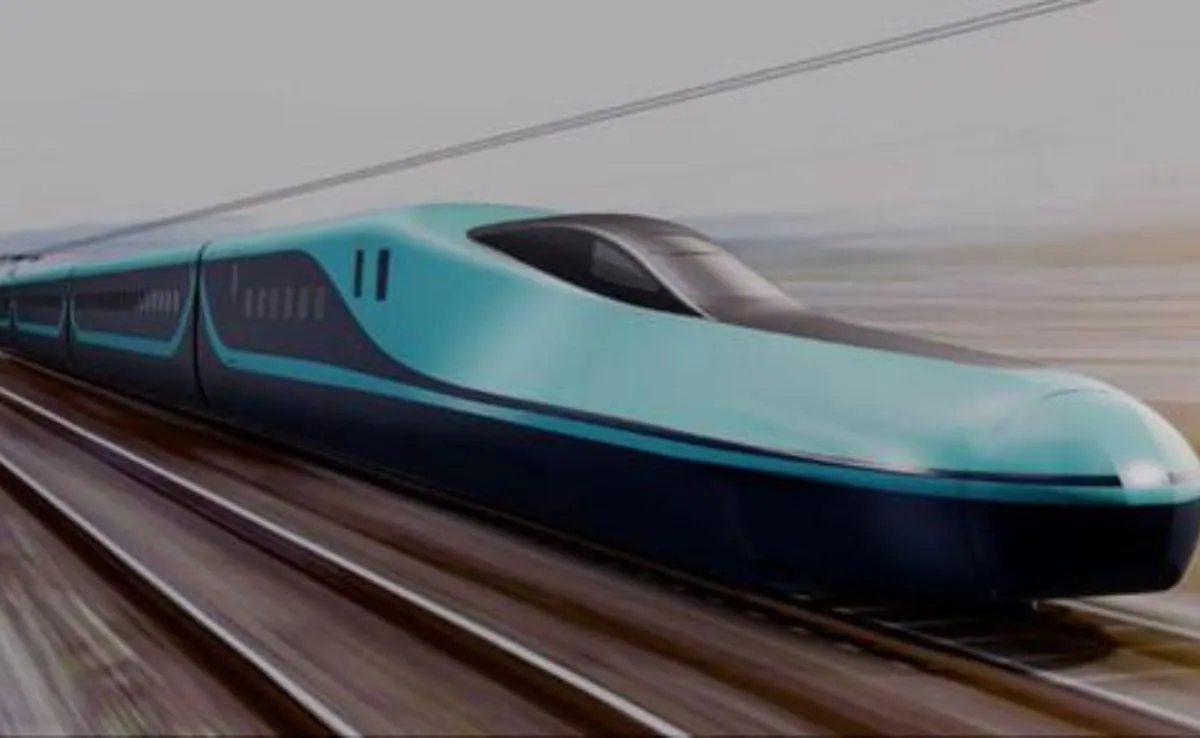
India’s first dedicated high-speed rail corridor is approaching operational readiness, with the Mumbai–Ahmedabad bullet train now targeted for phased launch beginning in 2027. The announcement signals a decisive step in India’s long-term shift towards faster, cleaner inter-city mobility and marks a turning point for large-scale rail-led urban and regional integration.
The 508-kilometre Mumbai Ahmedabad high speed rail corridor is being executed by a special purpose vehicle under the Ministry of Railways and represents the country’s most ambitious transport infrastructure project to date. Designed for operating speeds of up to 320 kmph, the corridor will compress travel time between India’s financial capital and Gujarat’s commercial hubs to just over two hours, fundamentally altering business, labour, and logistics dynamics across western India. Officials overseeing the project indicate that services will commence in stages, starting with sections in Gujarat where civil works are most advanced. This phased approach is intended to ensure operational safety while integrating complex systems such as signalling, power supply, and rolling stock maintenance. The final Mumbai connection, including underground sections in the metropolitan region, will follow once tunnelling and station works reach completion.
From an urban development perspective, the Mumbai Ahmedabad bullet train is more than a transport upgrade. Urban planners view it as a catalyst for polycentric growth, enabling economic activity to spread beyond traditional city cores. Stations along the corridor are expected to emerge as high-density transit nodes, supporting mixed-use development, commercial real estate expansion, and improved regional accessibility. Construction progress has reached a critical mass. Viaducts, piers, river crossings, and noise mitigation systems have been completed across large stretches, reflecting the scale and engineering complexity of the project. Track bed construction and overhead electrification are also advancing steadily, laying the foundation for high-speed operations that meet international safety benchmarks.
The corridor’s financing structure underscores its strategic importance. A substantial portion of the project cost is supported through long-tenure external funding, reducing immediate fiscal pressure while enabling the adoption of proven high-speed rail technology. Industry experts note that this model could shape future infrastructure financing in India, particularly for capital-intensive, climate-aligned projects.Environmental considerations are central to the corridor’s design. High-speed rail offers significantly lower emissions per passenger compared to short-haul aviation and private road travel. As India’s cities grapple with congestion, air quality challenges, and climate commitments, shifting long-distance travel to electrified rail is seen as a pragmatic pathway towards decarbonising transport without constraining economic growth.
Beyond mobility, the project is expected to generate sustained employment across construction, operations, and allied industries, while improving access to markets for businesses across Maharashtra and Gujarat. For commuters, the corridor promises predictable travel times and safer journeys, reinforcing rail’s role as a people-first mode of mass transport. As the Mumbai Ahmedabad high speed rail corridor moves closer to launch, its performance will be closely watched. Success here could determine the pace and scale of future bullet train corridors, shaping how India’s cities connect, grow, and compete in a low-carbon global economy.
Mumbai Ahmedabad Corridor Nears High Speed Rail Debut