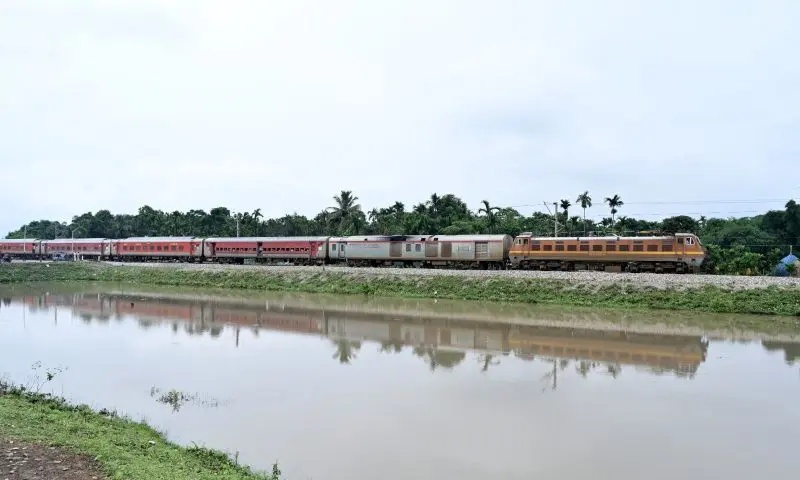
Northeast Frontier Railway has expanded passenger access across Assam and West Bengal by introducing 42 additional train stoppages in 2025, strengthening regional connectivity and improving travel convenience for semi-urban and rural communities. The move is part of a broader effort to make rail services more inclusive while supporting balanced regional growth in eastern India.
Railway officials said the new halts were approved after evaluating passenger demand, travel patterns and operational feasibility. The initiative reflects a growing emphasis on improving last-mile connectivity and ensuring that long-distance train services are accessible beyond major junctions. Transport planners view the move as a practical step towards reducing dependence on road travel while easing pressure on overcrowded rail hubs. In Assam, 32 additional stoppages have been introduced across 23 passenger trains, significantly widening access to the railway network. Stations such as Diphu, Goalpara Town, Kokrajhar and New Haflong have been added to train schedules, benefiting commuters from hill districts, border regions and fast-growing semi-urban centres. These stops allow passengers to directly board long-distance trains, reducing the need for time-consuming transfers at larger stations.
West Bengal has received 10 additional stoppages across eight trains, with stations including Kumedpur, Old Malda and Kanki gaining improved rail access. The new halts are expected to strengthen connectivity within North Bengal, a region where railways play a crucial role in linking trade hubs, education centres and healthcare facilities with remote settlements. Several prominent long-distance services have been covered under the expansion, including key express trains connecting the Northeast with northern and eastern India. Railway officials said this would help distribute passenger loads more evenly across stations while offering travellers greater flexibility in planning journeys.
Urban mobility experts note that such incremental network improvements can deliver outsized social benefits. Better rail access reduces travel costs for students, workers and small traders, while improving access to hospitals and educational institutions. It also supports local tourism and small businesses by making lesser-known towns more reachable. From a sustainability perspective, enhanced rail usage aligns with low-carbon transport goals by encouraging a shift away from private vehicles and long road journeys. Improved train accessibility can help cut emissions, reduce highway congestion and support more equitable mobility outcomes.
Northeast Frontier Railway officials said similar demand-based interventions will continue as part of ongoing service reviews. By responding to passenger needs and regional development priorities, the railways aim to play a stronger role in fostering inclusive growth while modernising India’s transport backbone.
Assam West Bengal Get 42 Additional Train Stoppages Improving Passenger Convenience 2025