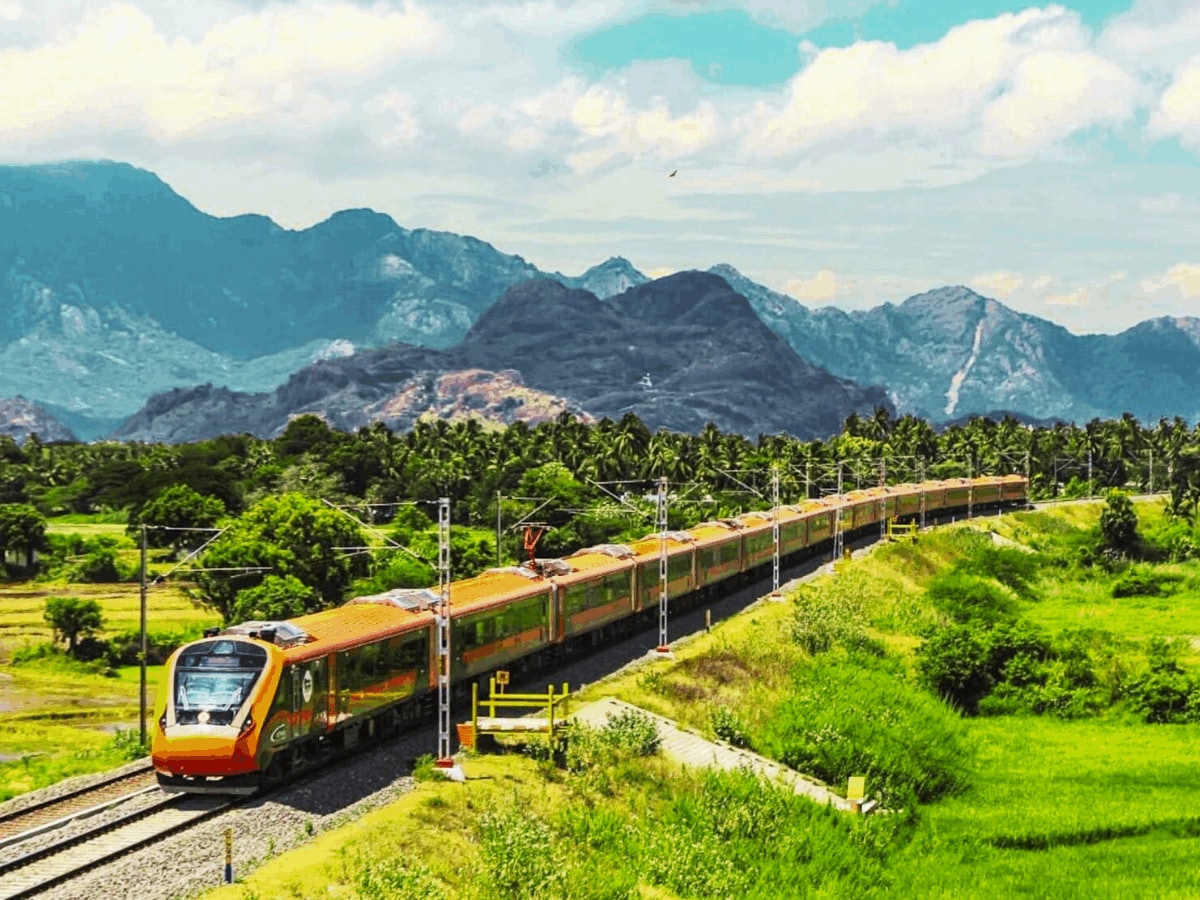
Bengaluru Mangaluru Vande Bharat Crosses Western Ghats
The Bengaluru–Mangaluru Vande Bharat route is putting one of Karnataka’s most challenging rail landscapes at the centre of a new intercity connection. The service traverses the Western Ghats through dozens of tunnels, hundreds of bridges and numerous sharp curves, demonstrating both the engineering complexity and the strategic value of maintaining rail connectivity across environmentally sensitive terrain.
The route between Bengaluru and Mangaluru includes 57 tunnels, 226 bridges and 108 curves across the Western Ghats section, according to railway information cited in the report. The infrastructure reflects the difficult geography faced by trains crossing the mountain range, where steep gradients, heavy rainfall and complex terrain create demanding operating conditions. The route’s engineering challenges are not simply a historical concern. The Western Ghats receive intense monsoon rainfall, making drainage, slope stability and regular inspection essential for safe railway operations. Tunnels and bridges require continuous maintenance, while exposed sections can face risks from erosion, landslides and falling debris. For passengers, the service creates a faster rail connection between Bengaluru and the coastal city of Mangaluru. The corridor serves more than leisure travellers. It supports movement linked to employment, education, healthcare, trade and tourism between the state’s interior and coastal regions. The railway’s ability to operate through such terrain also highlights the value of existing infrastructure.Constructing new transport corridors through the Western Ghats can involve substantial environmental and engineering costs. Making better use of established railway alignments, where capacity and safety allow, can provide connectivity without automatically requiring entirely new routes.
There are economic benefits to improved rail links as well. Mangaluru functions as an important coastal commercial centre, while Bengaluru is Karnataka’s largest employment and business hub. More reliable passenger connections can strengthen the movement of workers, students and visitors between the two economies. Tourism could also benefit from the service, particularly for travellers heading towards the coast and the Western Ghats. However, greater accessibility can increase visitor pressure on ecologically sensitive destinations. Tourism growth therefore needs to be accompanied by waste management, public transport options and protection of fragile landscapes. The route also illustrates why climate resilience is becoming central to railway planning. Extreme rainfall and changing weather patterns can increase the frequency and severity of slope failures and flooding. Monitoring systems, stronger drainage and early-warning mechanisms can help protect services and reduce disruption. From a sustainability perspective, rail remains an important alternative to road and air travel for intercity journeys. A dependable connection between Bengaluru and Mangaluru can shift some passenger movement away from private vehicles, reducing pressure on highways and potentially lowering transport emissions.
The Western Ghats section will nevertheless require careful stewardship. Speed and frequency improvements must remain compatible with safety requirements and the ecological sensitivity of the region. The Bengaluru–Mangaluru Vande Bharat is therefore more than a faster train service. It demonstrates how existing transport infrastructure can connect two major economic regions while navigating some of Karnataka’s most difficult terrain. Its long-term success will depend on keeping that network safe, resilient and environmentally responsible as passenger demand grows.