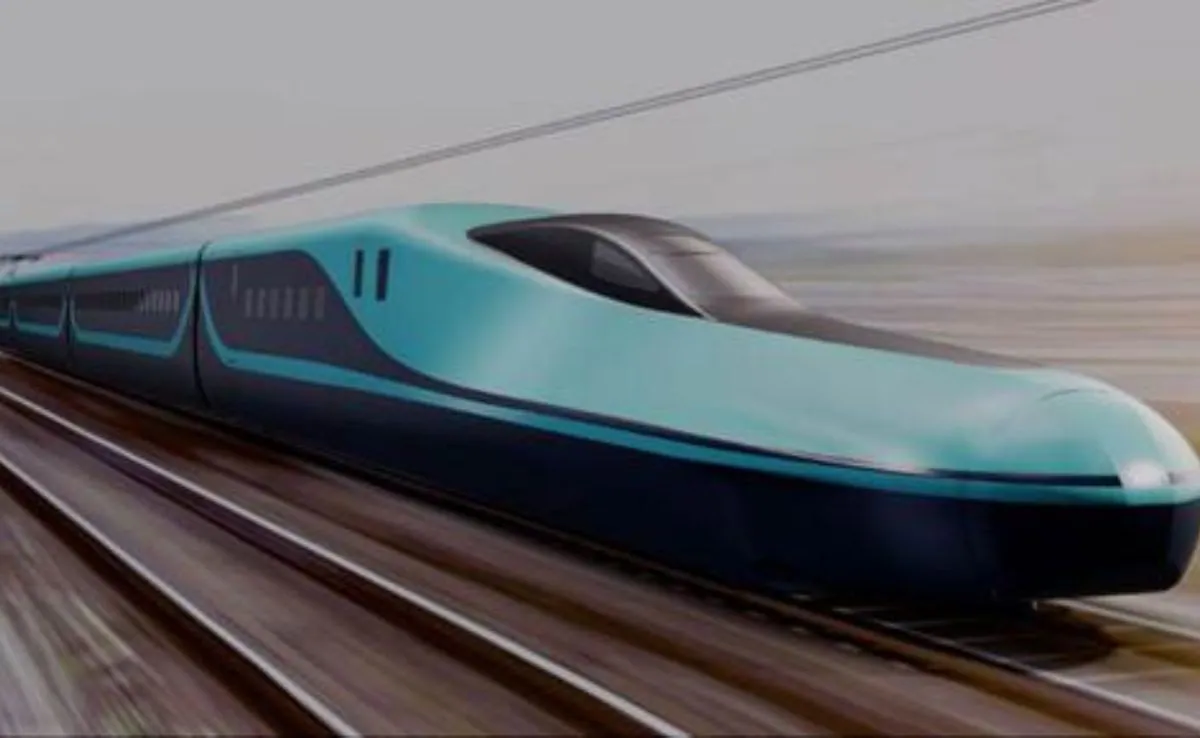
India’s transition into high-speed rail moved a step closer this week as railway authorities confirmed that the country’s first bullet train will commence partial operations on the Surat–Vapi stretch in August 2027. The update marks a significant milestone for the Mumbai–Ahmedabad high-speed rail corridor, a flagship mobility project designed to reshape intercity connectivity and support more efficient, lower-emission travel across western India.
Officials associated with the initiative said the initial 100-kilometre section in Gujarat has achieved key construction benchmarks, including the completion of a technically challenging tunnel designed to accommodate bi-directional high-speed operations. They noted that the breakthrough demonstrates the engineering readiness needed to accelerate progress along the remaining sections of the 508-kilometre alignment. Once fully commissioned, the corridor will enable a non-stop journey between Mumbai and Ahmedabad in just under two hours, significantly reducing current travel times and opening new possibilities for sustainable mobility. Railway representatives explained that a limited-stop service halting only at four principal stations would take roughly 1 hour and 58 minutes, while a train stopping at all 12 designated stations is expected to complete the journey in 2 hours and 17 minutes.
Urban mobility experts said the project has implications that extend beyond faster travel. They believe it could shift commuter behaviour towards cleaner transport options, particularly at a time when major cities are seeking solutions that reduce road congestion and support climate-aligned economic growth. According to industry observers, high-speed rail offers an alternative to short-haul flights, helping cities lower their carbon footprint while improving regional accessibility. Officials working on the project maintained that the infrastructure is being developed with long-term sustainability and resilience in mind. The corridor includes advanced structural systems, energy-efficient design features, and provisions for multimodal integration at key stations. Planners indicated that the network has the potential to improve urban–regional linkage, ease pressure on overstretched road networks, and support balanced development across the Mumbai Metropolitan Region and western Gujarat.
However, experts also emphasise that India’s high-speed rail ambition must be accompanied by equally strong last-mile connectivity, inclusive station planning, and equitable access if it is to bring widespread benefits. They argue that cities need to ensure that the new infrastructure does not widen mobility disparities but instead supports integrated, affordable, and low-carbon urban travel. As the Surat–Vapi section approaches readiness for commissioning, authorities expect construction momentum to increase across the remaining packages. While the inaugural run in 2027 will cover only a fraction of the complete route, it is seen as an operational proof-of-concept that will help refine safety, engineering and service protocols.
If the project continues as scheduled, the Mumbai–Ahmedabad corridor will become a defining moment in India’s mobility transition—introducing world-class high-speed systems that align with the broader push for cleaner, quicker, and more resilient transport networks.
Mumbai To Surat Bullet Train Promises Two Hour Travel After Major Update