


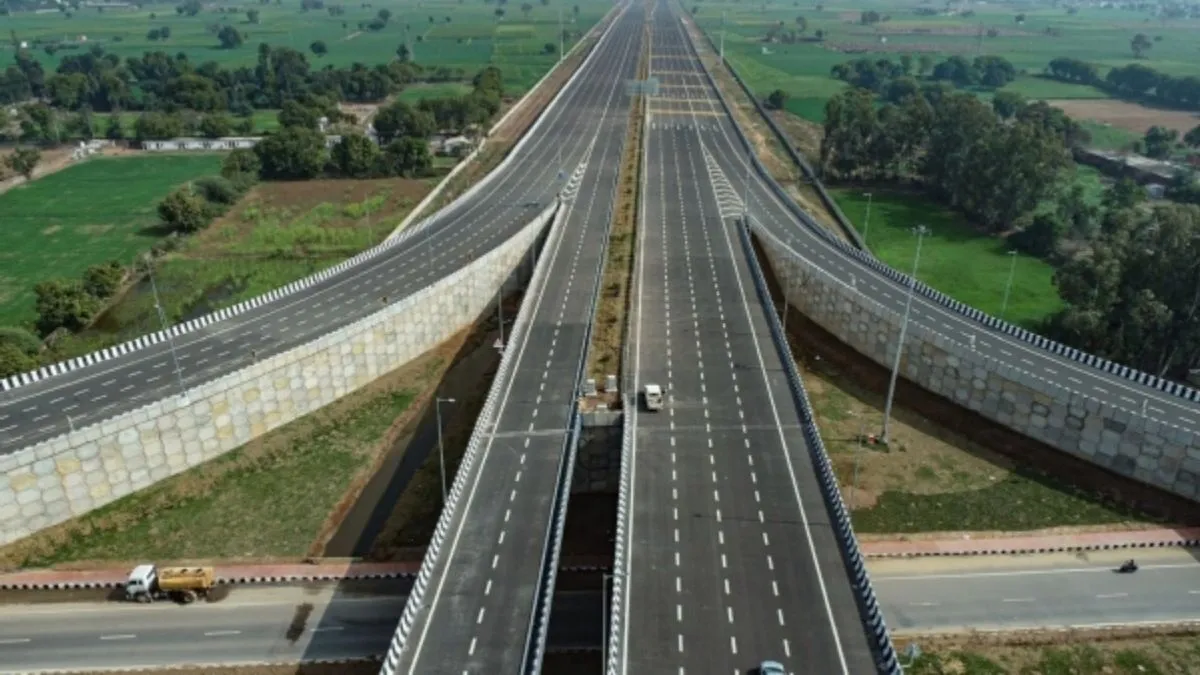
National Highways Authority of India (NHAI) has submitted a detailed project report (DPR) to the central government for a new greenfield Pune–Bengaluru highway. Estimated to cost ₹42,000 crore, the six-lane expressway is designed to decongest the existing route and enhance economic connectivity between Maharashtra and Karnataka.
According to officials, the proposed 699-kilometre highway will include a 206-kilometre stretch within Maharashtra, running parallel to the current Pune–Bengaluru route. Once approved, construction is expected to take three years. The design prioritises high-speed, safe travel with a target speed limit of 120 kilometres per hour. The highway will connect seamlessly with the ongoing Pune Ring Road project being developed by the Maharashtra State Road Development Corporation (MSRDC). The ring road, beginning near Khopi in Bhor, will link to the expressway, integrating regional logistics and easing urban congestion around Pune. This connectivity aims to strengthen trade routes and provide direct access to industrial and agricultural hubs in western Maharashtra.
Officials said the project includes advanced features such as grade-separated interchanges and two emergency airstrips near Pune and Bengaluru for defence and disaster response use. “Along the new highway, logistics parks, satellite townships and industrial estates are being planned to boost regional development and employment,” an official stated. Land acquisition for the Maharashtra section—covering approximately 5,000 acres—will be a major component of the project. Of the total ₹42,000 crore outlay, around ₹10,000 crore will be allocated for land acquisition and ₹8,000 crore for the construction of the 206-kilometre state stretch. The route design also includes two tunnels in Satara and three in Sangli, reducing environmental disruption by aligning with natural terrain.
Infrastructure analysts note that the new corridor could significantly cut travel time between Pune and Bengaluru, currently hampered by congestion on the existing NH48. The expressway will also encourage balanced regional growth, connecting emerging industrial zones with major urban centres and ports. If implemented with environmental safeguards, the project has the potential to become a benchmark for sustainable highway development. Experts emphasise the importance of incorporating green design standards such as rainwater harvesting, solar lighting, and noise barriers to minimise ecological impact.
Once operational, the Pune–Bengaluru greenfield highway could redefine mobility in southern and western India—linking economies, enabling faster freight movement, and strengthening India’s push for modern, resilient infrastructure.
Also Read: Mumbai To Get 5 Mega Bridges Reshaping South City Connectivity Over Next 5 Years
