


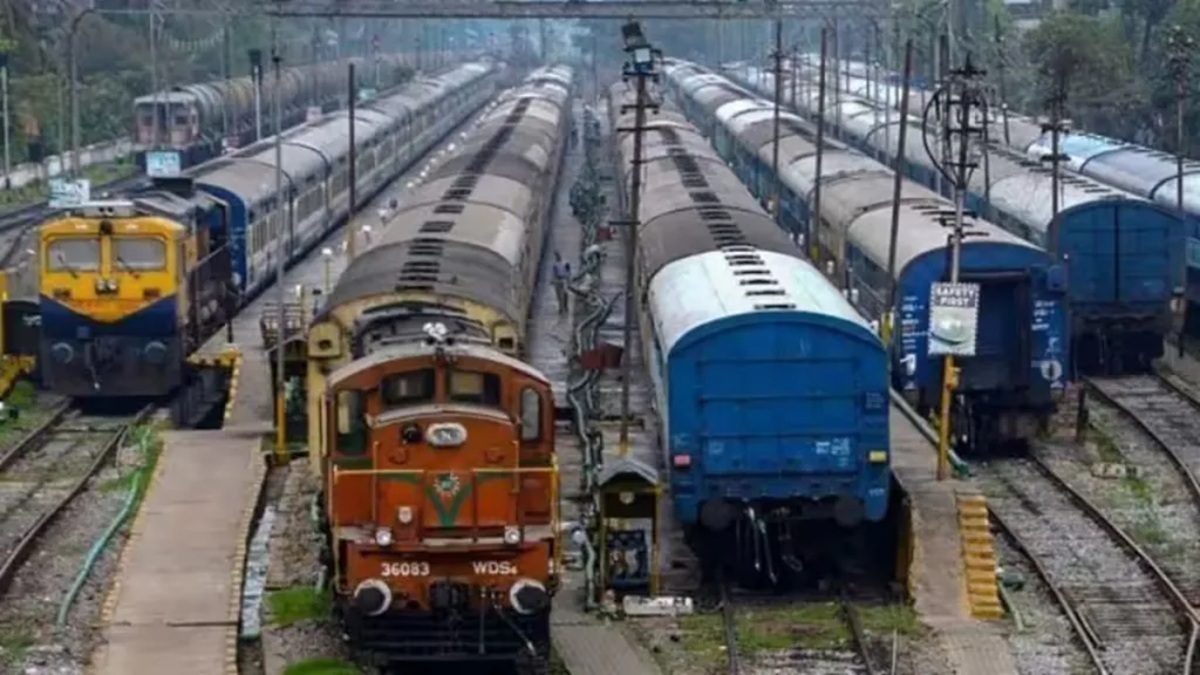
Northern Railways on Friday cancelled 46 trains operating from Jammu, Katra and Udhampur as relentless rainfall and flash floods continued to disrupt operations in the region. Passenger movement has remained crippled for four consecutive days, exposing the vulnerability of critical transport infrastructure to extreme weather events.
Officials confirmed that the suspension of services between Kathua and Udhampur was triggered by multiple track breaches, misalignments, and waterlogging across several stretches. Safety checks have been intensified to prevent accidents, and five trains were partially rescheduled with short-origin or short-termination arrangements. The cancellations follow a similar disruption a day earlier, when 40 trains were withdrawn from service, marking one of the most prolonged halts in recent years. The situation has left thousands of passengers stranded, particularly pilgrims heading towards the Mata Vaishno Devi shrine in Katra. Two special unreserved trains were operated from Jammu to ferry nearly 3,000 stranded passengers, yet the demand for evacuation far outweighed the limited supply. Officials admitted that heavy congestion and widespread cancellations have disrupted not only religious tourism but also routine economic movement across the Union territory.
The monsoon deluge has been unprecedented. Jammu recorded 380 mm of rainfall by Wednesday morning, its heaviest spell since 1910. The downpour triggered flash floods, landslides, and infrastructural collapse, claiming 34 lives in Katra alone. Transport experts say the impact underscores the urgent need to climate-proof India’s rail networks, particularly in geographies prone to seasonal flooding and landslides. Railway engineers on the ground have reported breaches in embankments and ballast washouts, which will require extensive repairs before operations can resume. Restoration work is underway, but officials cautioned that the safety of passengers remains the top priority, and resumption will be gradual. The disruption has already led to ripple effects on road transport, with highways witnessing long traffic snarls as travellers scrambled for alternatives.
Economic analysts suggest that repeated climate shocks to essential infrastructure in Jammu and Kashmir not only destabilise tourism but also raise questions about resilience planning. Pilgrimage circuits, which account for significant seasonal revenue, are particularly vulnerable. Experts have called for integrated disaster management frameworks, stronger drainage systems near tracks, and investment in resilient materials to adapt railways to increasingly volatile monsoons. For now, passengers have been urged to track real-time updates from railway authorities and avoid unnecessary travel until weather conditions stabilise. The region’s ordeal reflects a broader challenge for India’s transport ecosystem — how to sustain connectivity in the face of intensifying climate risks without compromising safety.
Also Read : Adani Ends Airport Lounge Service Collaboration With Dreamfolks After Encalm Exit
