


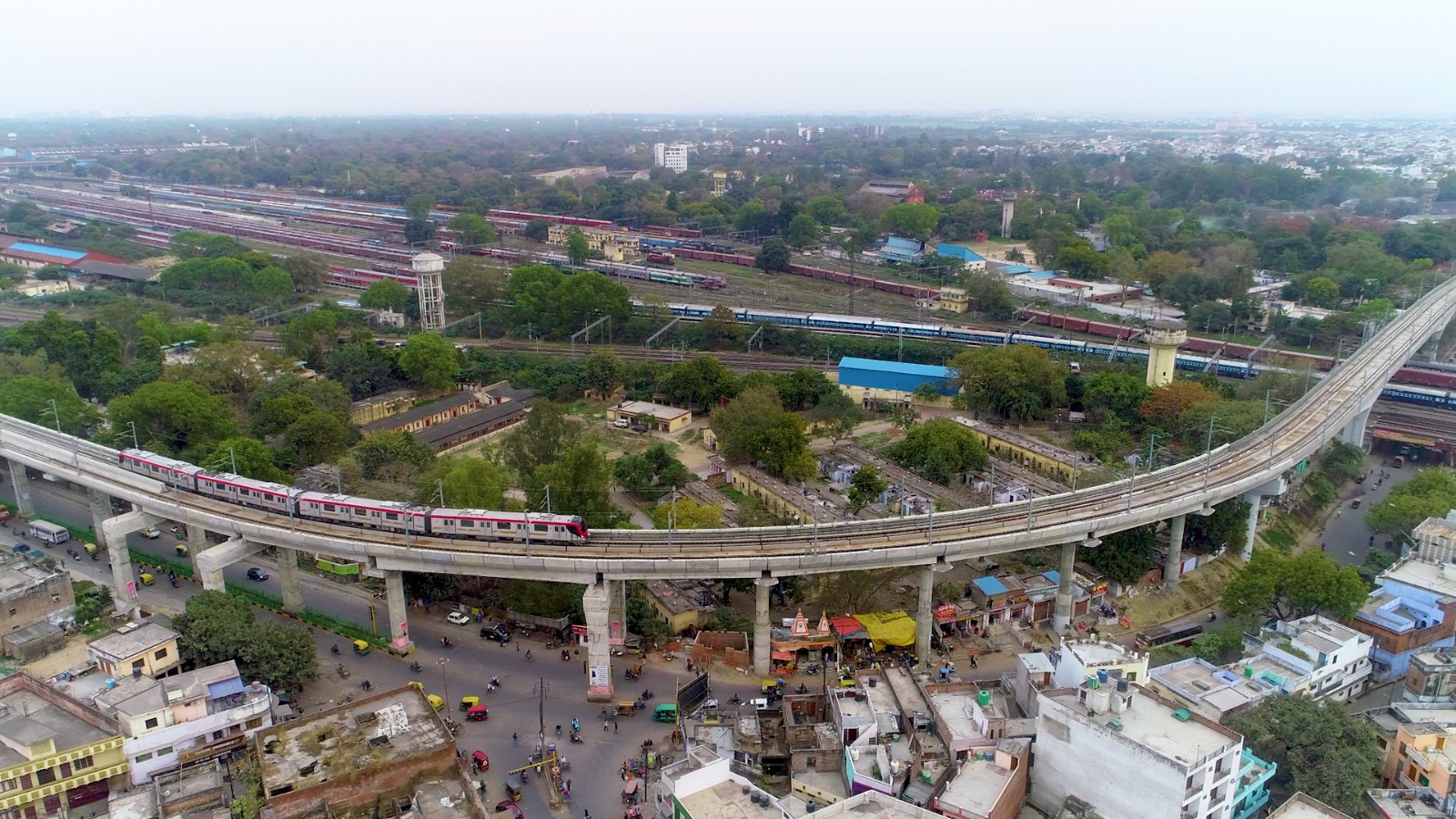
Lucknow is set to take a major leap in urban mobility with construction of the much-awaited Blue Line Metro corridor scheduled to begin this October. Backed by an investment of ₹5,801 crore, the 11.2-kilometre East-West line will connect Charbagh to Vasant Kunj, promising faster, cleaner and more reliable transit for nearly 10 lakh residents of the old city.
The Blue Line project has been designed to serve as a lifeline for some of Lucknow’s most congested neighbourhoods, including Aminabad, Chowk and KGMU. It will feature 12 stations in total seven underground and five elevated ensuring seamless travel across critical junctions. Officials have emphasised that station placement will be carefully planned, with construction taking place at least 5–10 metres away from intersections to prevent bottlenecks.
Also Watch: An Exclusive Interview with Sanjeev Jaiswal (IAS), CEO MHADA
Traffic management has been built into the project blueprint, with the entire corridor divided into four work zones. Choke points have already been mapped, and barricades will be strategically placed to ensure parallel movement of vehicles during construction. In dense residential pockets, advanced Tunnel Boring Machines imported from Spain and Italy will be deployed under expert supervision. These machines are designed to minimise vibrations, thereby protecting heritage homes and fragile structures across the old city.Beyond improving connectivity, the Blue Line holds the promise of significantly reducing the city’s environmental footprint. Once operational, it is expected to take nearly 2.5 lakh vehicles off Lucknow’s roads every day. This reduction in road congestion is not only projected to cut travel times but also improve air quality, aligning with the city’s push towards sustainable urban development.
Officials overseeing the project have indicated that while the estimated timeline for completion is five years, there is strong optimism that the work could be completed ahead of schedule. The urgency reflects the pressing need for modern transport solutions in a city where private vehicles dominate and traffic snarls are increasingly becoming an economic and ecological burden.The project also dovetails with the broader vision of building sustainable, gender-neutral and equitable cities. By prioritising safe, reliable and carbon-efficient mobility, the Blue Line is expected to transform commuting patterns in Lucknow while enhancing liveability for all sections of society.As construction begins in October, the Blue Line is being positioned not merely as an infrastructure upgrade but as a catalyst for reshaping Lucknow’s growth trajectory. For a city with deep cultural heritage and expanding modern aspirations, the metro expansion reflects both progress and preparedness for a more sustainable urban future.
