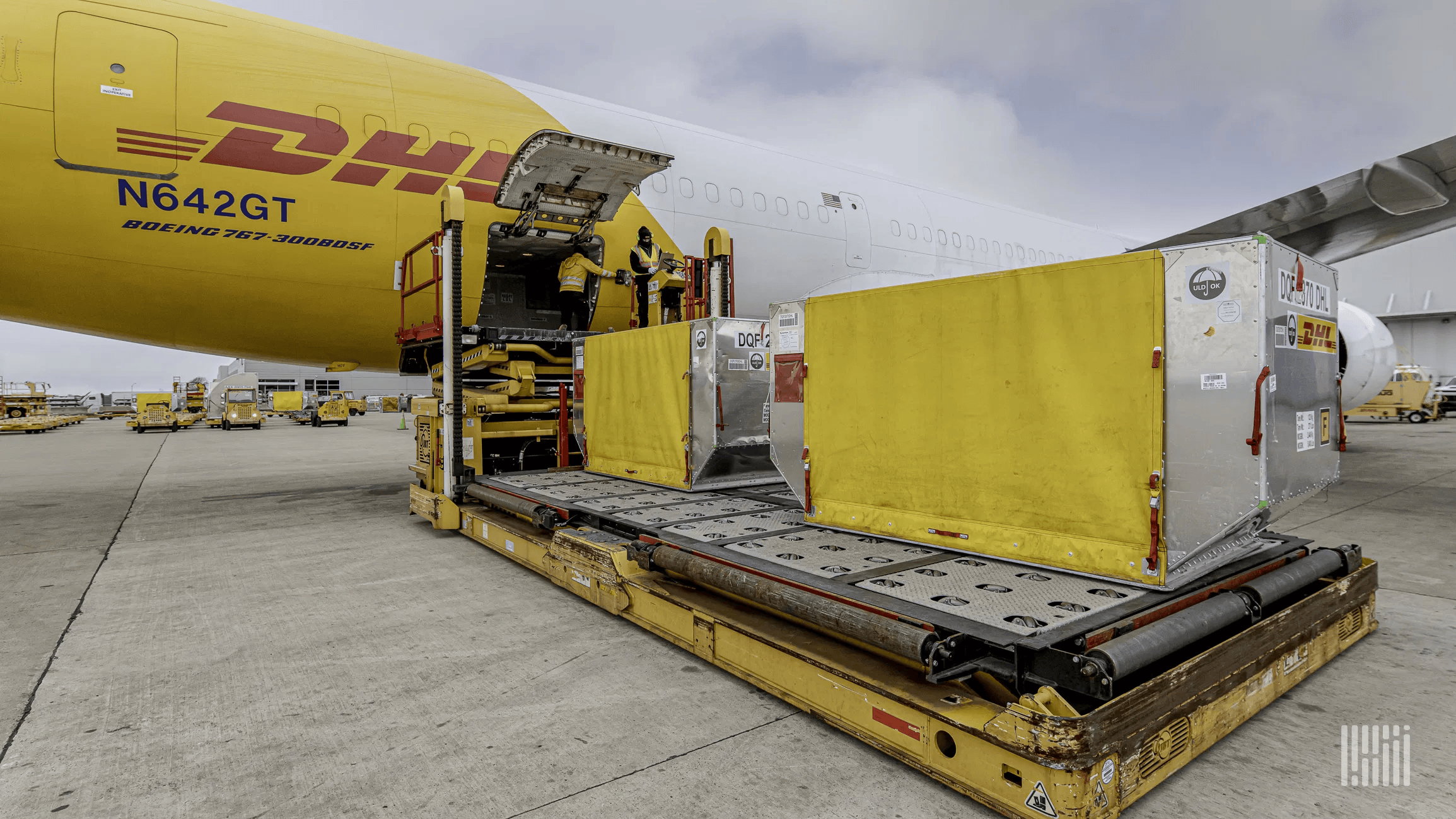
DHL Express strengthens infrastructure with automated service centre at Kempegowda Airport
DHL Express has significantly bolstered its air cargo infrastructure at Kempegowda International Airport (BLR), investing €3.43 million in a new automated service centre. This strategic expansion, announced on June 27, 2025, elevates DHL’s operational footprint at the airport to over 130,000 square feet, reinforcing its commitment to India’s burgeoning trade volumes and aligning with the nation’s ambitious drive for logistics modernisation and sustainable economic growth.
The timing of this infrastructure upgrade is particularly salient as India targets scaling its air cargo volumes beyond 10 million metric tonnes annually by 2030. Bengaluru, widely recognised as a technology and manufacturing powerhouse, serves as a crucial export origin, with Kempegowda Airport recording a robust 7.3 percent year-on-year growth in cargo volumes in FY 2024. This expansion is therefore timely, directly addressing the urgent need for enhanced handling capacity and advanced automation to meet escalating demand.
The new DHL facility integrates cutting-edge automation-driven solutions, including telescopic conveyors, wheel sorters, and sequence-based logic for optimised workflows. These tools are meticulously designed to drastically reduce processing time, minimise manual labour, and significantly increase shipment throughput. A company spokesperson highlighted that this enhanced regional productivity positions the firm to manage future volume growth with greater agility, thereby strengthening its competitive advantage in the airfreight sector.
This infrastructure investment is strategically aligned with India’s National Logistics Policy (NLP) and the PM Gati Shakti initiative, both of which prioritise multimodal integration and cost-efficiency. By supporting government objectives to reduce logistics costs, currently estimated at 13–14 percent of GDP, to international benchmarks of 8–9 percent, the expansion facilitates trade. This is particularly beneficial for small and medium-sized enterprises (SMEs) and multinational exporters in high-value sectors such as electronics, pharmaceuticals, and automotive components, fostering a more equitable economic landscape.
While specific environmental metrics were not detailed in the announcement, the investment in automation inherently contributes to operational sustainability. Reduced reliance on manual processes and decreased vehicle idling are key factors in lowering ground-level emissions. Furthermore, the facility’s closer proximity to airside operations minimises transit times, supporting compliance with international environmental mandates. Such future-ready logistics infrastructure is vital for India to cement its position as a global air logistics node, balancing operational efficiency with strategic foresight for a decarbonised future.
Ultimately, this expansion at Bengaluru Airport is more than just an infrastructure upgrade; it represents a convergence of national trade policy, private capital, and supply chain innovation. For India to solidify its global air logistics standing, such investments must be complemented by harmonised customs processes, efficient airspace management, and a skilled workforce. This model offers a blueprint for future-ready logistics infrastructure across emerging markets, balancing operational efficiency with strategic foresight for sustainable and equitable urban development.