


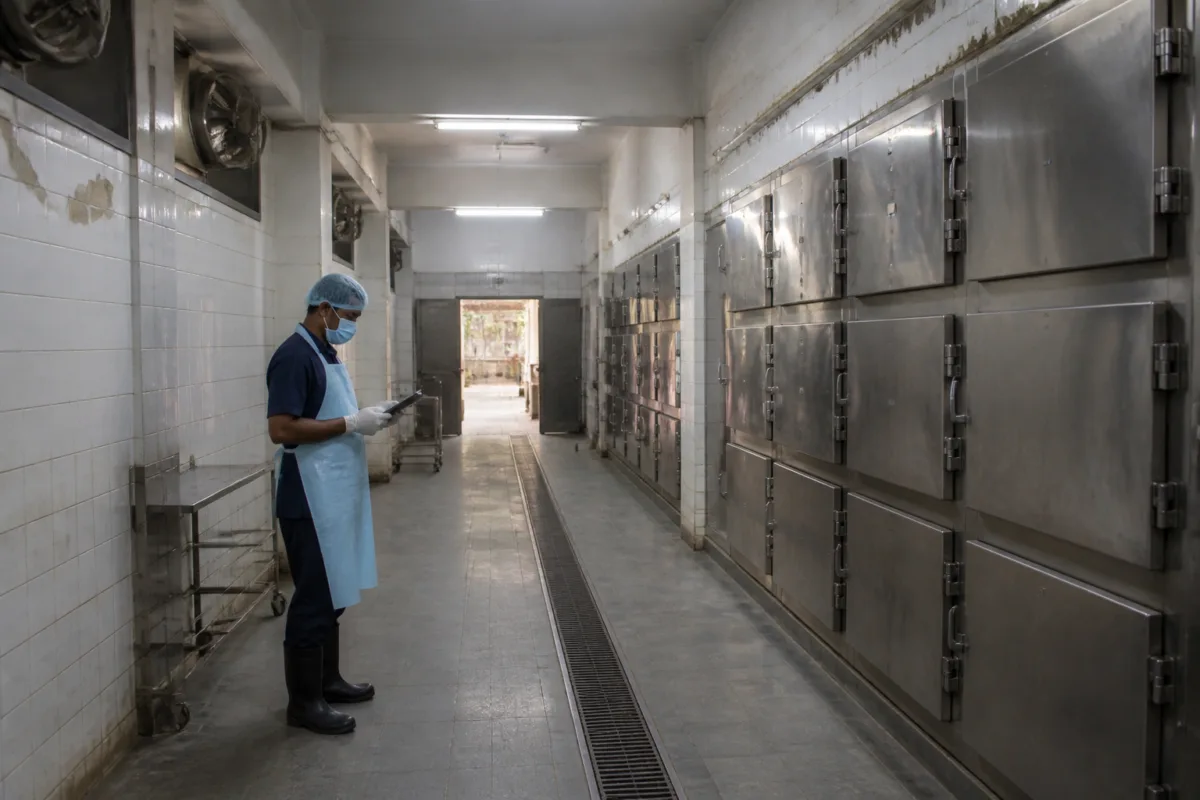
Mumbai hospital mortuary capacity is under pressure from unclaimed bodies and delays in their disposal, even though three major BMC-run hospitals report adequate cold-storage space for routine post-mortem cases.

A report by the Free Press Journal said KEM, Nair and Sion hospitals have facilities designed primarily for regular post-mortem workloads. Hospital administrators have nevertheless raised concerns about handling a sudden increase in bodies after a mass-casualty incident.
Mumbai hospital mortuary capacity at BMC hospitals
Nair Hospital’s mortuary can hold more than 51 bodies and conducts approximately 90 to 120 post-mortems a month. KEM Hospital has capacity for more than 36 bodies and carries out about 60 to 90 post-mortems monthly. Sion Hospital has cold storage for 65 bodies and conducts around 15 to 25 post-mortems a day, according to the report.
| Hospital | Mortuary capacity | Post-mortems |
|---|---|---|
| Nair Hospital | More than 51 bodies | Approximately 90–120 a month |
| KEM Hospital | More than 36 bodies | Approximately 60–90 a month |
| Sion Hospital | 65 bodies | Around 15–25 a day |
Dr Pramod Ingale, dean of Sion Hospital, said the facility had adequate capacity but that the prolonged stay of unclaimed bodies affected the availability of space. Dr Shailesh Mohite, dean of Nair Hospital, said the hospital had sufficient cold-storage capacity for its regular inflow of bodies.
Emergency preparedness and mass casualties
Dr Harish Pathak, dean of KEM Hospital, said the hospital could face difficulties during a major disaster involving mass casualties because it did not have dedicated arrangements to accommodate a sudden surge in bodies.
This separates routine Mumbai hospital mortuary capacity from emergency preparedness. Regular facilities may be adequate for normal post-mortem workloads, while a mass-casualty incident could require arrangements that can be activated when the number of bodies rises sharply.
For related reporting, see Urban Acres’ coverage of infrastructure and analysis.
Unclaimed bodies and coordination
The report quoted former Assistant Commissioner of Police Vishram Abhyankar as saying that unclaimed bodies often include people who die in railway accidents, labourers and economically disadvantaged people whose relatives can be difficult to trace. Former Deputy Commissioner of Police Dhanraj Vanjari said a body should be preserved for a few months under the law, after which the police or hospital administration can decide on disposal.
Iqbal Mamdani, founder of the Mamdani Health & Education Trust, called for closer coordination between hospitals and the police. He said authorities should establish clear, time-bound guidelines specifying how long efforts to trace relatives should continue.
The report does not specify whether BMC has a city-wide contingency plan, additional temporary facilities or a common protocol covering all municipal hospitals. The immediate concern is therefore not only the number of cold-storage slots available on ordinary days, but also how hospitals and police coordinate identification, family tracing, documentation and disposal when cases remain unresolved or when a mass-casualty event overwhelms regular capacity.

