


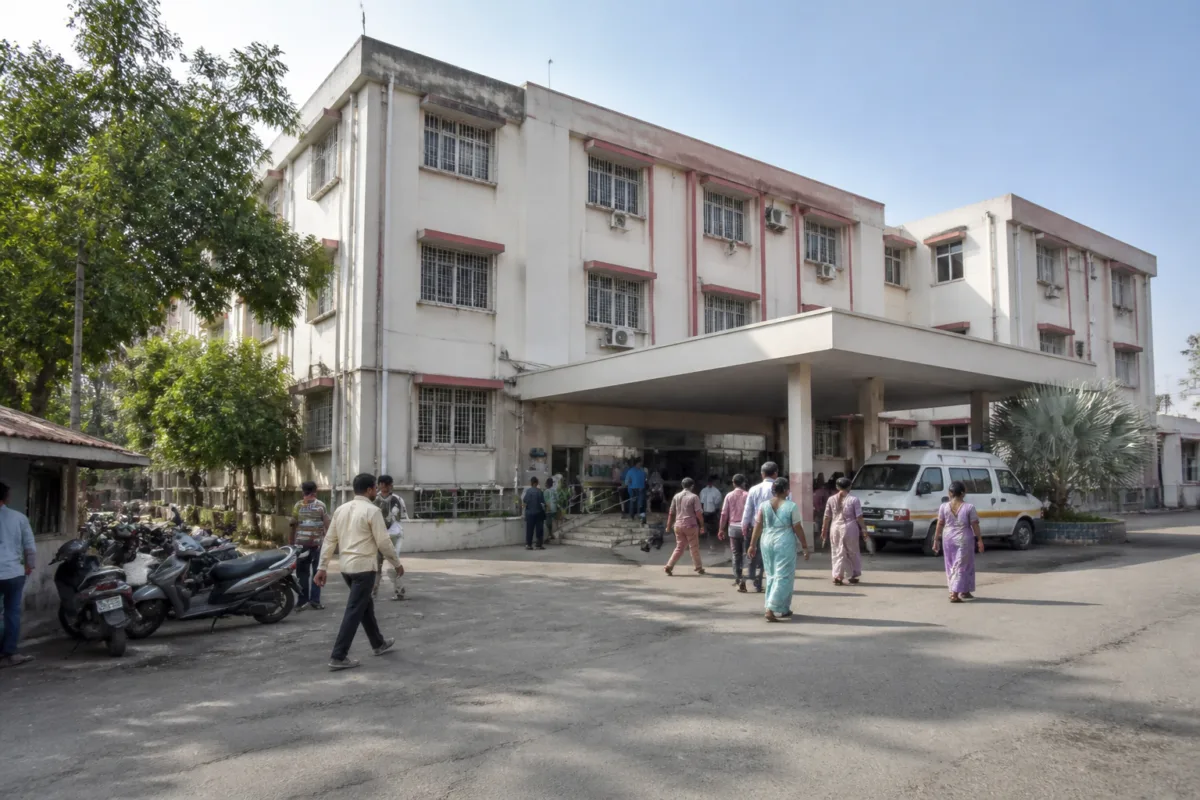
The Bombay High Court has held that a charitable hospital cannot be denied property tax exemption merely because it charges patients, provided the institution’s activities are genuinely directed towards public welfare.
Justice Milind Jadhav dismissed an appeal filed by the Pimpri-Chinchwad Municipal Corporation against a nearly 37-year-old judgment that granted the exemption to a hospital operated by Lokmanya Medical Foundation. The exemption had been upheld by a Pune district court in February 1989.
The case concerned exemption under Section 132(2) of the Bombay Provincial Municipal Corporations Act. The corporation argued that registration as a charitable trust did not automatically qualify the hospital for relief from property tax. It also alleged that the hospital charged substantial fees and was involved in profit-making activities rather than providing charitable services.
The High Court rejected that reasoning, finding that the trust had produced oral and documentary evidence demonstrating the charitable nature of its work. The court noted that the corporation had not produced evidence in rebuttal or effectively challenged the material submitted by the trust.
The judgment recorded that the hospital provided medical relief and education, organised free family welfare camps and offered treatment at nominal rates based on patients’ financial capacity. Its services included emergency treatment for industrial workers, maternity care, medical camps, ambulance services and diagnostic facilities.
According to the judgment, about 35,000 families of industrial workers were attached to the trust. Under an arrangement cited in the case, the government paid the trust Rs 5 per family annually. The hospital’s casualty centre handled approximately 500 to 600 cases each month, while 15 maternity beds were provided free of charge.
The trust’s operations were funded through government grants, public donations and nominal income from patients. The court held that charging patients, by itself, did not negate the charitable character of the institution. It also pointed out that the corporation had not entered the witness box before the trial court to substantiate its allegations.
The ruling does not treat charitable registration alone as sufficient for a property tax exemption. Instead, the court’s reasoning rests on evidence that the hospital’s activities were genuinely charitable and that it provided public-welfare services, including subsidised and free care.
For municipal bodies, the decision underscores the importance of establishing allegations of commercial or profit-making activity with evidence when challenging an exemption claim. For charitable hospitals, it affirms that collecting nominal or other patient-related income is not automatically inconsistent with their charitable purpose.
The High Court accordingly upheld the February 1989 judgment and dismissed the Pimpri-Chinchwad Municipal Corporation’s appeal.

