


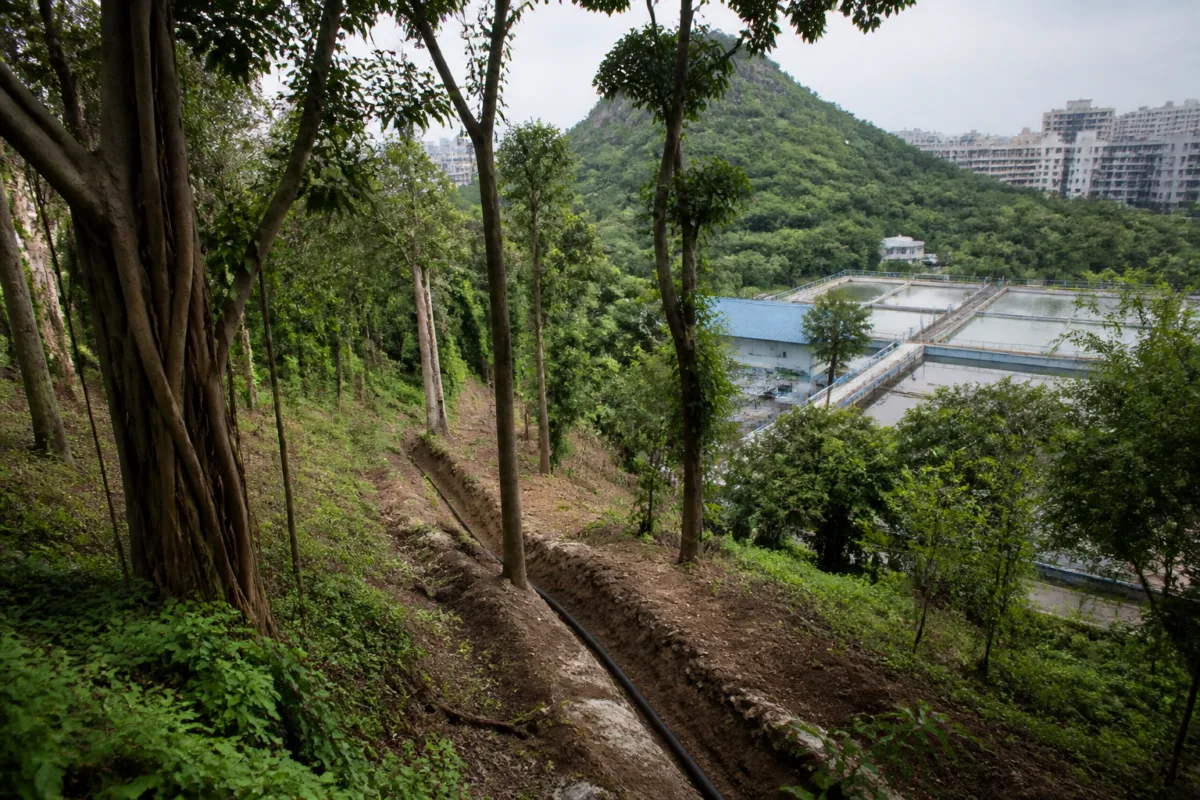
Navi Mumbai’s proposed water pipeline through the foothills of Parsik Hill has triggered a dispute over tree removal, slope stability and whether residents were given a fair opportunity to object. The Navi Mumbai Municipal Corporation (NMMC) has identified 249 trees that could be affected by the project: 44 are proposed to be felled and 205 transplanted.
The planned 1,500-mm-diameter pipeline would connect Parsik Hill MIDC to Punyanagari MIDC in Nerul. The trees were identified below NMMC’s water treatment plant and include peepal, banyan, umbar, jamun, mango, tamarind, karanj, khair, teak and neem.
Environmental groups Sajag Nagrik Manch and Nat Connect Foundation have approached the NMMC Tree Authority seeking a review of the proposal, a fresh 15-day objection period and a personal hearing before the authority takes a decision. Their challenge focuses both on the ecological consequences of the work and on the timing of the public notice.
According to the groups, the notice was dated November 16 and published on November 17, while notices were displayed on trees at the site only on November 27—three days after the November 24 deadline for objections. An NMMC Tree Authority official, however, said the notice had been published in accordance with statutory norms. The official added that permission would be considered only after site inspections and a review of formal representations.
The environmental concern extends beyond the number of trees listed for removal or relocation. B N Kumar, director of Nat Connect Foundation, said vegetation at the base of Parsik Hill helps hold soil, check erosion and regulate surface runoff. He questioned whether the impact of removing nearly 250 trees on the hill’s geological stability had been assessed.
The groups have also raised doubts about the survival of transplanted trees. They cited a Forest Research Institute assessment of 12,852 transplanted trees across 23 locations in Delhi, which found survival rates of 40–45%. On that basis, they questioned whether transplantation at Parsik Hill would preserve the ecological functions of the existing trees.
NMMC has defended the proposal, saying only a small fraction of the affected trees would be felled and that most would undergo scientific transplantation along with mandatory compensatory plantation. That response places the outcome on the quality of the site assessment, the transplantation plan and the authority’s review of objections—none of which has yet resulted in a reported final permission.
The dispute therefore involves two linked public-interest questions. The first is whether the pipeline’s alignment and construction method can limit damage to the hill’s vegetation and slopes. The second is whether the consultation process allowed affected residents and groups enough time to examine the proposal and submit objections. The Tree Authority’s inspection and decision will determine how those questions are addressed before work proceeds.

