


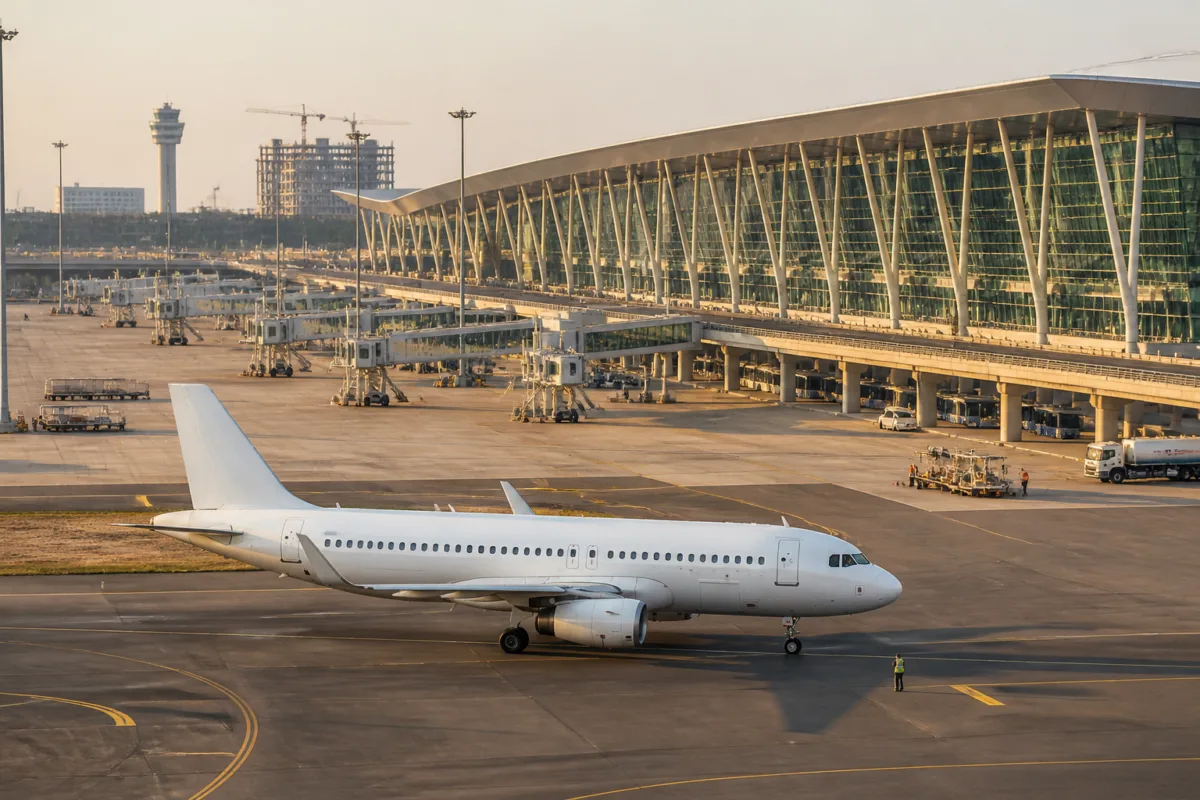
Adani Group has sought government approval to invest in airlines, signalling an attempt to expand its presence in India’s aviation sector beyond airport operations, group chief financial officer Jugeshinder ‘Robbie’ Singh said on Friday.
Speaking on the sidelines of the Trust India Debt Capital Market Summit 2026, Singh said India needed substantially greater airline capacity to serve its potential passenger base. He said more than 600 million people in India had the potential to fly and that daily flights would need to increase nearly tenfold to 30,000 to meet the opportunity he identified.
Singh said the group had requested permission to invest in an airline, an existing aviation company or an entrepreneur entering the sector. He did not identify a potential partner, airline or proposed investment structure.
The proposed airline entry would add a new dimension to Adani’s existing aviation footprint. Adani Airport Holdings, established in 2019 after the group won concessions to operate six airports, later acquired a controlling stake in Mumbai International Airport. Its portfolio has since expanded to eight airports with the addition of Navi Mumbai International Airport.
Adani Airports would be operationally ready for a possible demerger in calendar year 2027, Singh said. He clarified that the potential transaction would be a demerger rather than an initial public offering, while the final decision would rest with the relevant boards.
The group’s airport plans form part of a wider investment programme covering infrastructure, energy, data centres and emerging businesses. Singh said the group had committed to investing $120 billion over the next five years. Annual capital expenditure had risen from ₹80,000 crore three years ago to ₹1.1 trillion and ₹1.56 trillion in the subsequent years, he said.
Group companies are expected to borrow ₹1.3-1.4 trillion annually in each of FY27 and FY28, according to Singh. Adani Power is expected to remain a significant issuer in domestic public and private debt markets, while other group companies may tap international bond markets.
Singh said the group wanted domestic capital markets to provide 70-75% of its total capital over time, compared with about 56% currently. It also plans to raise $3-4 billion annually through equity issuances, primarily to broaden its shareholder base, he said.
For the aviation sector, the proposed airline investment could connect airport ownership and operations with airline capacity, but the immediate outcome remains uncertain because government approval has not yet been granted. No timetable for a decision or details of a prospective airline investment were provided in the report.

