


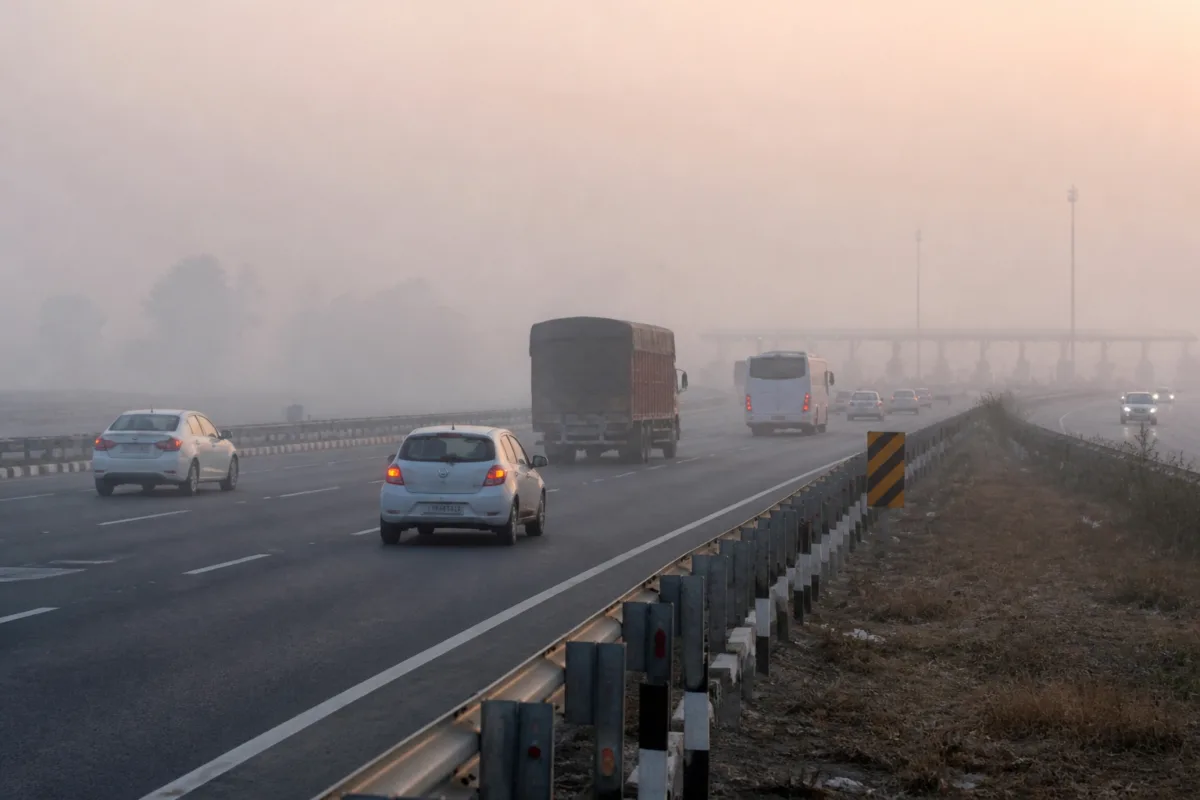
More than 30 districts in Uttar Pradesh are likely to experience dense fog on Saturday, November 28, with reduced morning visibility expected to affect road travel, according to a report by Live Hindustan citing the weather department.
The alert covers districts in western and eastern Uttar Pradesh, including Saharanpur, Shamli, Muzaffarnagar, Bijnor, Moradabad, Rampur, Bareilly, Pilibhit, Shahjahanpur, Lakhimpur Kheri, Bahraich, Barabanki, Shravasti, Balrampur, Gonda, Ayodhya, Amethi, Pratapgarh, Jaunpur, Sultanpur, Ambedkar Nagar, Basti, Siddharthnagar, Maharajganj, Kushinagar, Gorakhpur, Sant Kabir Nagar, Azamgarh, Mau and Deoria.
The report said fog in rural areas has already been reducing visibility during the early morning and morning travel periods, although sunlight is expected to clear it later in the day. It attributed the conditions to moisture associated with easterly winds, falling temperatures and the influence of cold northerly winds combining with dry winds from the west.
The weather department expects the pattern to continue for the next seven to eight days. From November 29 to December 2, dry weather is expected, with shallow to moderate morning fog in parts of the state. Kanpur city and Etawah recorded the lowest reported temperature in Uttar Pradesh at 8.4 degrees Celsius.
The report also said the Uttar Pradesh Expressways Industrial Development Authority (UPEIDA) and the National Highways Authority of India (NHAI) have issued winter safety directions for highway operations. NHAI is reported to have asked for speed control during fog, with information at toll plazas on the distance ahead affected by fog. The report did not specify NHAI’s exact speed limits.
For expressways under the stated UPEIDA arrangements, the reported limits vary by vehicle and time period until February 15. Cars are limited to 80 kmph during the day and 60 kmph at night; buses to 60 kmph during the day and 50 kmph at night; and trucks and other heavy goods vehicles to 50 kmph during the day and 40 kmph at night. The measures are intended to reduce risks from poor visibility and support safer highway travel during the winter period.

