


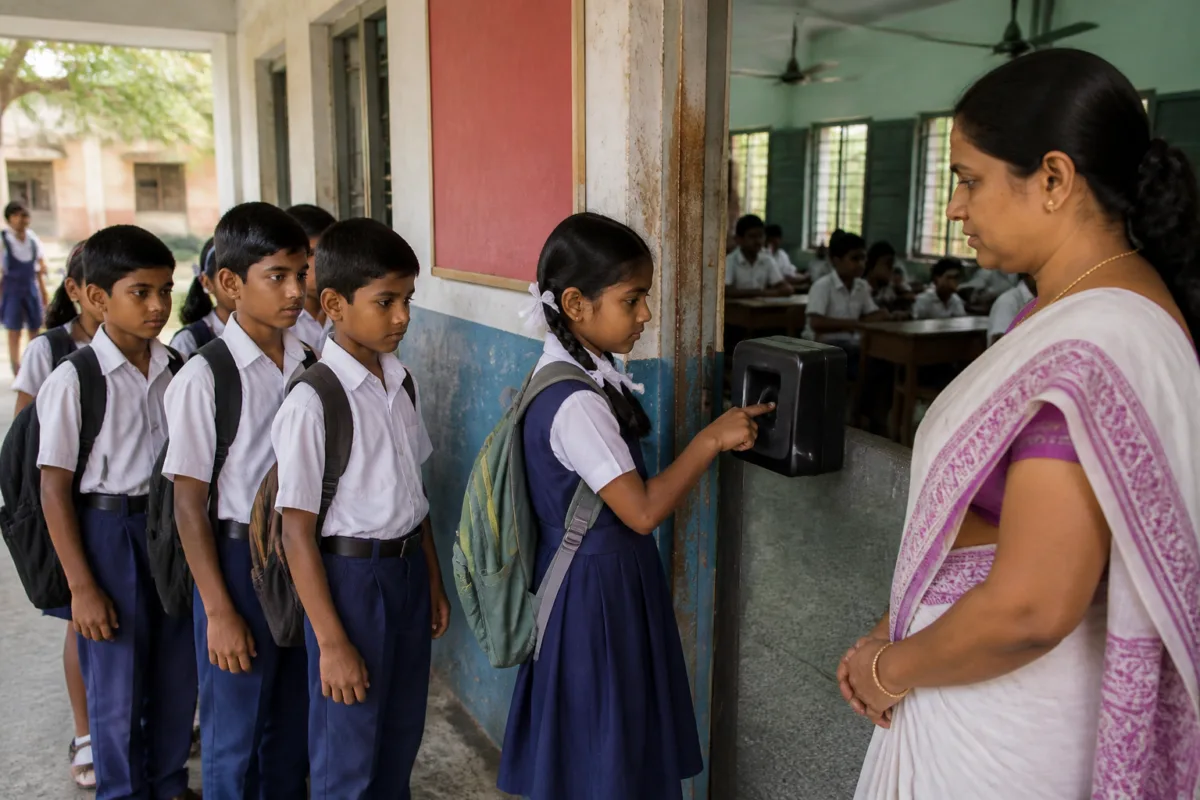
West Bengal plans to introduce an AI-powered biometric attendance system for teachers and students in state-run and aided schools from January 2, 2027, School Education Minister Dipak Barman said, in a move that would replace registers and roll calls with digital monitoring across the school system.
The system is expected to cover around four lakh teachers and 1.6 crore students from primary to higher secondary levels, according to the minister. Before the statewide launch, it will be piloted in 150 schools in December, Barman said while speaking to reporters.
The proposed AI biometric attendance system will use facial-recognition features, a senior school education department official told The Telegraph. At present, teachers record attendance by signing registers, while student attendance is taken by calling out roll numbers. The department expects the digital system to provide more consistent attendance records.
The announcement extends a wider shift towards biometric monitoring in publicly funded education and government administration. The source report said the BJP government had made biometric attendance compulsory for teachers and students at self-financed Bachelor of Education colleges in July, following complaints of attendance irregularities. The higher education department also directed those colleges to preserve classroom CCTV footage for at least a month and share recordings digitally with the department in real time.
A similar attendance system has already been introduced in several government offices, according to the report. The school rollout would be substantially larger in scale, bringing a single attendance-monitoring framework to schools across the state.
The pilot phase will be important for testing whether the system can work reliably across schools with different levels of digital infrastructure. The report does not specify the technology provider, installation requirements, connectivity arrangements, operating costs or the process for correcting erroneous attendance records. It also does not set out how biometric and facial-recognition data will be stored, accessed or protected.
These details will affect how the system works for schools, teachers and students in practice. A digital attendance platform may reduce paperwork and make records easier for officials to review, but its public value will depend on reliable hardware, clear accountability and safeguards for personal data. The December pilot is expected to provide the first operational test before the proposed statewide implementation.

