


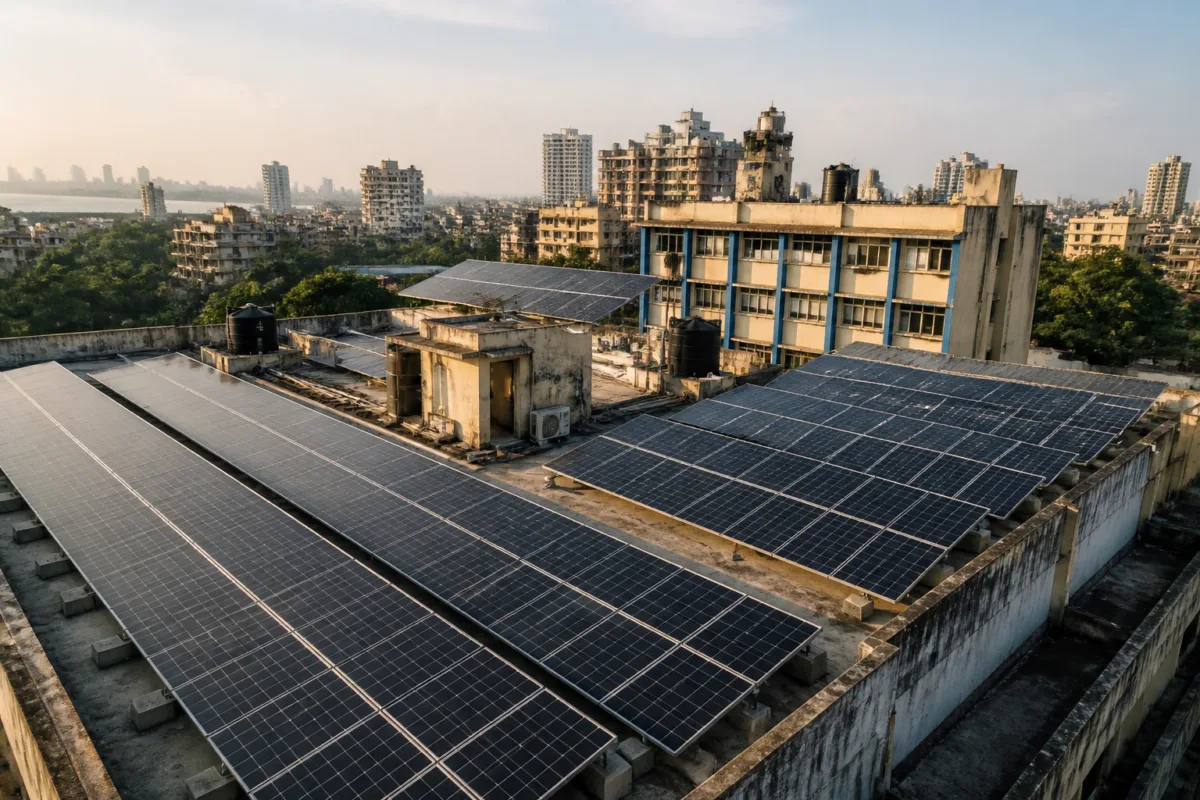
The Brihanmumbai Municipal Corporation (BMC) has reported a sharp fall in electricity consumption and expenditure at eight municipal properties in Mumbai’s G South Ward after installing on-grid solar power projects.
According to figures released by the civic body, combined electricity consumption at the properties fell from 23,701 units in May 2026 to 11,318 units in June. That represents a reduction of 12,383 units, or approximately 52.25 per cent, in a month.
The combined electricity bill for the eight properties declined from Rs 2,32,046 in May to Rs 1,21,288 in June. The BMC said this amounted to a monthly saving of Rs 1,10,758, equivalent to a 47.73 per cent reduction in expenditure.
The projects have a stated capacity of 12 kilowatts and were installed at municipal properties including the Worli crematorium, municipal schools and BMC office buildings. The civic body said the initiative was intended to reduce reliance on conventional electricity supply, lower long-term expenditure and increase the use of renewable energy in its facilities.
The reported figures point to two direct benefits for the municipal system. First, lower grid electricity consumption could reduce the operating costs of public buildings. Second, the use of solar generation gives the civic body a way to integrate renewable energy into facilities that provide everyday municipal services.
However, the one-month comparison does not by itself establish how much of the reduction will be sustained over a full year. Electricity use can vary with occupancy, equipment operation, weather and other factors. The BMC has said that the savings generated by the projects will be monitored regularly, which will be important for assessing their longer-term performance.
The report does not provide details on the individual capacity installed at each property, the capital cost of the systems, the ownership or financing model, or the period required to recover the investment. It also does not quantify the reduction in emissions associated with the lower electricity consumption. These details would help establish the projects’ overall financial and environmental performance.
Deputy Municipal Commissioner Zone II Prashant Sapkale and G South Ward Assistant Municipal Commissioner Swapnaja Kshirsagar said the civic body would continue monitoring the savings. Officials also said the BMC would explore the feasibility of installing similar solar power projects at other municipal properties.
That proposed expansion would require property-specific assessments, including available roof area, structural suitability, electricity demand, maintenance arrangements and the economics of connecting the systems to each building. For municipal buildings, the reported results from G South Ward provide an initial operational case for examining those questions, while continued monitoring will determine whether the June savings can be replicated across a wider estate.

