


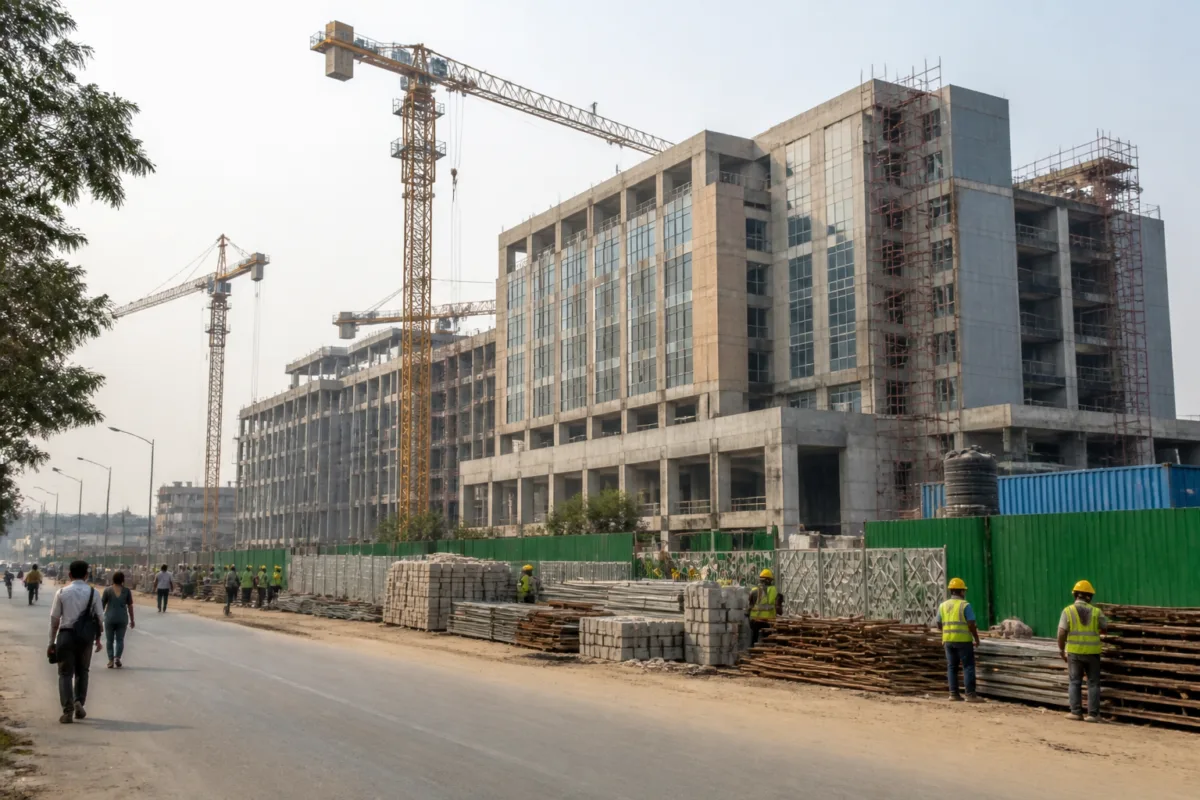
Delhi hospitals in Siraspur and Hastal, with a combined capacity of 1,815 beds, are expected to become operational next year as the city government advances a wider programme of public healthcare construction and expansion.
Chief Minister Rekha Gupta announced the plans after reviewing healthcare infrastructure projects at the Delhi Secretariat on Wednesday. According to a statement issued by her office, the 1,164-bed Siraspur hospital is ready, with medical equipment procurement underway and completion targeted by the end of January. Construction of the 651-bed hospital in Hastal is also nearing completion.
The two hospitals are expected to improve access to treatment in their surrounding areas and reduce pressure on existing facilities, the statement said. The announcement, however, covered projects at different stages, ranging from facilities nearing completion to hospitals still in the planning and construction pipeline.
The government is also developing 1,139 Ayushman Arogya Mandirs across Delhi, of which 415 are currently operational. Another 40 centres are scheduled to open next month, on the occasion of the 102nd birth anniversary of former Prime Minister Atal Bihari Vajpayee. The government plans to introduce two-shift services at centres that are recording higher patient footfall.
The next phase of hospital construction includes two 691-bed facilities in Madipur and Jwalapuri, both scheduled for completion by 2028. The Madipur project has an estimated cost of Rs 466.50 crore, while the Jwalapuri hospital is estimated to cost Rs 484.04 crore.
Several existing hospitals are also being expanded. A 463-bed maternal and child healthcare block is under development at Baba Saheb Ambedkar Hospital in Rohini, where the outpatient department block is ready for inauguration. A 270-bed block at Rao Tula Ram Memorial Hospital and a 460-bed block at Lal Bahadur Shastri Hospital in Khichripur are also nearing completion.
The government is planning an integrated redevelopment of Lok Nayak Hospital and the Maulana Azad Medical College campus. The stipulated timeline for planning and construction is around 30 months, according to the report.
The proposed institutional changes also include bringing Guru Teg Bahadur Hospital, Rajiv Gandhi Super Speciality Hospital, Delhi State Cancer Institute and the Institute of Human Behaviour and Allied Sciences in the Trans-Yamuna region under a common institutional framework. The stated objective is to strengthen specialised medical services.
The healthcare programme includes medical education capacity as well. The government plans to establish medical colleges at Indira Gandhi Hospital in Dwarka and Guru Gobind Singh Government Hospital, with 150 MBBS seats at each institution. The number of seats at Baba Saheb Ambedkar Medical College is proposed to rise from 125 to 200, while Maulana Azad Institute of Dental Sciences is expected to increase its intake from 50 to 70 seats.
The scale of the programme places equipment procurement, staffing and commissioning alongside construction as key implementation requirements. The Chief Minister’s Office said the Health Department was monitoring projects to ensure timely construction and procurement of equipment. Gupta also stressed the need for better treatment, modern facilities and adequate hospital staff.
For residents, the immediate significance of the announcement will depend on when the facilities become fully functional, rather than when construction is declared complete. The projects cover new hospitals, local primary-care centres, specialist institutions, maternal and child healthcare and medical education, indicating an effort to expand capacity across several levels of Delhi’s public health system.

